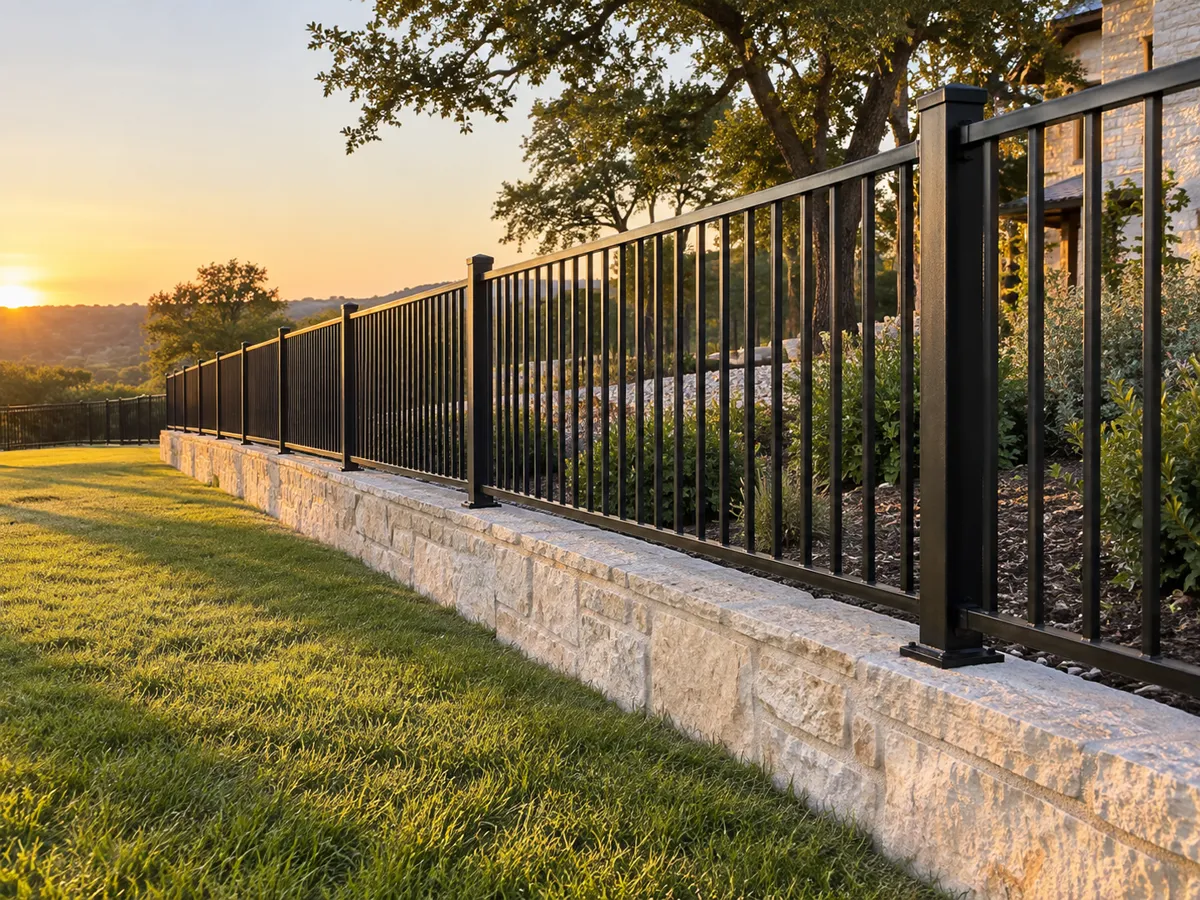
Posts, Footings and Gate Columns That Stay Plumb
A leaf hangs off one post, so that post carries the full weight of the gate at the end of a lever. When a driveway gate starts to sag, the cause is usually a footing that moved, not a gate that bent.
On every install we set the footing to the leaf it will carry:
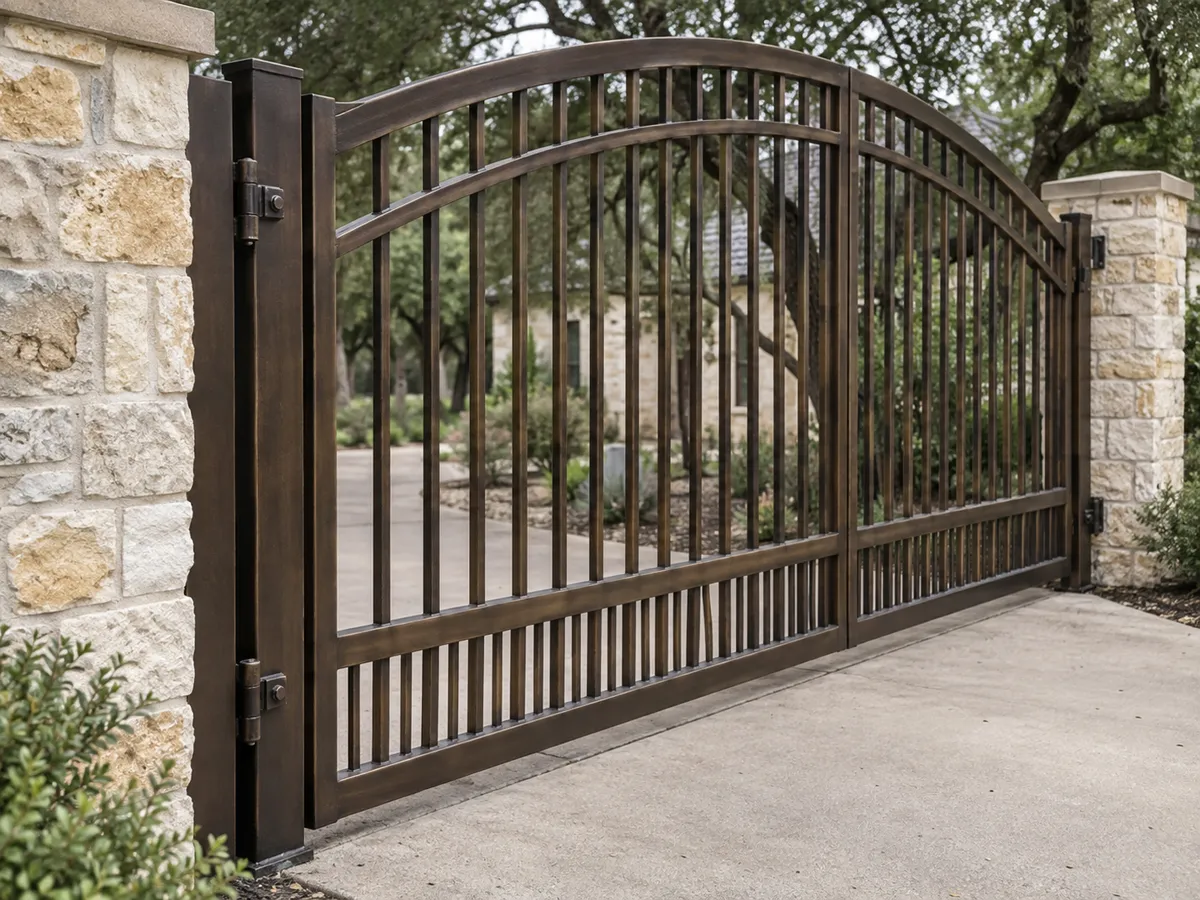
- Hinge posts get the deepest, widest footing on the job, because they take the weight and the twist of a swinging leaf.
- Latch and stop posts take the impact when the gate closes, so they need a solid base even though they carry less weight.
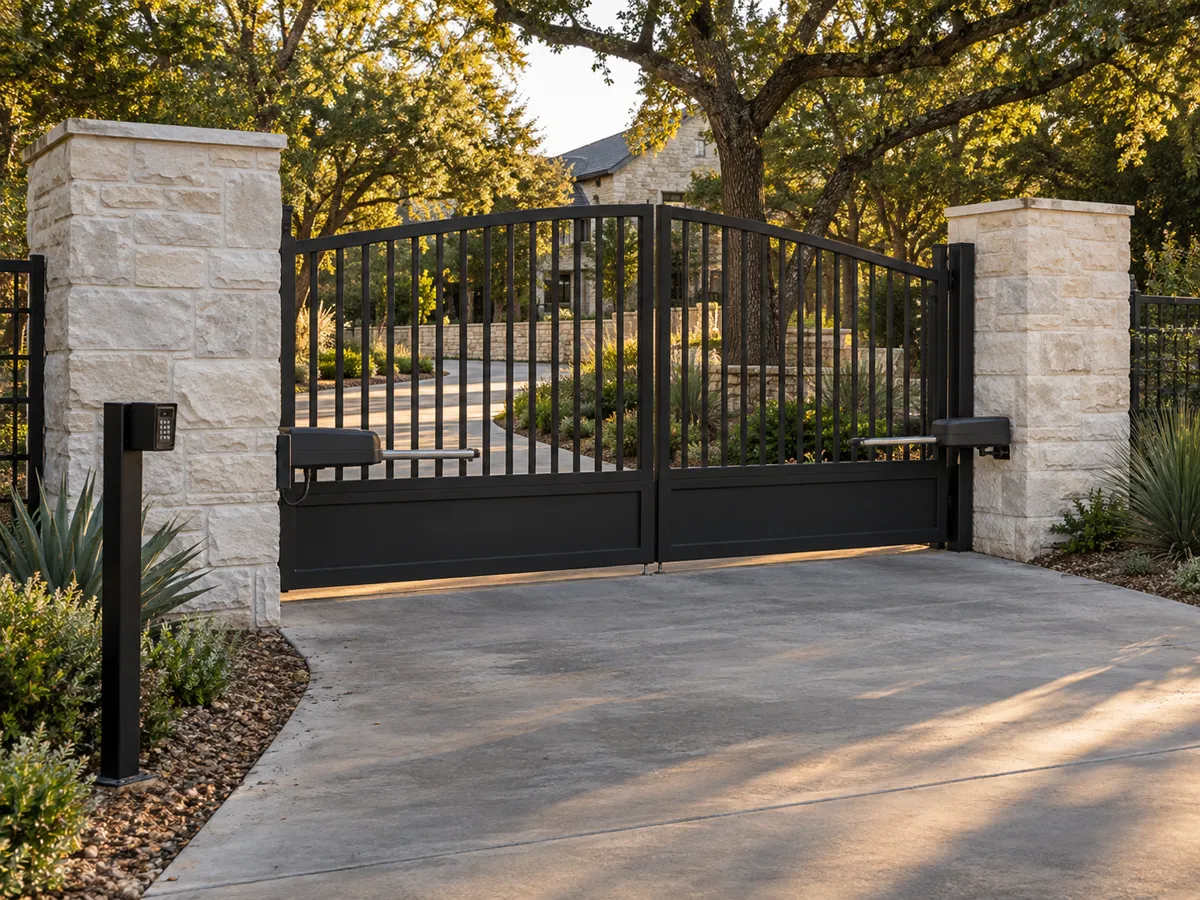
- Cane bolt and drop rod sleeves are cast into the drive or a small pad at the center of a double gate, so the leaves can be locked in the open and closed positions.
Concrete reaches most of its final strength within about four weeks and has to stay damp while it cures, which matters in a Texas summer when a fresh pour can dry too fast and crack. For that reason we can pour footings on one visit and come back to hang the leaves once the concrete has had time to gain strength.
Steel posts or masonry columns
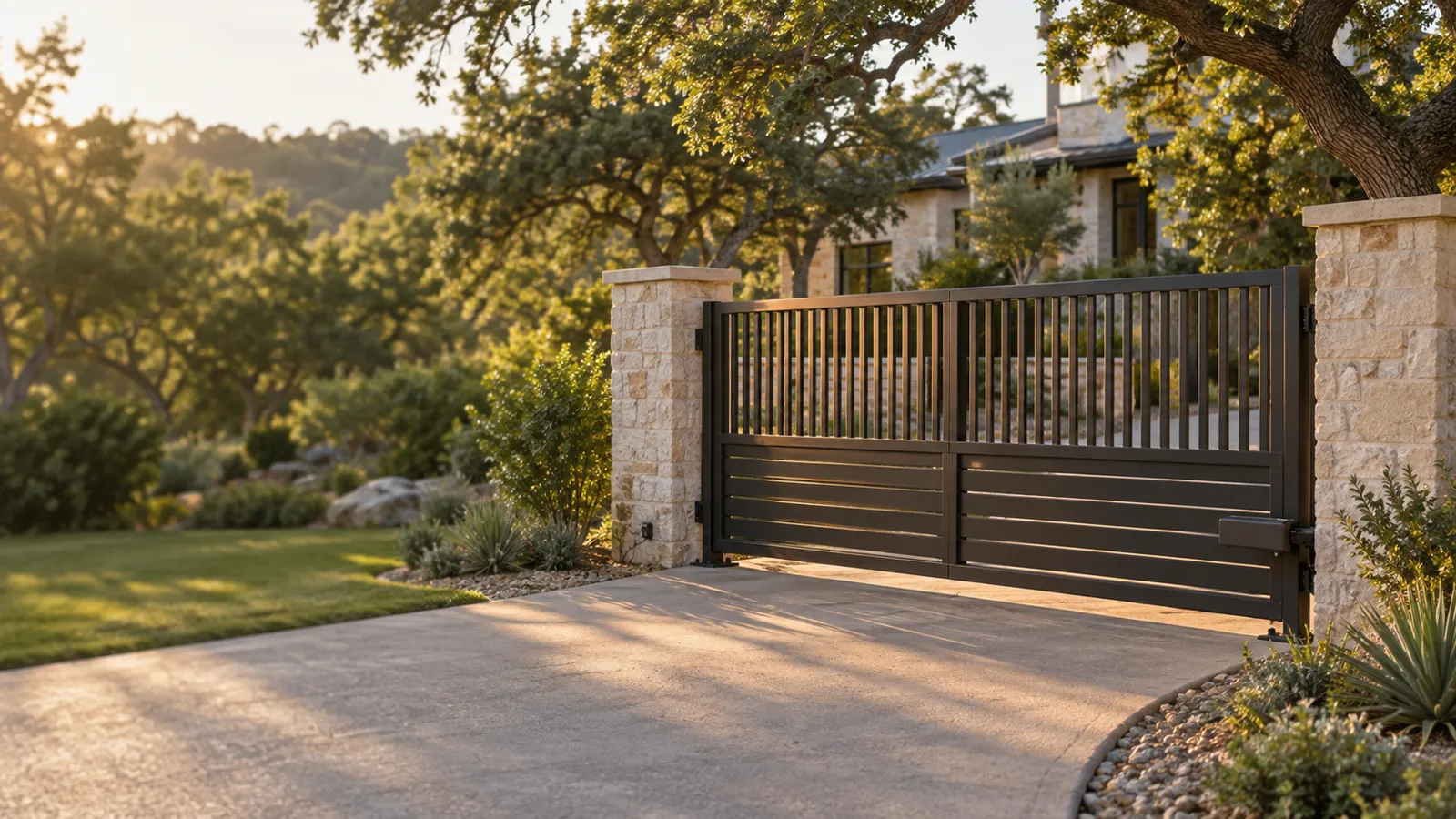
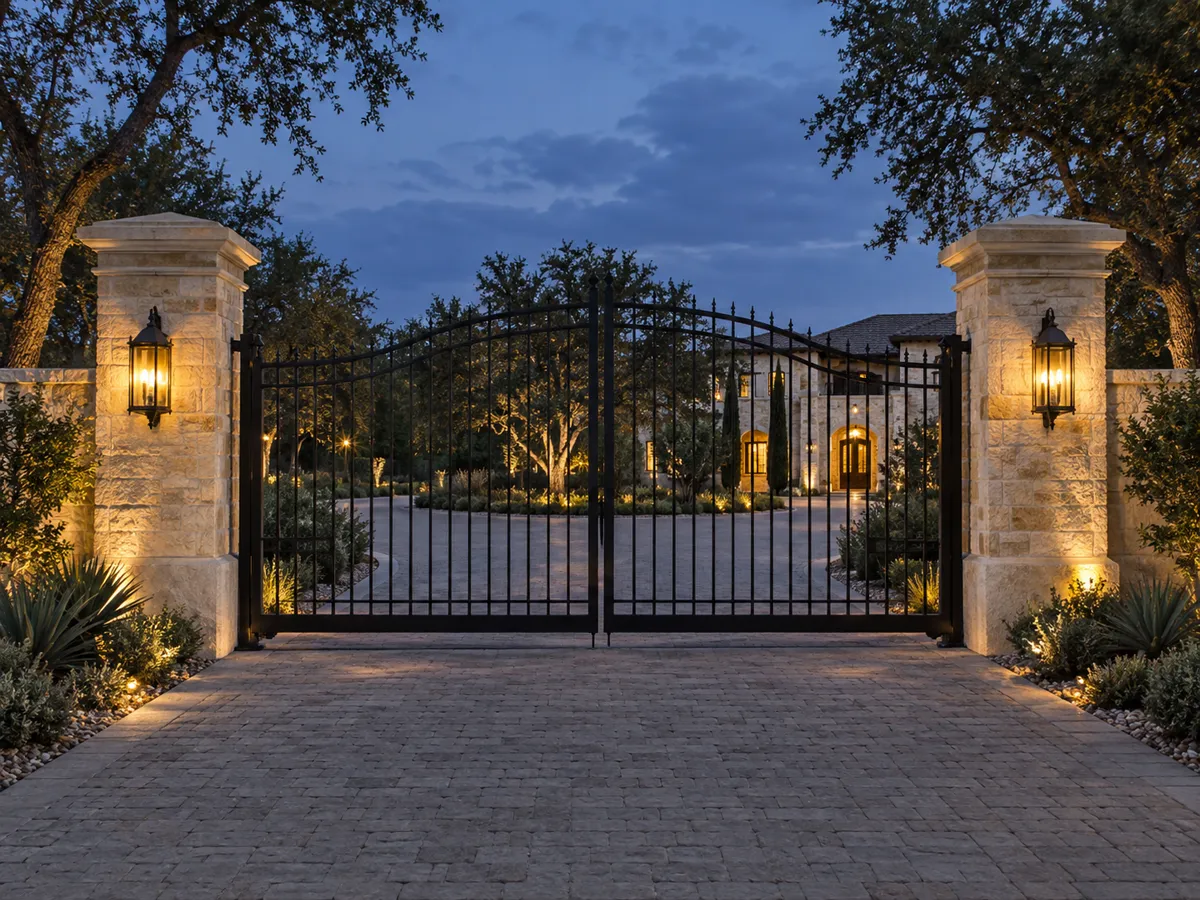
A square steel post set in concrete is the plain choice and works on most drives. Many Austin owners want stone or stucco columns instead, to match the house. A column is built around a steel core or with embedded hinge plates, so the gate hangs from steel and the stone stays a finish, not the structure. We coordinate the column with your mason or build the core ourselves, so the hinge points land where the drawing put them.