
West Lake Hills · Sunset Valley · Shady Hollow · Barton Creek
Metal Gates in Rollingwood, Built Around a 3 Foot Front Yard Rule
Austin Metal Gates fabricates metal gates in Rollingwood, TX, and is a trusted Travis County ironwork specialist, specializing in set-back driveway gates, side-yard walk gates and open-picket front fencing held to three feet. We offer rear-yard iron fence runs and pool barrier gates.
- Free on-site measure
- Shop drawings you approve
- Operators set up to UL 325
- One written price
Gates and ironwork in Rollingwood
Our team provides stair and porch railings, delivering clean steel detailing for homes and durable finishes for both residential and commercial projects. We measure the lot, the curb line and the drive ourselves, then weld every panel in our own shop from drawings you approve first.
From a picket spacing that keeps a front run at least 80 percent see-through to a gated side drive tucked behind the front foundation line, our team handles every detail. Serving Rollingwood, West Lake Hills and Lost Creek, we check every job against the current city code at quote time.
Why Austin Metal Gates
How We Work
No stock panels cut down to fit, and no handoffs. The crew that measures your opening builds and installs the gate.
Why a Rollingwood Front Yard Takes a Low Fence, Not a Tall Gate
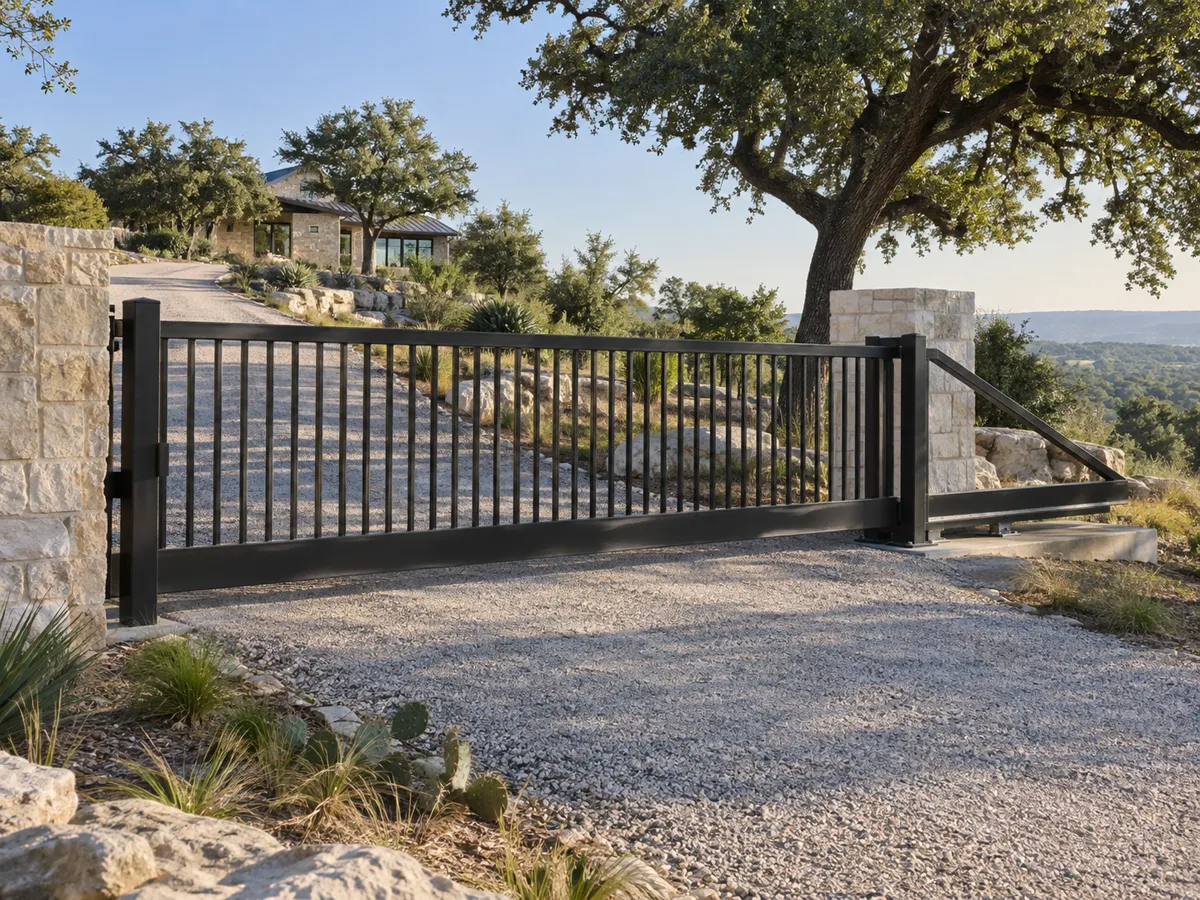
Rollingwood's code starts from a ban. Section 107-34(a) says no front-yard fence may be built or kept, and then carves out a single exception in 107-34(b). That exception is narrow: no taller than 3 feet from finish grade, an average of 80 percent visibility through the run, and every component at least 15 feet back from the curb or the edge of the pavement. Posts may rise 4 inches above the fence line, and a sloped segment may gain up to 6 inches on average.
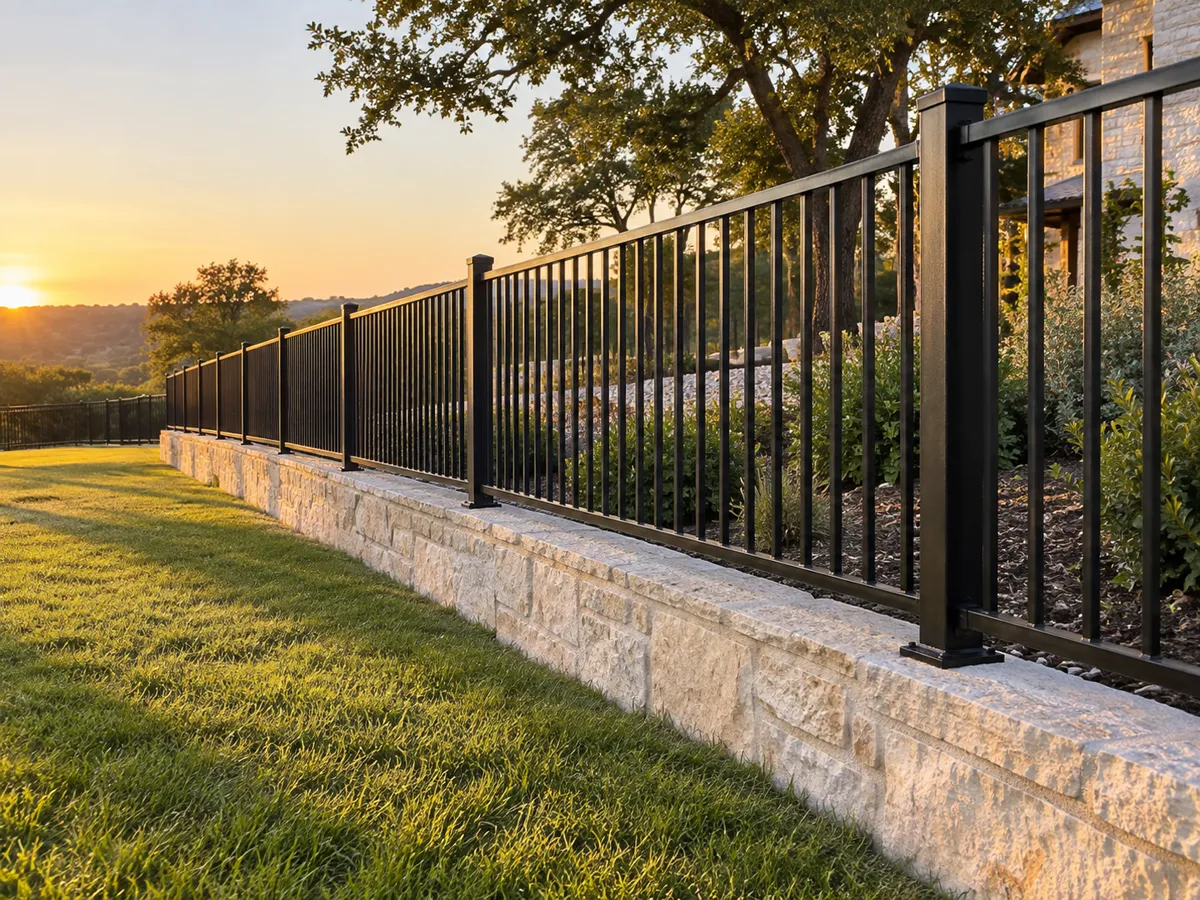
So we do not sell a tall iron driveway gate across a Rollingwood front yard. A 6 foot estate entry at the street would break three rules at once, and a gate nobody may legally hang is not a product. What the code does allow is handsome in its own right: a low, open picket run in powder coated steel, set well back from the curb, on posts of metal, brick, rock, stone or wood, which is the list the code gives.
The same section bans chain link, barbed wire and electrified fencing, and it bars any top carrying exposed sharp or pointed material able to impale a person or an animal. Every Rollingwood front run we draw finishes in a flat rail or a rounded cap, never a spear point.
Where a Taller Driveway Gate Does Fit on a Rollingwood Lot
A fence over 36 inches is allowed only at least 15 feet from the curb and not in front of the home's front foundation line. That is where a real driveway gate belongs here: across a side drive, at the mouth of a rear motor court, or between the garage and the back yard, all behind the face of the house.
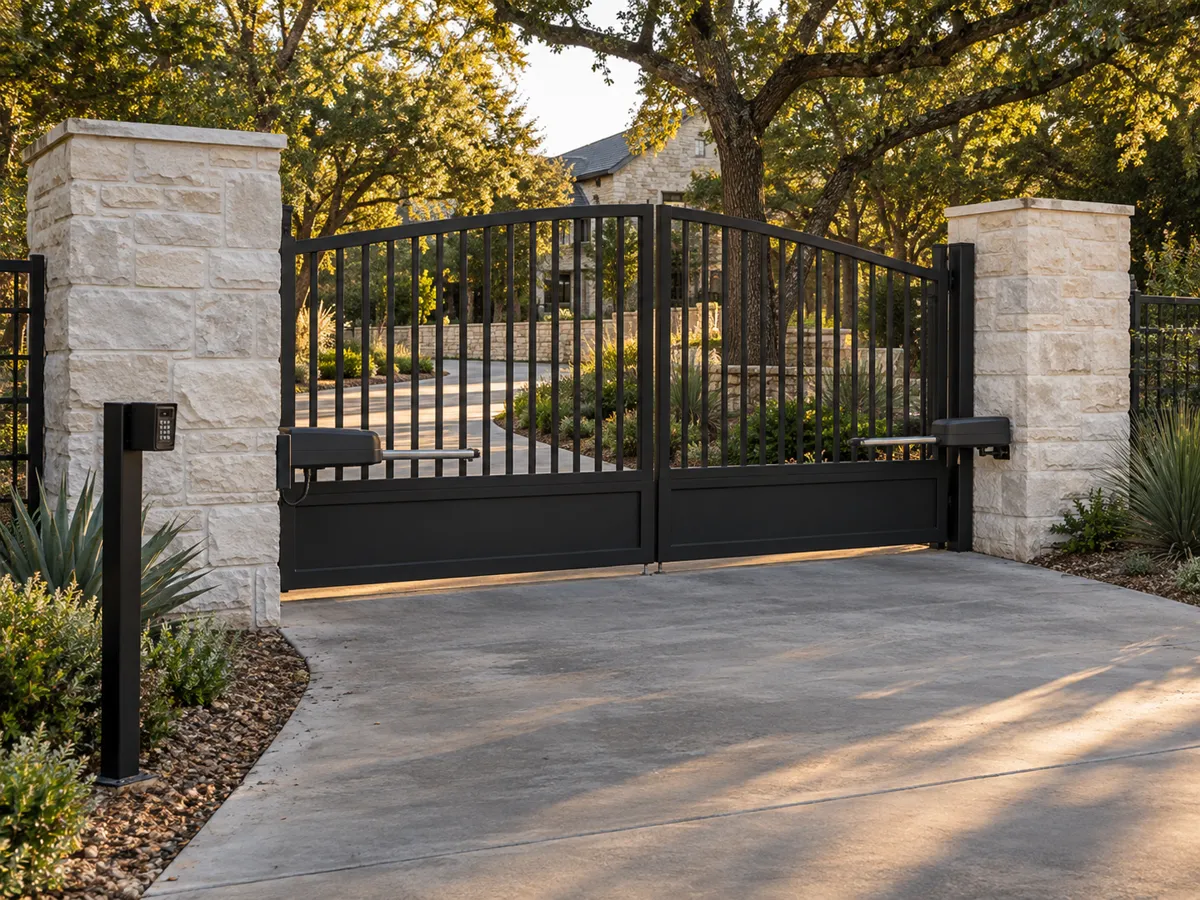
The code adds a geometry rule for any gate that crosses a driveway. It has to sit far enough in that a car waiting for it is completely off the street, and it has to open parallel to the street or away from it. In practice that means an inward swing or a slide. A dual swing pair opening toward the road is out, however good it looks on paper.
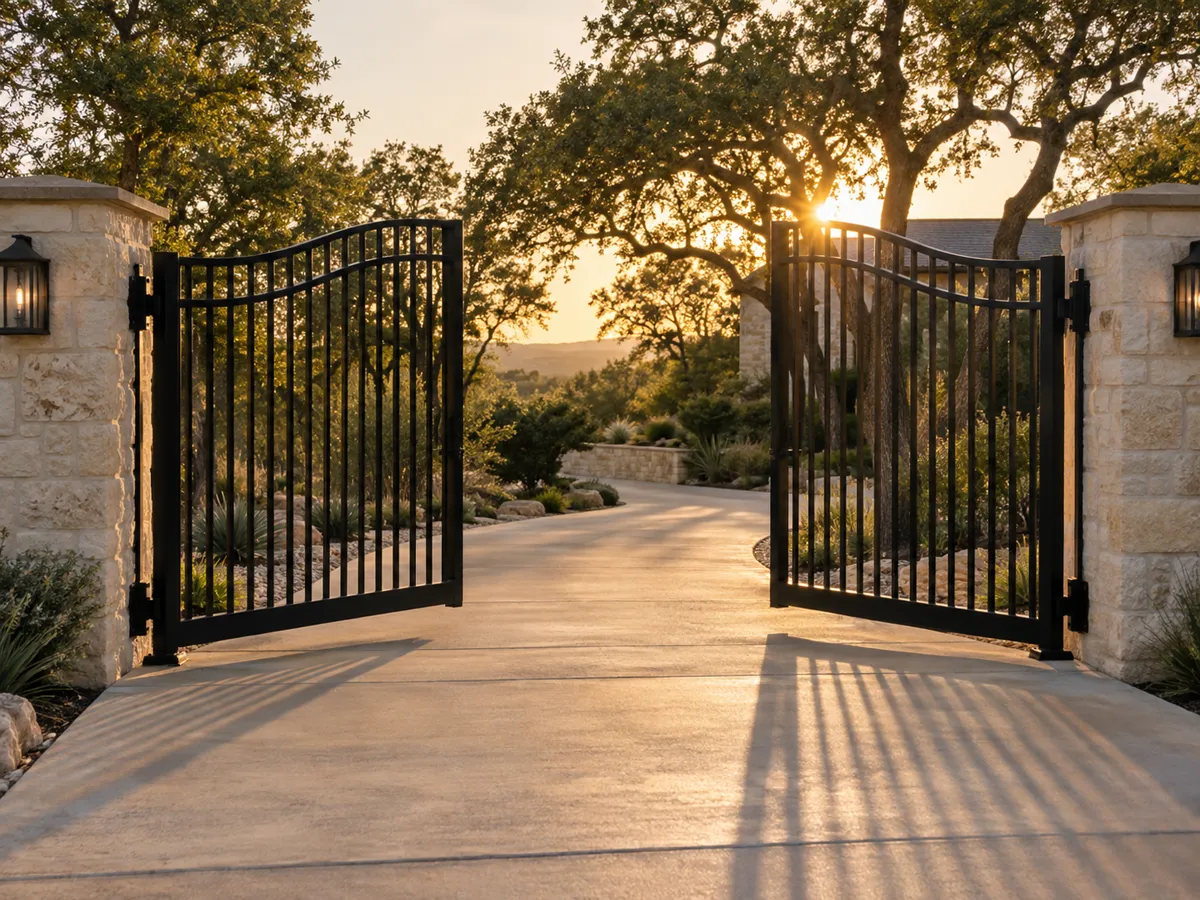
Sliding and cantilever designs suit a narrow side drive because they need no swing arc. A cantilever carries its weight on rollers beside the opening, so no track crosses the pavement. Swing leaves suit a wider court where they can fold back against a wall. Either can be automated, with photo eyes watching the opening and a backup battery so it still runs when the power drops.
Corner lots carry one more limit under Section 107-32: a 36 inch cap within 15 feet of where the rights-of-way meet. We measure that triangle before we draw anything.
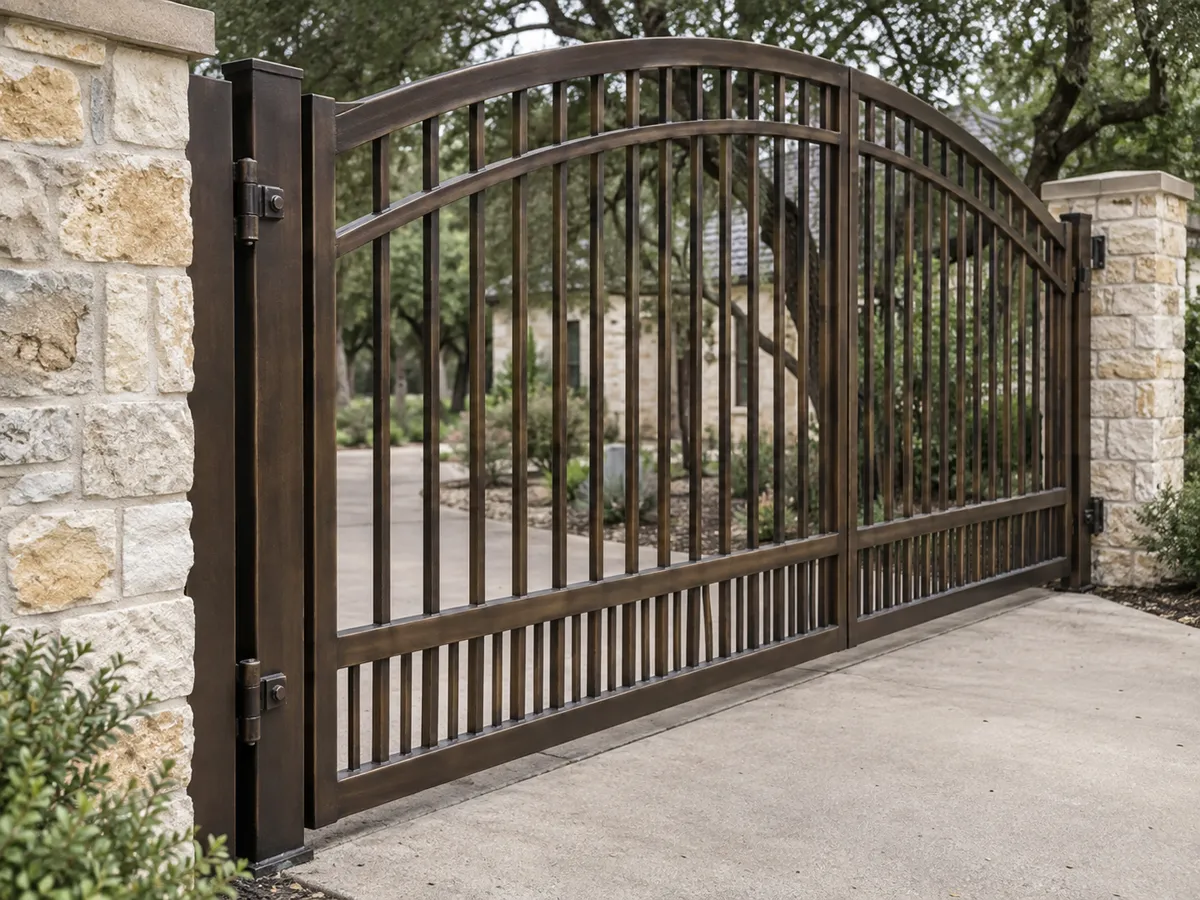
Side Yards, Rear Fence Runs, Pool Barriers and Railings
Behind the front foundation line the work opens up. Side-yard walk gates, rear iron fence runs along a back property line and garden gates into a side court are standard fabrication for us, sized to the opening and hung on posts set in concrete.
Pools carry their own rule. Under Section 107-35(g), a pool fence built or substantially altered after April 20, 2016 has to meet appendix G, section AG105.1 of the 2012 International Residential Code. The city may also require an annual visual inspection and gives an owner 30 days to correct anything that fails it. We draw pool barrier panels and their gates to that named edition, and we confirm the current requirement with the city before any cutting starts.
Railings are the other half of an iron job in this town. Porch, stair and balcony railings in mild steel, with balusters finished to match the fencing elsewhere on the property, let a house read as one design from the street to the back terrace. Because the front yard allows so little, the railings and the rear fence are often where the ironwork shows most.
What Drives the Cost of Gates and Iron Work in Rollingwood
We do not publish prices, because no two Rollingwood lots ask for the same combination of pieces. These are the things that move the number, and each one is settled at the site visit.
- The mix of work: a low front run, a set-back driveway gate, side and rear panels and railings are each priced as separate pieces.
- Opening width and leaf count on any driveway gate, and whether the layout forces a slide or cantilever instead of a swing.
- Slope and grade. If the lot falls away, a run needs stepped or racked panels, which is added fabrication time.
- Material and gauge: mild steel tube, solid bar, or aluminum for a pool barrier, plus the frame and picket sizes the design calls for.
- Finish: hot-dip galvanizing under powder coat outlasts powder coat alone and adds a step.
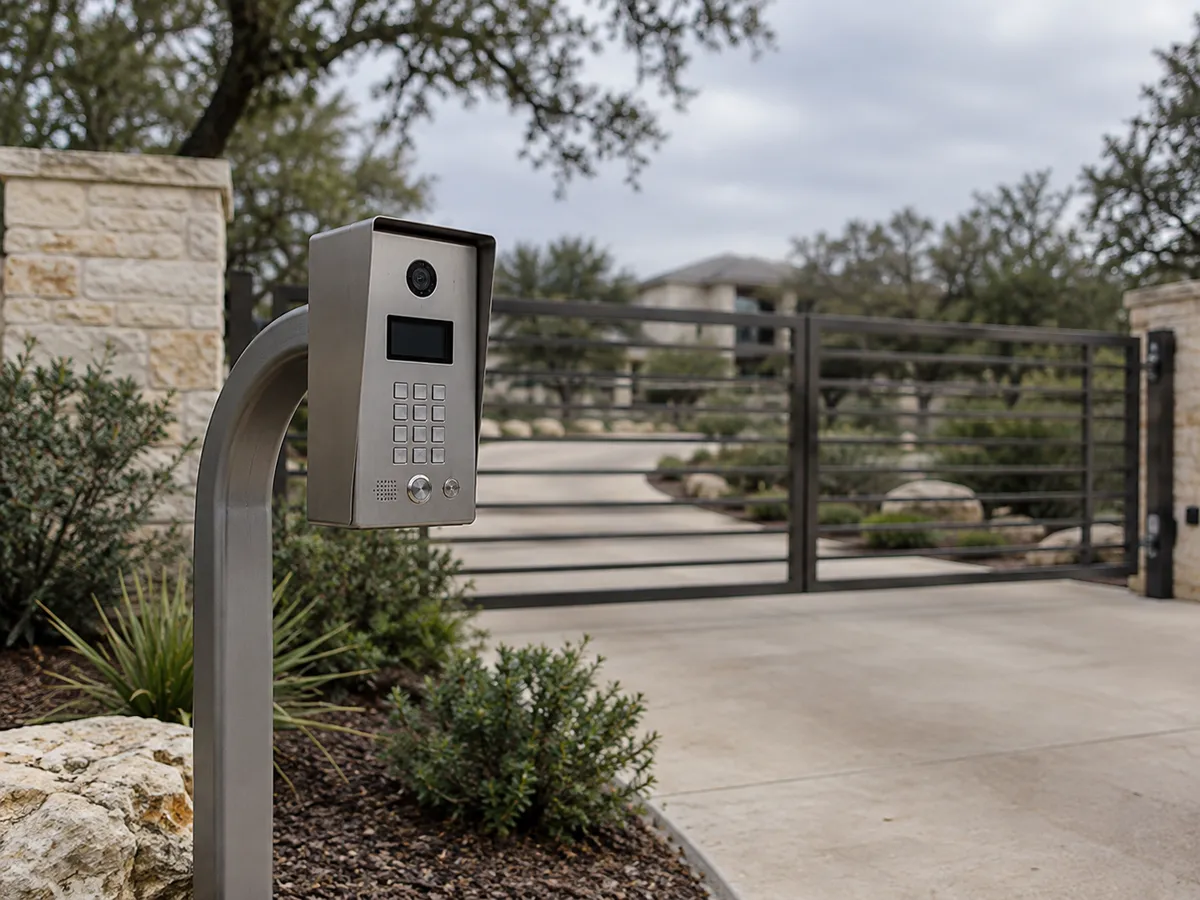
- Operator type and duty cycle, power at the gate (a trench from the house or a solar panel), a keypad or intercom, and safety devices such as photo eyes and edges.
- Posts and footings, including any masonry column and the rock found when the holes are dug.
- Permits, which the city requires when more than half of an existing fence is repaired or replaced.
The measure is free, and a written quote follows it.
Materials and Finishes That Suit the Rollingwood Code
Nearly every gate or fence sold as wrought iron today is mild steel, shaped to resemble the hand-worked iron of the past. True wrought iron has not been made commercially since 1973. We build in mild steel and say so plainly, because it welds cleanly, takes a crisp profile and lasts when it is protected properly.
Protection comes in two layers when the budget allows. Hot-dip galvanizing dips the finished steel in molten zinc at about 450 degrees Celsius; the zinc bonds to the surface and weathers to a dull protective film. Powder coat then goes on as a dry powder and is cured with heat into a finish thicker and tougher than liquid paint.
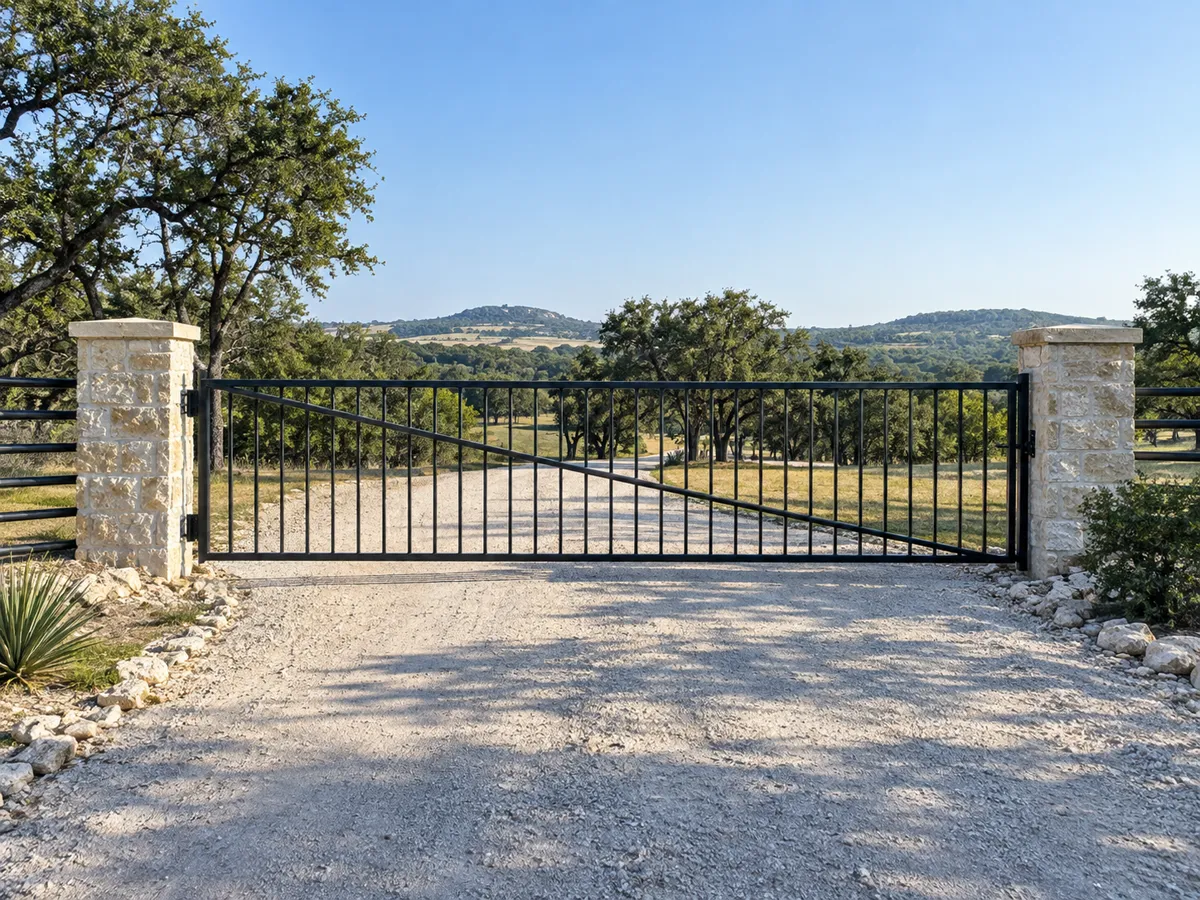
For a front run, the 80 percent visibility rule shapes the pattern. Thin pickets with generous spacing and a slim top rail pass easily; a solid scroll panel or a tight privacy screen does not. We draw the elevation with the open area worked out before you approve it, so the design you like is also the design the city accepts.
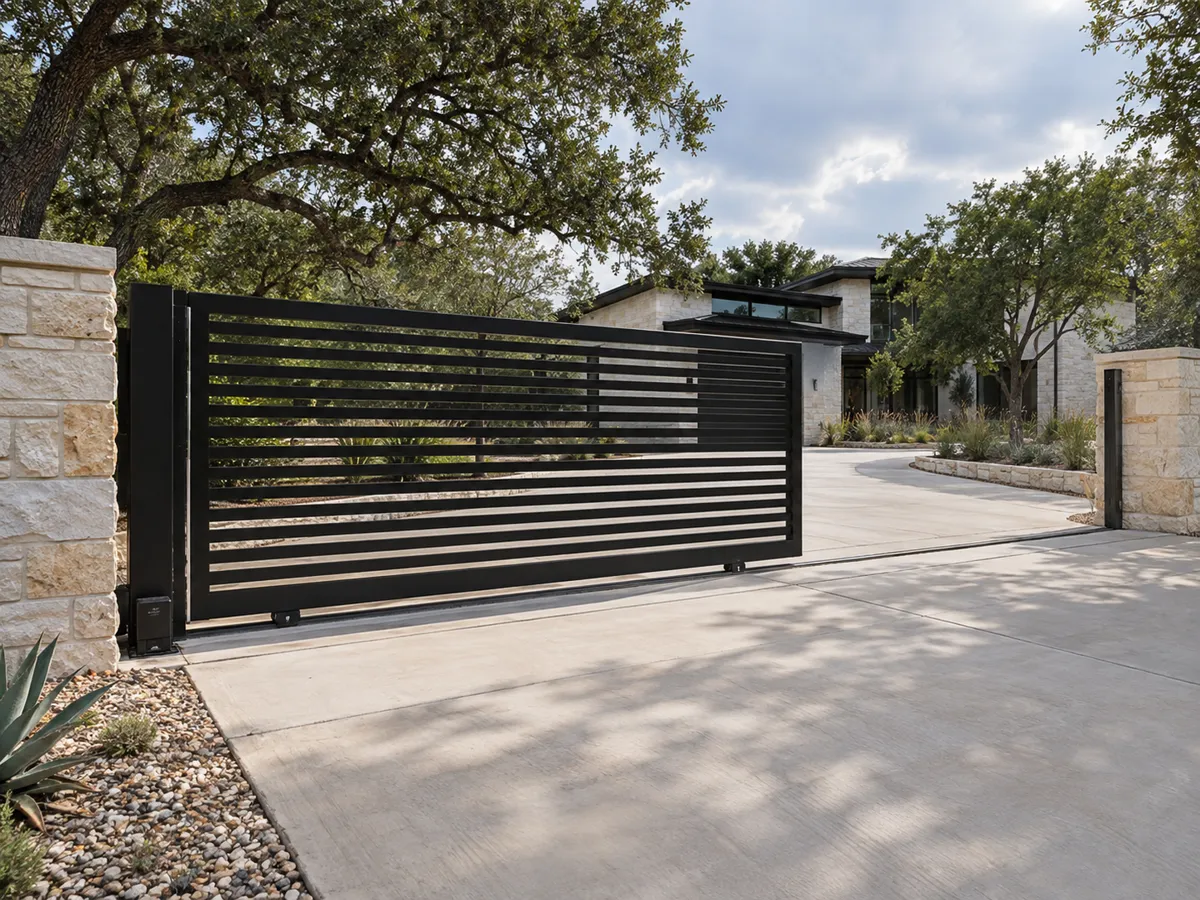
How a Rollingwood Job Runs, From Curb Measure to Install
It starts on the lot. The same crew that will install your gates measures the curb, the pavement edge, the front foundation line and the drive, because in Rollingwood those four lines decide what can be built and where.
From that visit we produce shop drawings: elevations, picket spacing, post locations and, for any driveway gate, the swing or slide path and the operator position. You approve them before any steel is cut. We check the drawing against the current city code at quote time, since codes change, and we file the fence permit wherever one applies.
Fabrication and welding happen in our own shop. The steel is galvanized and powder coated, then the crew sets posts, hangs panels and gates, and adjusts hinges and latches on site. Automated gates are set up to UL 325 with the safety devices the layout needs, and the job closes with a written warranty and a walkthrough of how everything works.
The process
From Site Visit to a Gate That Runs
Four steps, and nothing is fabricated until you have signed off on the drawings and the price.
Free site visit
We measure the opening, the slope and where power can reach, and talk through style, automation and access.
Drawings and a written price
You get scaled drawings for your approval and for any HOA or city review, with one written price.
Fabricated in our shop
Steel is cut and welded to the approved drawings, then galvanized, powder coated or both.
Installed and tested
Columns and posts set, gate hung, operator set up to UL 325 and every safety device tested with you.
Gates, Fences and Ironwork We Build
Questions
Rollingwood: Gate and Fence Questions
Can I put a tall iron driveway gate at the street in Rollingwood?
No. Section 107-34 caps a front-yard fence at 3 feet, 15 feet off the curb and 80 percent open, and any gate across a drive must let a car stop fully off the street and open parallel to it or away from it. A taller gate belongs behind the front foundation line, and we will show you where that line falls on your lot.
What does a gate or iron fence cost in Rollingwood?
It depends on the mix of pieces, the opening width, slope, steel gauge, galvanizing and powder coat, the operator and its power, and the footings. We give a written number after the free on-site measure, never a guess over the phone.
How long does fabrication take once I approve the drawings?
Lead time depends on the design and on the shop schedule at the time, so we put a fabrication date in writing with the quote. Galvanizing and powder coat are separate steps, and they are counted in that date.
Should a Rollingwood side drive get a swing gate or a slide gate?
The code requires a driveway gate to open parallel to the street or away from it, so the choice is an inward swing or a slide. A narrow side drive usually suits a slide or cantilever; a wide rear court can take swing leaves folding against a wall.
Do I need a fence permit in Rollingwood, and who files it?
The city's construction guidance requires a fence permit when more than half of an existing fence is repaired or replaced. For new work we confirm with the city at quote time what it wants filed, and we prepare and file it as part of the job.
What happens to an automatic gate in a power outage?
We fit a backup battery so the operator keeps cycling when the power drops, and every operator has a manual release so the gate can be opened by hand if the battery runs flat.
Can the fire department get through a locked gate?
The Rollingwood code sections we read name no fire access device for a residential gate. We confirm with the fire district at quote time and can fit a key switch or a key box on the post so responders are never locked out.
What happens at the site visit?
We measure the curb, pavement edge, front foundation line, drive and slope, talk through the pieces you want, and explain what the code allows where. You get shop drawings and a written quote afterward, and every finished job carries a written warranty.
Talk to us about a gate in Rollingwood
Free on-site measure across Austin and the west side. We call you back to set a time.
Calls only, we do not receive text messages.