Wood that has gone soft
Wood takes on water at every joint and end grain. Once a rail is soft at the hinge side, screws pull out and the leaf drops, and a new board on a rotten frame only hides the problem for a season or two.
Austin Metal Gates handles gate replacement in Austin, TX, and is Travis County's trusted specialist in swapping a tired gate for a new one, specializing in wood-to-steel conversions, rebuilt hinge posts and matched ironwork. We offer replacement swing leaves and replacement sliding panels.
Our team provides fitted gate hardware and a clean install on your existing opening, delivering a sturdy new entry for homeowners and a low-upkeep closure for both residential and commercial projects. The same crew that measures your old gate hangs the new one, we weld every frame in our own shop, and each replacement carries a written warranty.
From reading the sag in an old hinge post to hanging a new leaf true and level, our team handles every detail. Serving Austin along with West Lake Hills, Shady Hollow and Volente, we replace the gate and leave the rest of your entry alone.
Why Austin Metal Gates
No stock panels cut down to fit, and no handoffs. The crew that measures your opening builds and installs the gate.
A gate is worth replacing when the leaf itself has failed, not just its latch or a single hinge. Rotted wood, a bent steel frame and a chain link panel that no longer holds its shape are the three usual reasons.
Wood takes on water at every joint and end grain. Once a rail is soft at the hinge side, screws pull out and the leaf drops, and a new board on a rotten frame only hides the problem for a season or two.
Rust is iron oxide, and it takes up far more room than the metal it replaces. That swelling splits welds and flakes the surface, and flaking rust gives no protection to the steel underneath. A leaf with rust at its lower rail and corner joints has usually lost more than paint.
Chain link is woven steel wire, and the wire is commonly 9, 11 or 11.5 gauge. It looks fine from the street, but a stretched panel on a light frame sags on its posts and rarely suits a house that wants a proper entrance. If the leaf can still be saved, we tell you that at the measure. If not, the quote is for a new one.
Replacing a gate does not mean tearing out the entry. The posts or columns, the fence line and often the operator can stay, provided they are sound and sized for the new leaf.
We check each post for lean, movement at the base and cracked footings. A new steel leaf weighs differently than the wood it replaces, so a hinge post that carried a light frame may need a new footing or a heavier section before it takes the new one.
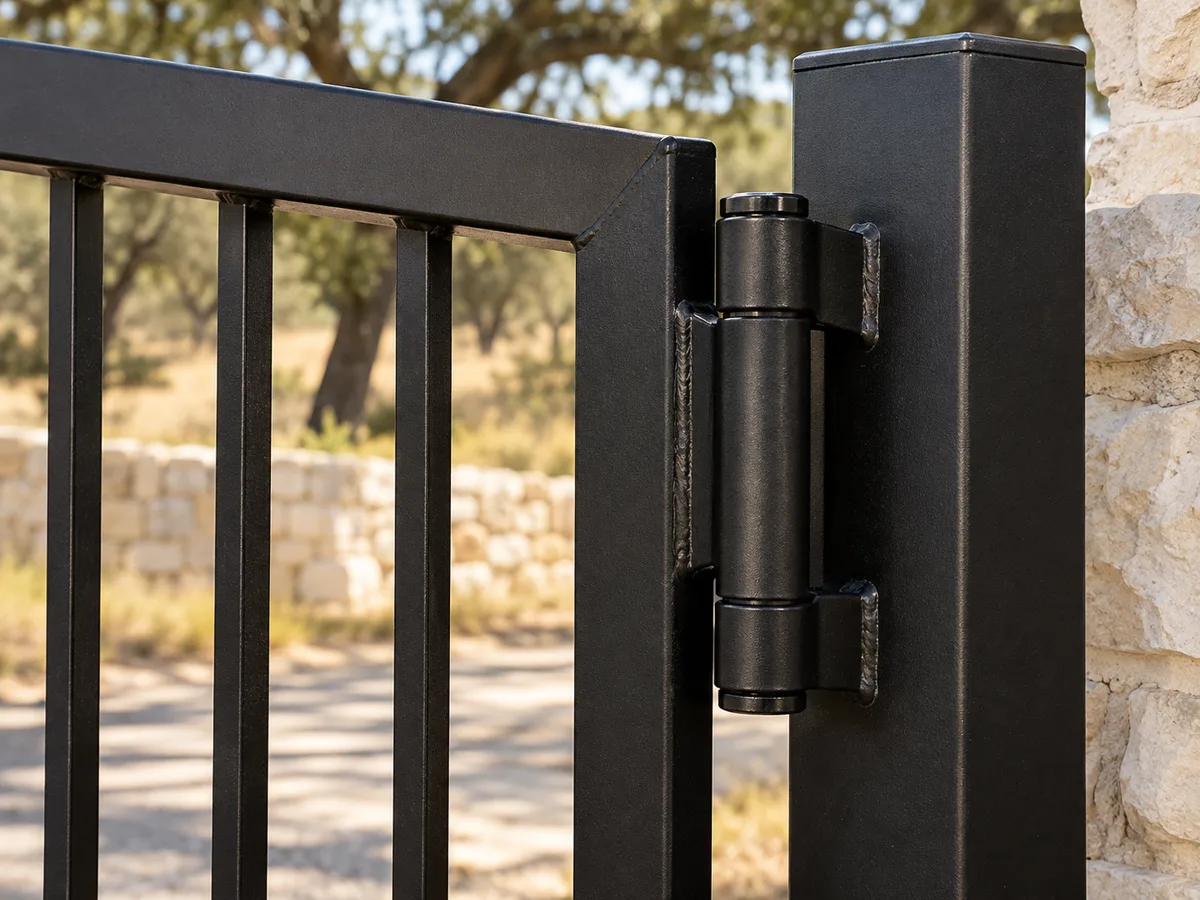
A hinge is a bearing that lets a leaf rotate on one axis. Weld-on barrel hinges and adjustable pivots are common gate choices, and we pick them for the finished weight of the new leaf, not for the old one.
If the leaf is automatic today, we look at the operator before we quote. A working unit can be remounted to the new leaf. An aging unit is a decision to make now, while the old gate is off, and we explain the tradeoff plainly. Any operator that stays is set up again to UL 325 before we leave.
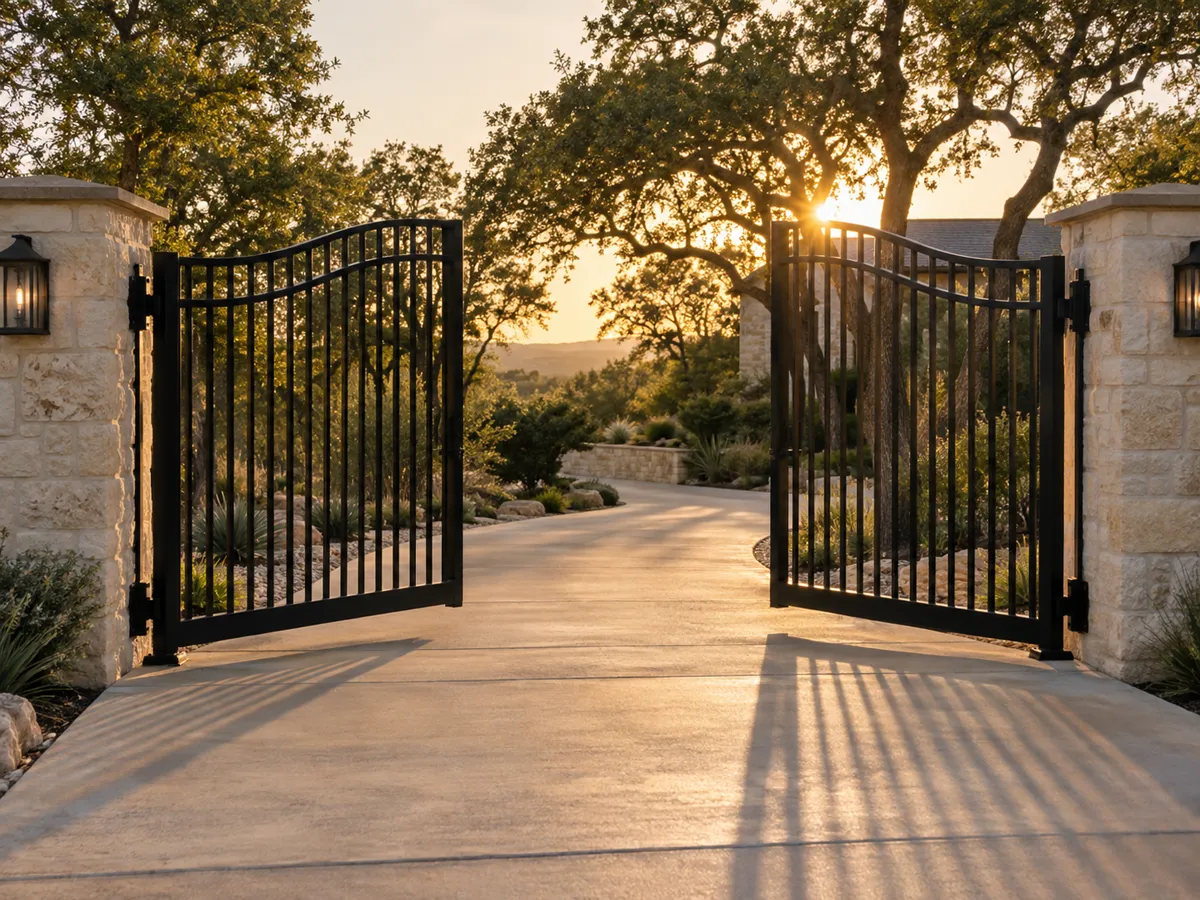
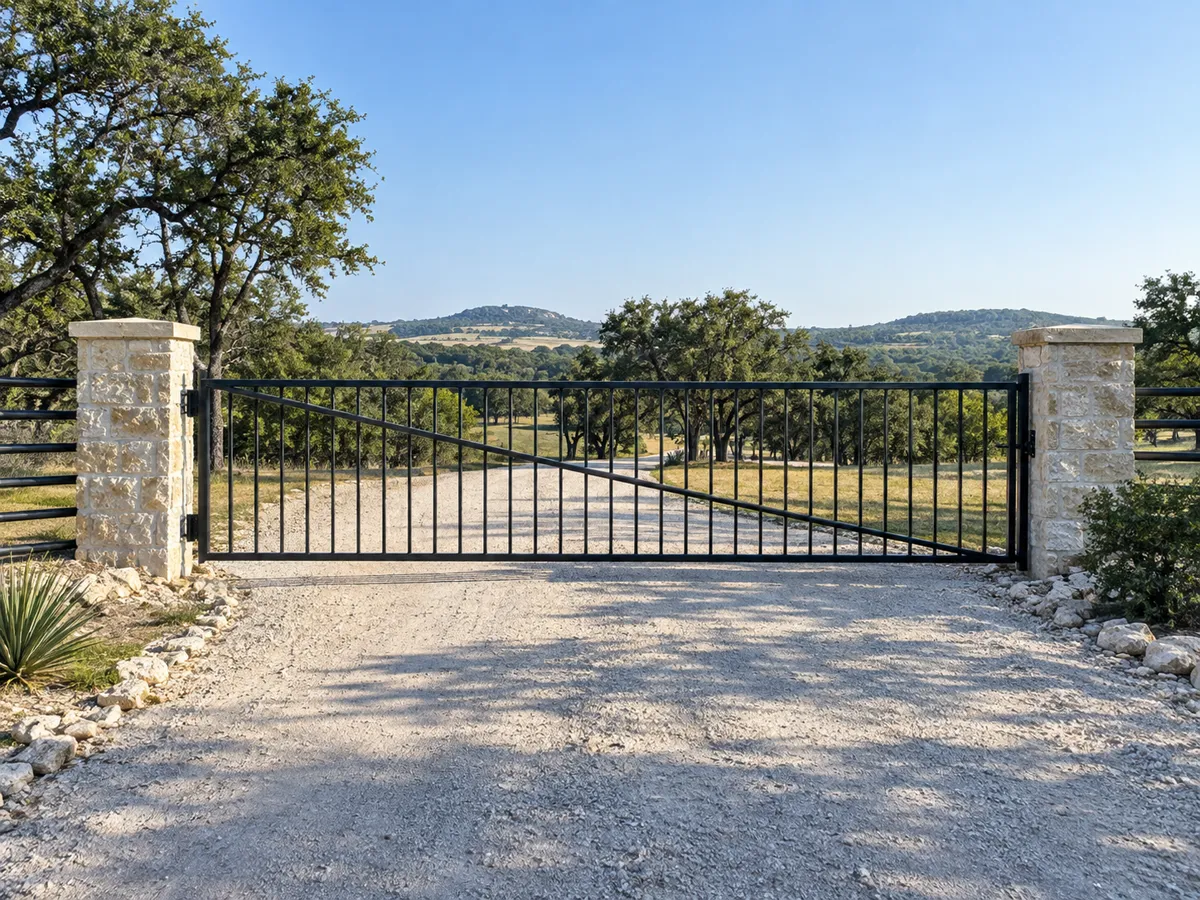
The most common swap here is a wood or chain link gate replaced by a welded steel gate. It costs more up front and asks for far less afterward.
The look is your call. You can choose flat or spear pickets, a solid lower panel for privacy or a fully open design. Many gates sold as wrought iron today are mild steel made to resemble hand-forged work, since true wrought iron stopped being made commercially in 1973, and we say which one you are getting.
Replacement is the cheapest moment to change how a gate works, because the opening is already clear and the old leaf is out of the way.
A new leaf can be built with the mounting plates and a conduit path an operator needs, so you can automate now or later without cutting into the finish. Power reaches the gate by trench or by solar, and we sort that out at the measure.
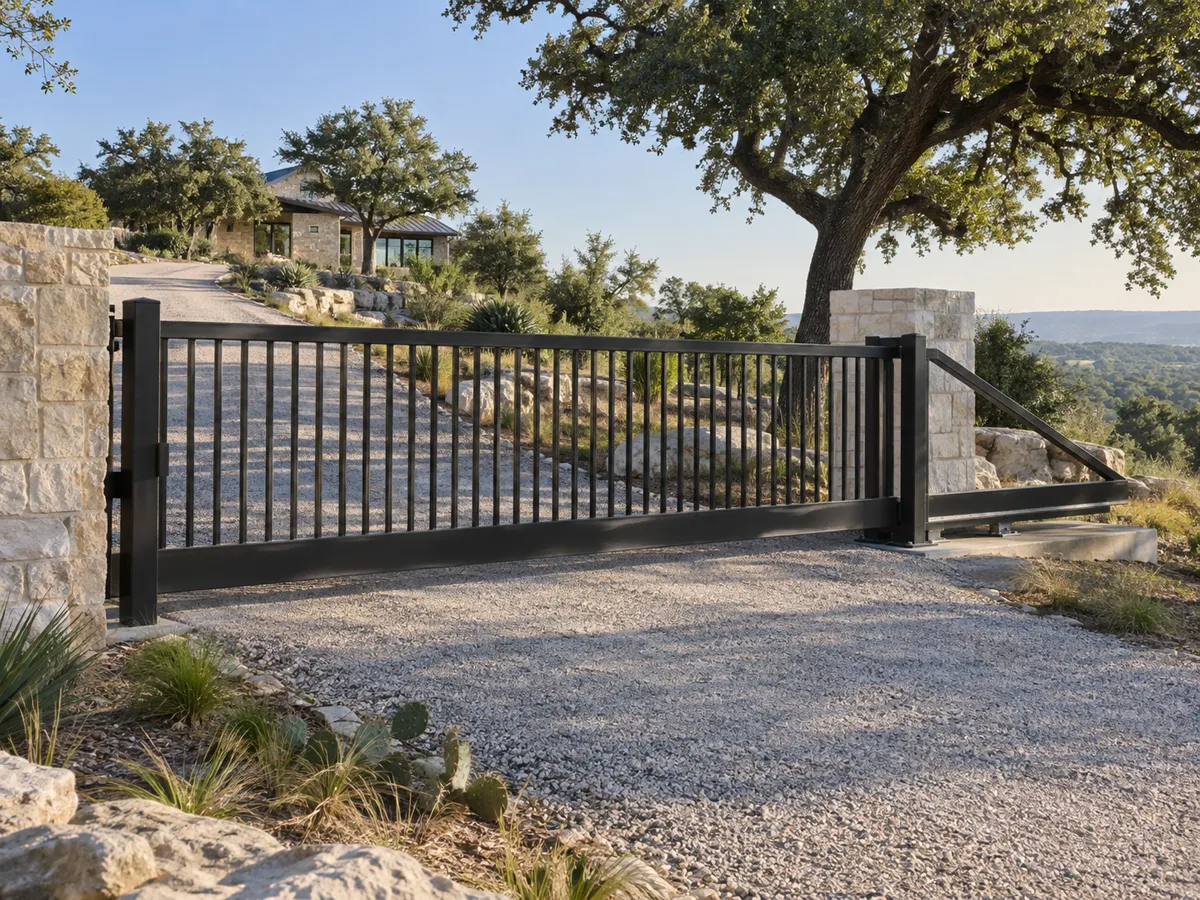
If your old gate swept across a drive that slopes, or across a short apron where cars park, a rolling gate on a track may suit the opening better. That depends on the room along the fence, the grade and the setback, and we measure all three before recommending it.
Once a gate moves on its own, photo eyes, loop detectors and edge sensors matter. We include them in the drawing so nobody is surprised by them on the quote.
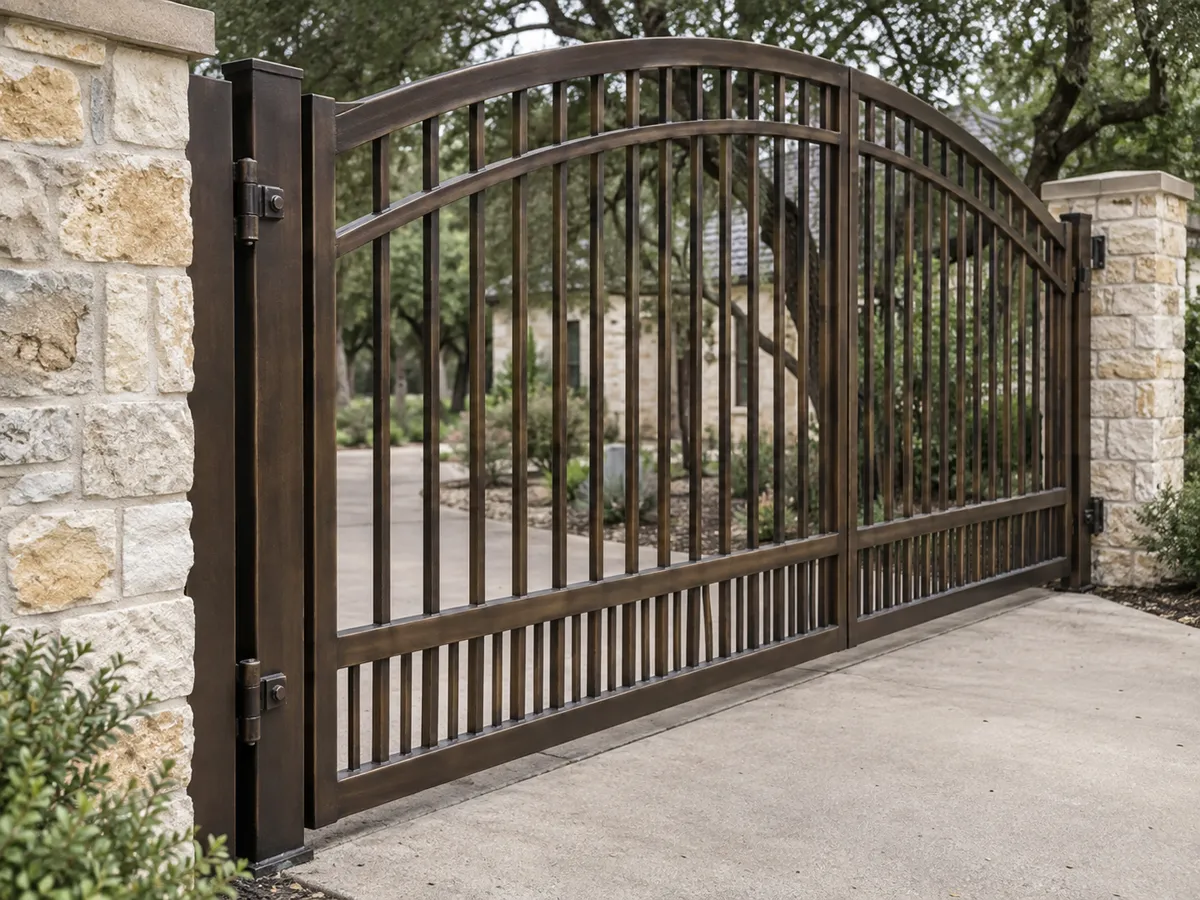
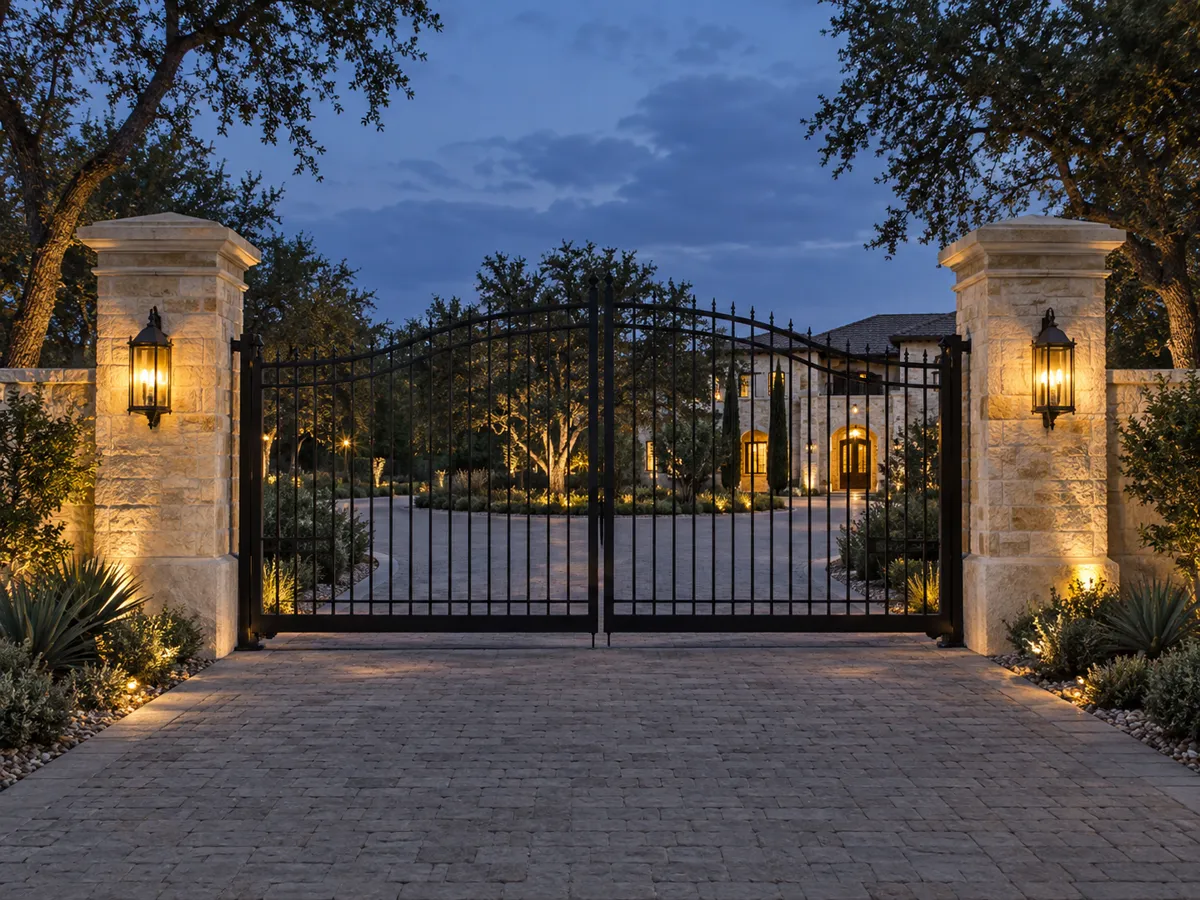
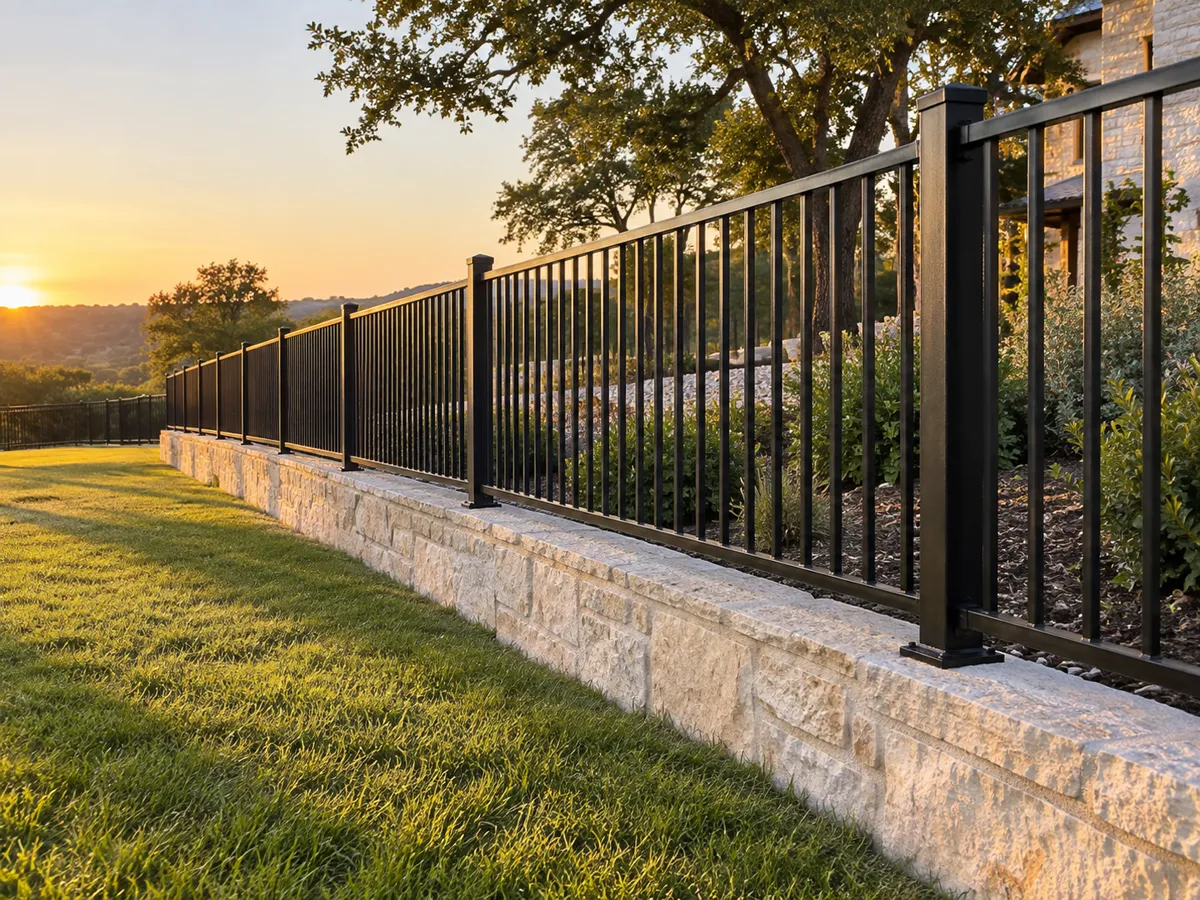
A new gate should look like it belongs to the property. We photograph and measure your existing pickets, rails and posts, then draw the replacement to match their spacing, height and color.
Rules can shape the swap too. Lakeway requires a flat top on iron fences and gates, and Sunset Valley bars spiked elements above the top rail. Rollingwood's code says a driveway gate must let a car stop off the street and open parallel to it or away from it. In a POA or HOA community, an architectural review usually comes before any work starts, and the owner is normally the applicant. We supply the drawing, dimensions and finish color the committee wants, and we check the job against the current code at quote time, because these rules change.
In Texas, an HOA may require a driveway gate to sit at least 10 feet back from the right-of-way under SB 711, in force since September 1, 2025, and we mark that on the drawing where it applies.
We do not publish a set figure here, because two replacements of the same width can differ widely in what they involve. Here is what moves the price of a replacement:
Any figure you see for a project like this is an estimate, subject to change, and your written quote sets the final price after we measure the opening and check the posts. The measure is free.
The process
Four steps, and nothing is fabricated until you have signed off on the drawings and the price.
We measure the opening, the slope and where power can reach, and talk through style, automation and access.
You get scaled drawings for your approval and for any HOA or city review, with one written price.
Steel is cut and welded to the approved drawings, then galvanized, powder coated or both.
Columns and posts set, gate hung, operator set up to UL 325 and every safety device tested with you.
Questions
If only a latch, hinge or picket has failed, a repair usually makes sense. If the frame is rotted, rusted through or bent, replacement is the better answer. We tell you which at the free measure.
Often yes, if they are plumb and their footings are sound. A steel leaf can weigh more than wood, so we check each post and say if one needs a heavier footing before it carries the new gate.
If the operator still works and suits the weight of the new leaf, we remount it and set it up again to UL 325. If it is near the end of its life, we explain that before you commit.
Yes. We build the new leaf with mounting plates and a conduit path, and we plan the power supply, whether trenched or solar. You can automate right away or add the operator later.
It depends on width, metal, finish, posts and whether the gate will be automated, so any range is an estimate. Your written quote sets the final price, and the measure that produces it is free.
Most associations in Travis County want a review, and the owner is usually the applicant. We provide the drawing, dimensions and finish color, and revise the drawing if the committee asks for changes.
Yes. We measure your pickets, rails and posts at the visit and draw the replacement to match their spacing, height and color.
We work across Travis County, including Austin, Rollingwood, West Lake Hills, Sunset Valley, Shady Hollow, Barton Creek, Lost Creek, Steiner Ranch, The Hills, Lakeway and Volente.
Yes. Each replacement gate we build carries a written warranty, and you receive it with the quote so you can read it first.
Free on-site measure across Austin and the west side. We call you back to set a time.
Calls only, we do not receive text messages.