Skip to content

Gate Maintenance Contracts in Austin, Scheduled and Documented

Austin Metal Gates offers gate maintenance contracts in Austin, TX, and is a trusted Travis County specialist in keeping automated entrances in order, specializing in scheduled operator servicing, safety device testing and UL 325 inspections of existing installations. We offer planned visits for HOA entrances and service programs for commercial slide gates.

  • Free on-site measure
  • Shop drawings you approve
  • Operators set up to UL 325
  • One written price

Request a free site visit

Or call (512) 503-9203. Calls only, we do not receive text messages.

About our gate maintenance & service contracts

Our team provides a written condition report after every visit, delivering fewer surprises for a board and cleaner records for a facility manager, for both residential and commercial projects. Because we fabricate and weld gates in our own shop, the technician checking your hinges, rollers and welds knows how the leaf was built and what wear on it means.

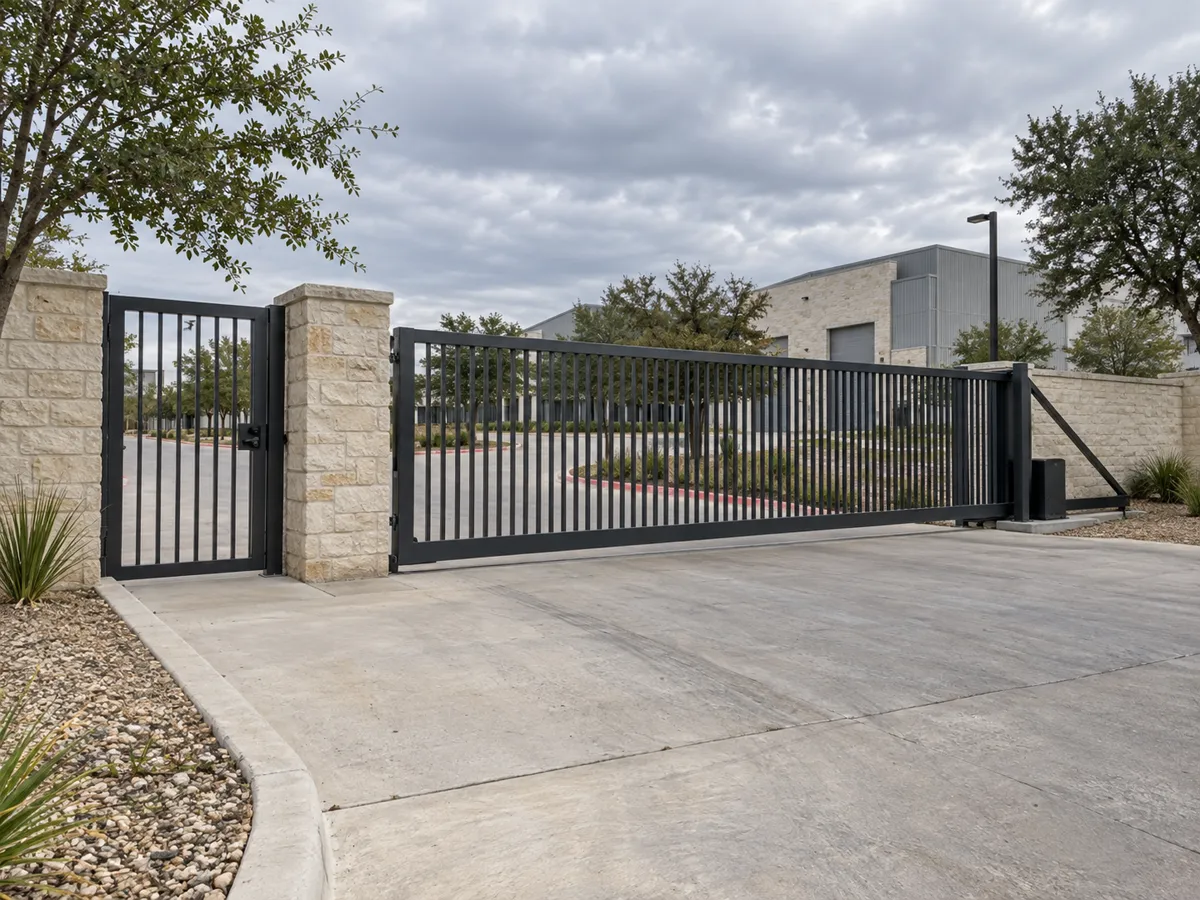
From cleaning and gapping a photo eye so it sees across the lane to a full inspection program covering operators, loops, fire access hardware and finish across every gate a property owns, our team handles every detail. Serving Austin, Barton Creek, Rollingwood and Volente, we book each visit on the calendar well before it is due.

Why Austin Metal Gates

How We Work

No stock panels cut down to fit, and no handoffs. The crew that measures your opening builds and installs the gate.

Measured on siteThe opening, the slope and the ground, measured where the gate will hang
Shop drawings firstYou approve the drawings and finish before any steel is cut
Welded in our own shopFrames fabricated and finished to your drawings, not ordered from a catalogue
Set up to UL 325Every operator installed with its safety devices tested before we leave

What a Scheduled Gate Maintenance Contract Covers

Preventive maintenance is a routine of periodic inspection that catches problems while they are small. The alternative, waiting for a gate to stop, is almost always dearer, because a failed part damages the parts around it and a stuck entrance costs a property in complaints and lost access. A contract puts the inspection on a calendar instead of on someone's memory.

This page is for HOA and POA boards, community and apartment managers, and facility managers responsible for automated gates. Every visit is booked in advance: the contract is scheduled care, not an on-call arrangement. Each visit covers:

  • Operator: drive, gearbox or hydraulics, limit settings, clutch or force adjustment, and control board condition.
  • Safety devices: photo eyes, contact edges and loops tested one by one, and monitoring confirmed.
  • Hardware: hinges, roller trucks, guide wheels, tracks, latches and stops.
  • Access control: readers, keypads, call boxes and the controller that opens the gate.
  • Fire access and backup power: the key switch or access box, the manual release and any backup power source.
  • Structure and finish: posts, welds, frame alignment, galvanizing and powder coat.

Anything that needs more than adjustment is written up with a quote, so the board or owner decides on it and it is scheduled like the rest of the program.

UL 325 and ASTM F2200 Inspection of Gates Already Installed

Many gates around Austin were installed before the current standards took their present form. An inspection compares what is on site with what UL 325 and ASTM F2200 ask of a gate today, and tells the owner plainly where the gaps are.

Operator and entrapment protection

UL 325 requires protection at every entrapment zone: inherent sensing in the operator (Type A), non-contact photo eyes (Type B1) or contact edges (Type B2). Since 2016 those external devices must be monitored, so the operator confirms each one is connected and working before the gate moves. We check the operator's usage class against the site as well. A Class I residential operator on an apartment entrance serving five or more units is on the wrong side of the line, since that site sits in Class II.

Gate construction

ASTM F2200 governs the gate itself. We look for guards over slide gate rollers, covers at pinch points, and openings in the leaf and the fence beside it small enough (2.25 inches where the standard applies) that a hand cannot reach through to moving parts. Warning signs should be posted on both sides.

Pedestrian use

People are not meant to walk through a vehicular gate. If residents or staff are cutting through the vehicle opening, the report says so and recommends a separate pedestrian gate. The report records what we found and why it matters. It does not claim an older gate is illegal. It gives the owner the facts to plan upgrades on their own schedule.

Fire Access Hardware and Backup Power Checks

Under the International Fire Code, a security gate across a fire apparatus access road must have an approved means of emergency operation, and that means must be kept operational at all times. Where Appendix D is adopted, gate components are to be kept in operative condition, and an electric gate must be openable by fire department personnel. A fire access device that has never been tested since installation is the kind of thing a contract exists to catch.

  • Key switches and access boxes: we confirm the device is present, mounted where the district wants it and actually opens the gate. In Lakeway a coded development gate owes a key switch for Travis County ESD No. 6. In West Lake Hills every lockable gate carries a security access box approved by ESD 9.
  • Manual release: we operate it, because a release that has seized is discovered at the worst moment.
  • Backup power: West Lake Hills requires electric driveway gates to carry an emergency power source as part of the system. Where a gate has one, we test that it carries the gate through a cycle.
  • Police and resident codes: where a city requires codes on file, as Lakeway does with its police department, we remind the manager to confirm the codes are current after any change.

Service Records Built for HOA Boards and Facility Managers

A board plans major replacements through its reserve fund, and a reserve plan is only as good as its information about the assets. A gate that is documented visit by visit can be budgeted years ahead instead of turning into a special assessment.

What each report carries

The date, the gate and the operator model and usage class. Each safety device tested and the result. Hardware wear, with photos where something is changing. Fire access device and backup power results. Recommended work, graded by urgency, each with its own quote.

Why the record matters

Maintenance records exist so deterioration is seen before failure. A roller truck wearing on one side, an edge that trips late, a powder coat breaking down at a weld: each is cheap to plan for when it shows up in three reports in a row. For a board, the file is also the answer when an owner asks what has been done about the entrance. Access control logs, which record granted and denied attempts, can be exported with the report if your system supports it, so the board sees how the entrance is actually used.

Choosing a Visit Interval: Planned or Condition Based

There are two ways to decide how often a gate is serviced. Planned maintenance happens at fixed intervals whatever the condition. Condition-based maintenance watches the equipment and acts when it starts to change. Most contracts use both.

The interval is set at the first inspection, from the gate's traffic, its usage class, its age, its exposure and what we find. A busy apartment entrance that cycles all day earns more visits than a ranch-style gate at a quiet commercial lot. Austin's long, hot summers bear on grease, seals, batteries and electronics in an operator housing, so we time a visit ahead of the heat. After a year of reports the interval is reviewed and adjusted to what the gate has actually shown.

What Drives the Price of a Gate Maintenance Contract

We do not publish a contract rate. The quote is built from these drivers.

  • Number of gates and operators: each operator, lane and pedestrian gate is a line on the checklist.
  • Gate type: swing, slide, cantilever or barrier arm, each with its own hardware.
  • Usage and duty cycle: high-traffic entrances need more frequent visits.
  • Visit interval: the number of visits a year.
  • Safety devices: the count of photo eyes, edges and loops to test.
  • Access control and call boxes: whether the readers and panels are included.
  • Fire access and backup power: testing key switches, access boxes and batteries.
  • Age and condition: older installations take longer to inspect and document.
  • Reporting: standard reports or board-format records with photos.

The first step is a free inspection walk. Call and we will set a time with the manager.

The process

From Site Visit to a Gate That Runs

Four steps, and nothing is fabricated until you have signed off on the drawings and the price.

  1. Free site visit

    We measure the opening, the slope and where power can reach, and talk through style, automation and access.

  2. Drawings and a written price

    You get scaled drawings for your approval and for any HOA or city review, with one written price.

  3. Fabricated in our shop

    Steel is cut and welded to the approved drawings, then galvanized, powder coated or both.

  4. Installed and tested

    Columns and posts set, gate hung, operator set up to UL 325 and every safety device tested with you.

More of What We Build

Questions

Gate Maintenance & Service Contracts: Common Questions

How is a maintenance contract priced?

From a walk of every gate on the property. The number of gates and operators, their type and traffic, the safety devices, access control, fire access hardware and the visit interval set the quote.

Do you service gates you did not install?

Yes. The first visit is a full inspection against UL 325 and ASTM F2200, and the report tells you what you have before the contract starts.

Is this an on-call arrangement for a broken gate?

No. It is scheduled maintenance, with every visit booked in advance. Work found during a visit is quoted and scheduled.

How often will you visit?

It depends on traffic, usage class, age and exposure. We set the interval at the first inspection and review it after a year of reports.

Will the fire department device be checked?

Yes. Key switches, access boxes and manual releases are tested on every visit, and backup power is run where the gate has it.

Can the reports go straight to our board?

Yes. We format them for a board packet, with each gate, each result and recommended work graded by urgency.

Do you cover properties outside Austin?

Yes, across Travis County, including Barton Creek, Rollingwood, Volente, Steiner Ranch and Lakeway.

Is maintenance work covered after a visit?

Work we carry out is covered by a written warranty, stated in the contract.

What happens at the first inspection?

We walk every gate with the manager, test each operator and safety device, check fire access hardware and finish, and send a written report with a contract proposal.

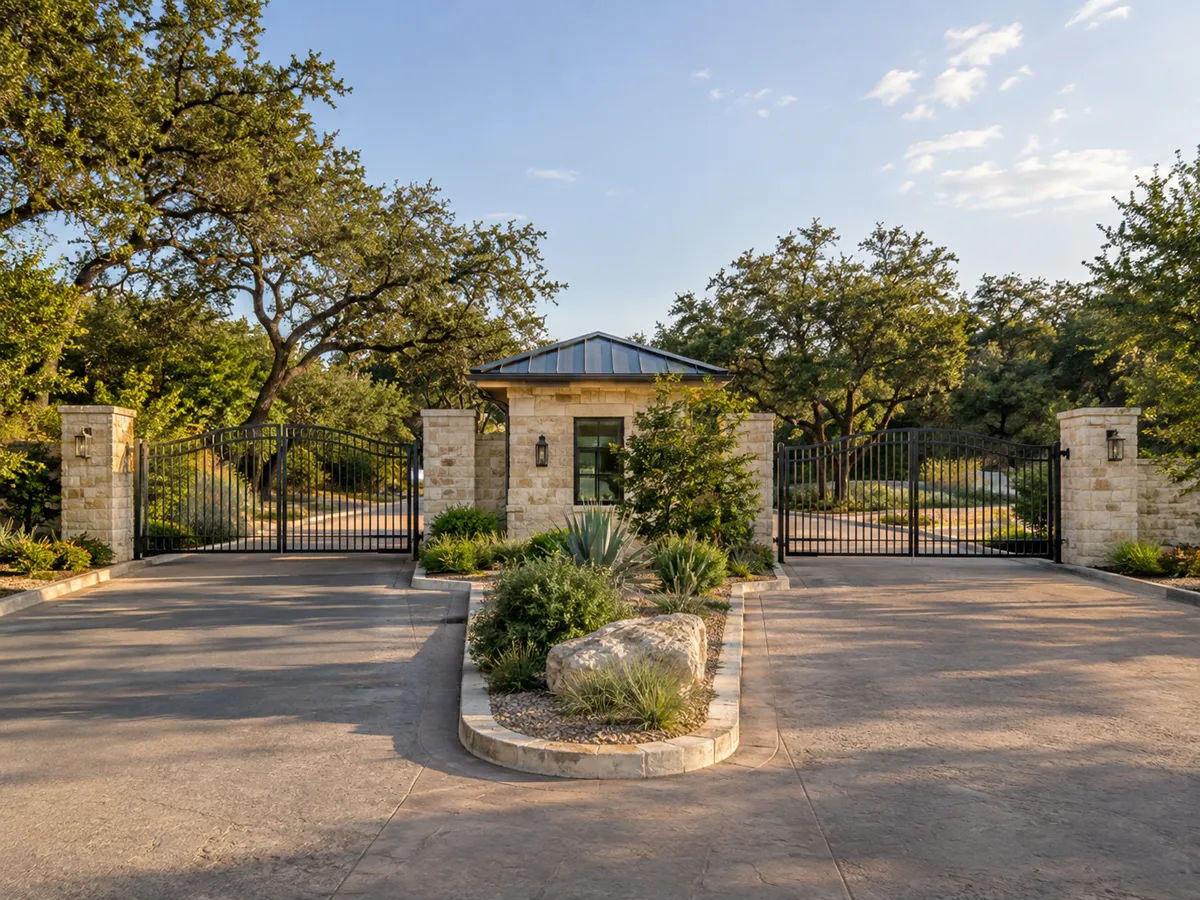
Free site visit

Talk to us about gate maintenance & service contracts

Free on-site measure across Austin and the west side. We call you back to set a time.

Call to Discuss Scope

Calls only, we do not receive text messages.

Call (512) 503-9203