
Metal Gates in Austin, Drawn for Your Drive and Built in Our Shop
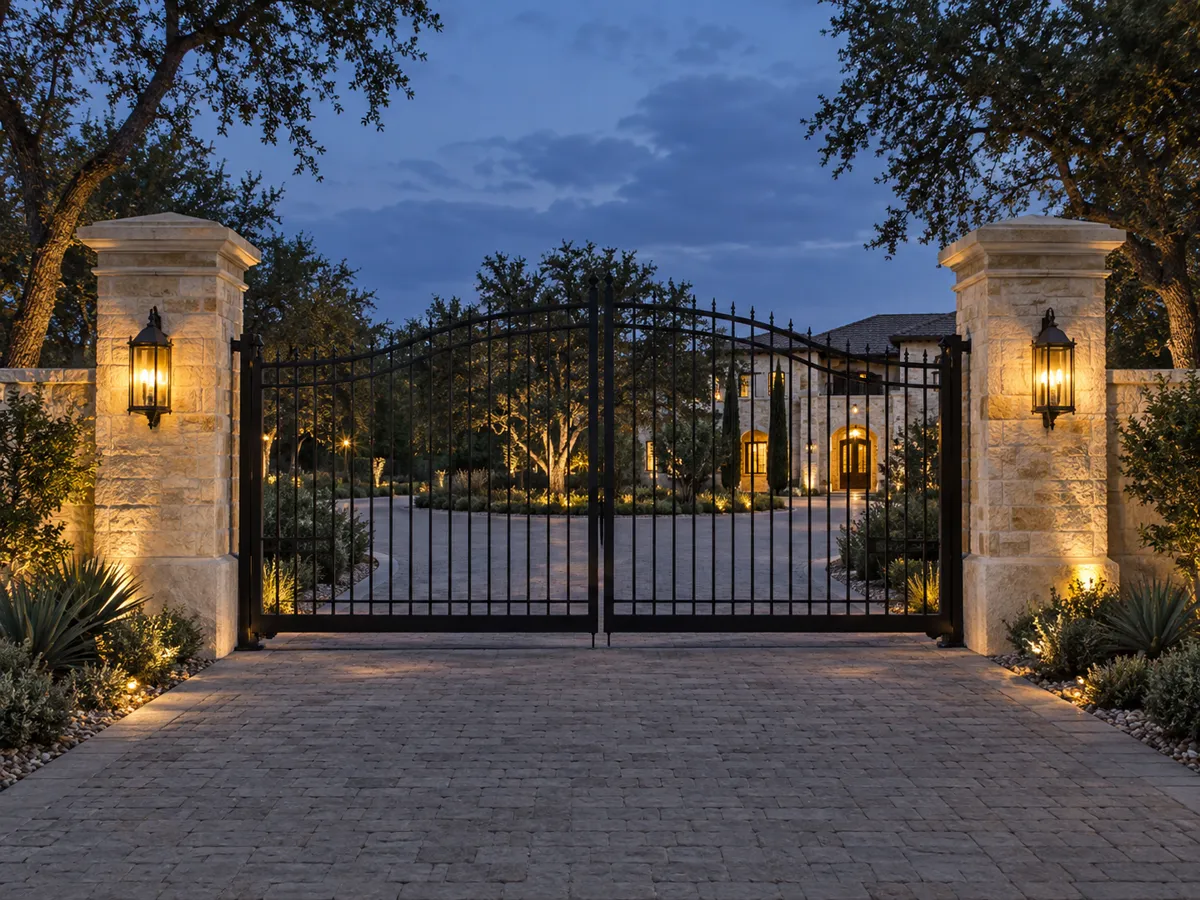
Austin Metal Gates builds metal gates in Austin, TX, and is Travis County's trusted specialist in custom ironwork for the front of a property, specializing in automatic driveway gates, estate entry gates with masonry columns and wrought iron fencing. We offer gate access control with keypads and intercoms, and solar operators for drives with no power run.
- Free on-site measure
- Shop drawings you approve
- Operators set up to UL 325
- One written price
Gates, Fencing and Ironwork
Tell Us About the Opening
A free on-site measure, drawings you approve, and one written price.
Calls only, we do not receive text messages.
Metal gates, built for the opening you have
Our team provides iron railings, balconies and entry doors, delivering a finished, secure frontage and code-minded entry systems for both residential and commercial projects. The same crew that measures your opening and its slope installs the finished work, and nothing is cut until you approve the shop drawings; we fabricate and weld in our own shop, set every operator up to UL 325 and back the job with a written warranty.
From the photo eyes and contact edges that stop a closing leaf to a complete entry of columns, operator, intercom and a matching fence line, our team handles every detail. Serving Austin, West Lake Hills, Rollingwood and Barton Creek, we plan each entry around the street it faces and the rules that apply at that address.
Why Austin Metal Gates
How We Work
No stock panels cut down to fit, and no handoffs. The crew that measures your opening builds and installs the gate.
Iron Gates and Custom Gates for Every Kind of Entry
Most calls start with a driveway. A gate across the drive is usually the largest single piece of steel on a property, and it sets the tone for everything a visitor sees from the street. We build it to your opening, your slope and the style of the house, then carry the same design into the fence, the pedestrian gate and the ironwork closer to the front door.
Here is the range of work, grouped the way owners tend to think about it:
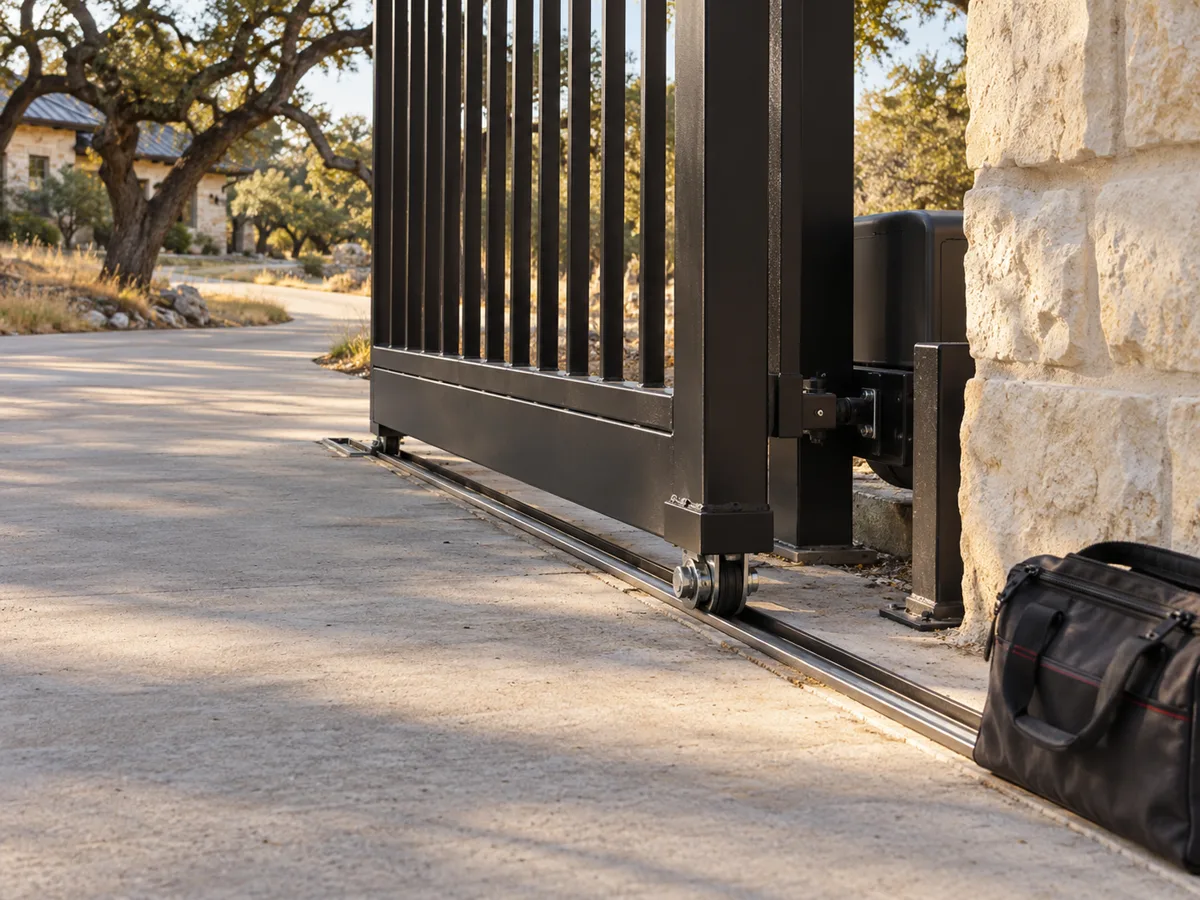
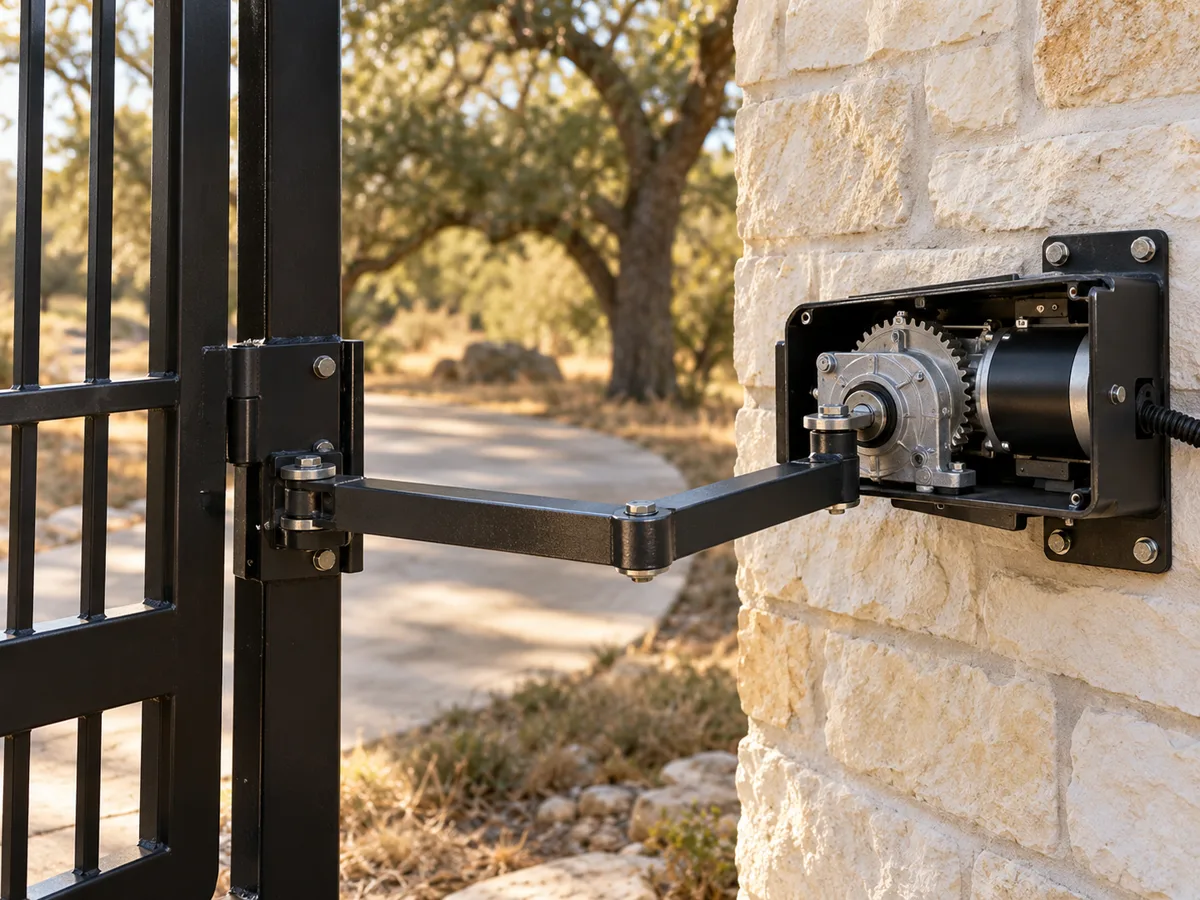
- Driveway gates: dual swing, single swing, sliding and cantilever gates, built custom to the opening rather than cut down from a stock panel.
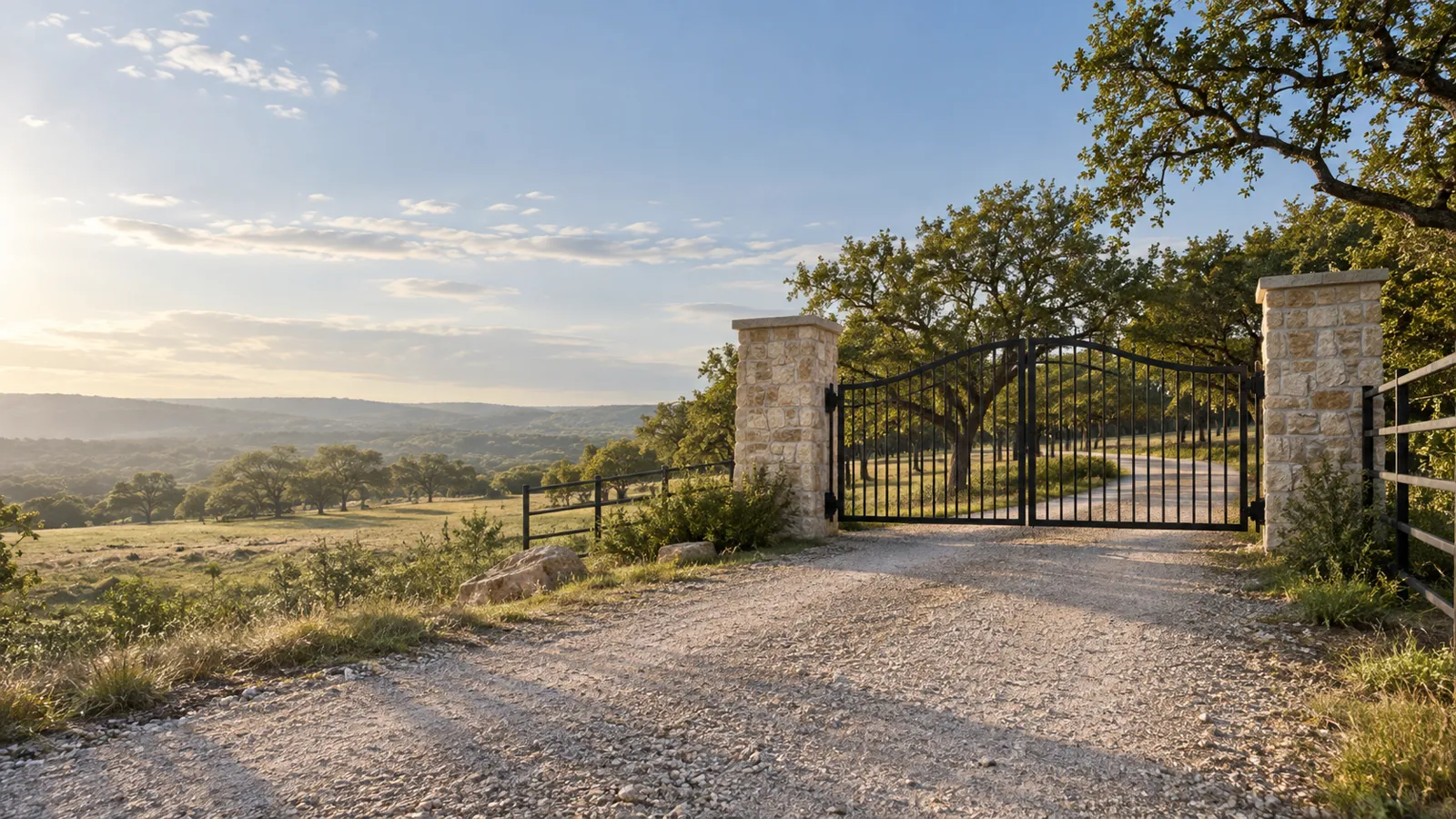
- Estate and ranch entries: columns, arched tops and wide entries for long private drives and acreage.
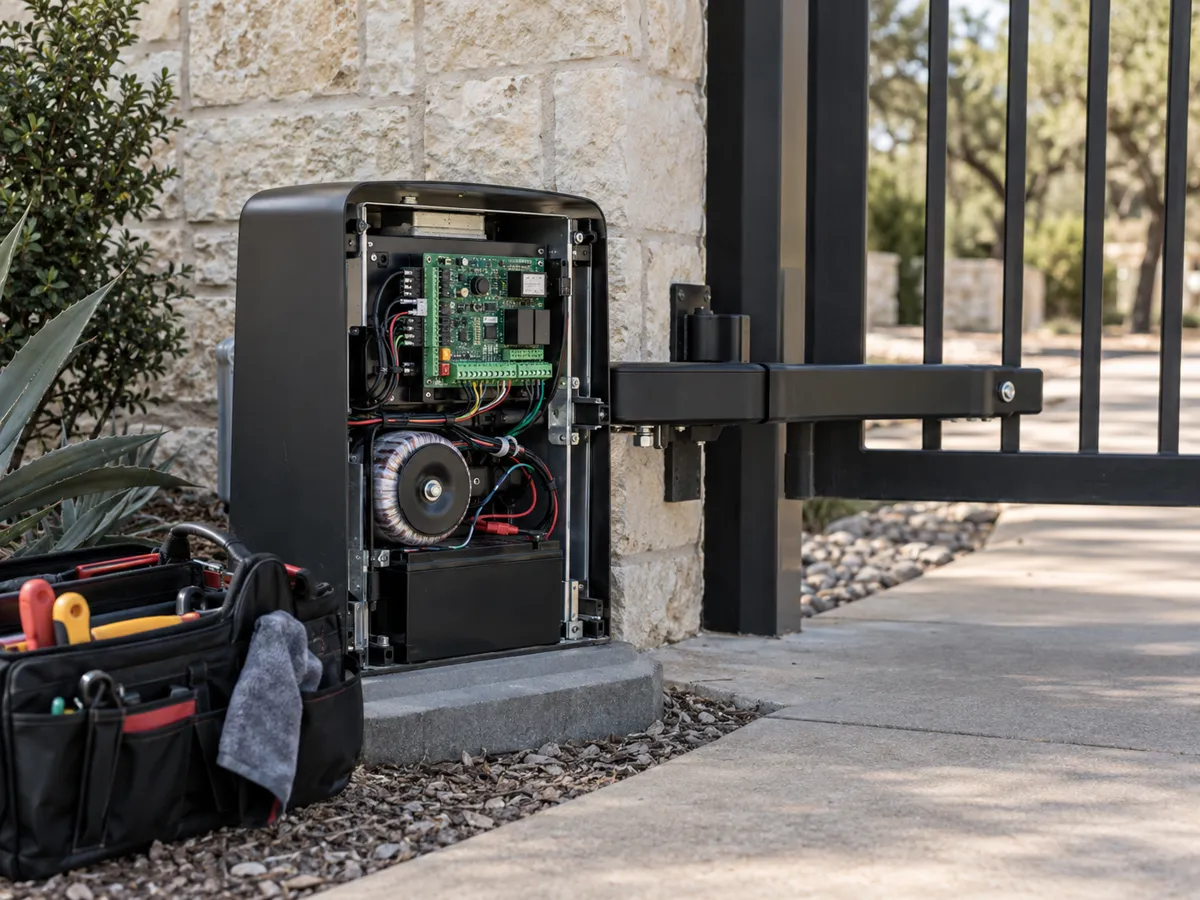
- Automation: operators for swing and slide gates, solar operators where power is hard to reach, and retrofits that bring an older opener up to UL 325.
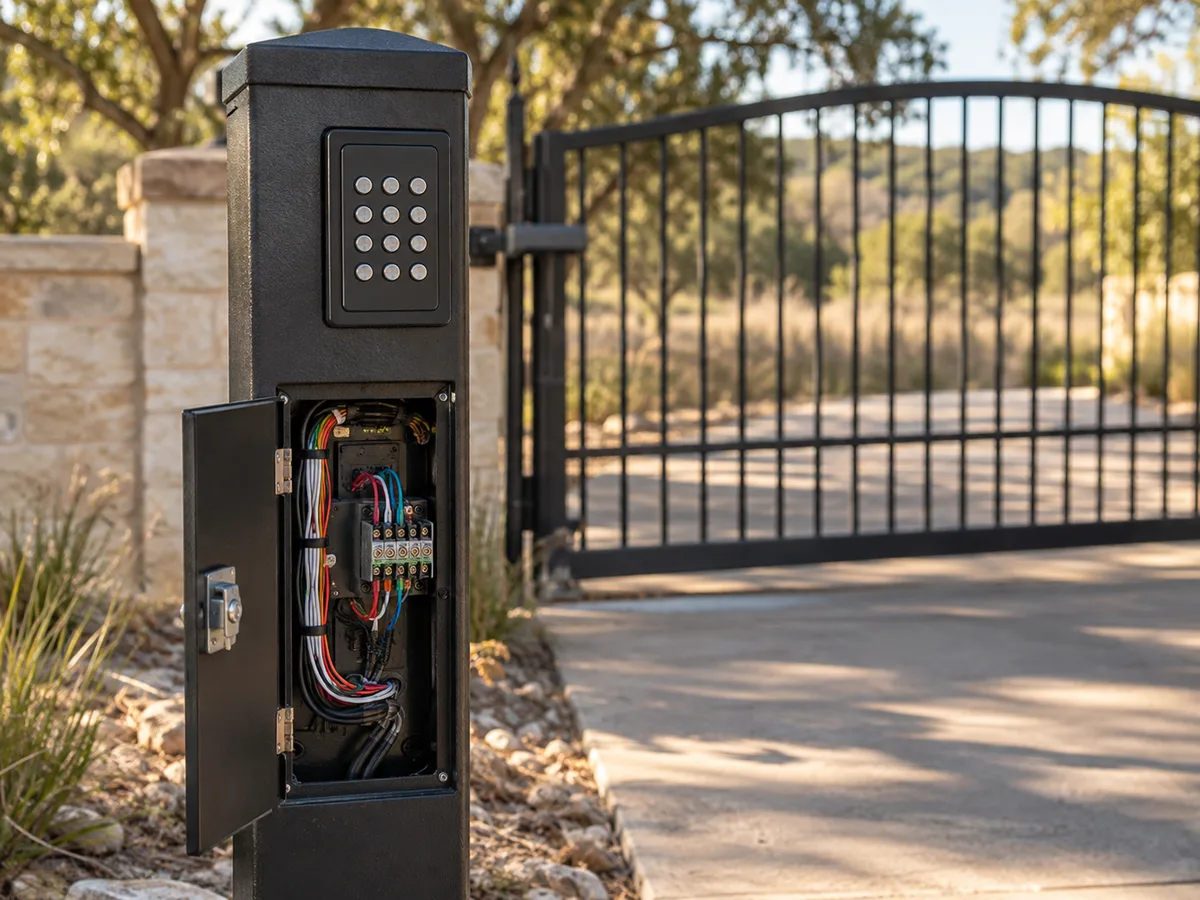
- Access control: keypads, intercoms, remotes and fob or card readers for residents, guests and deliveries.
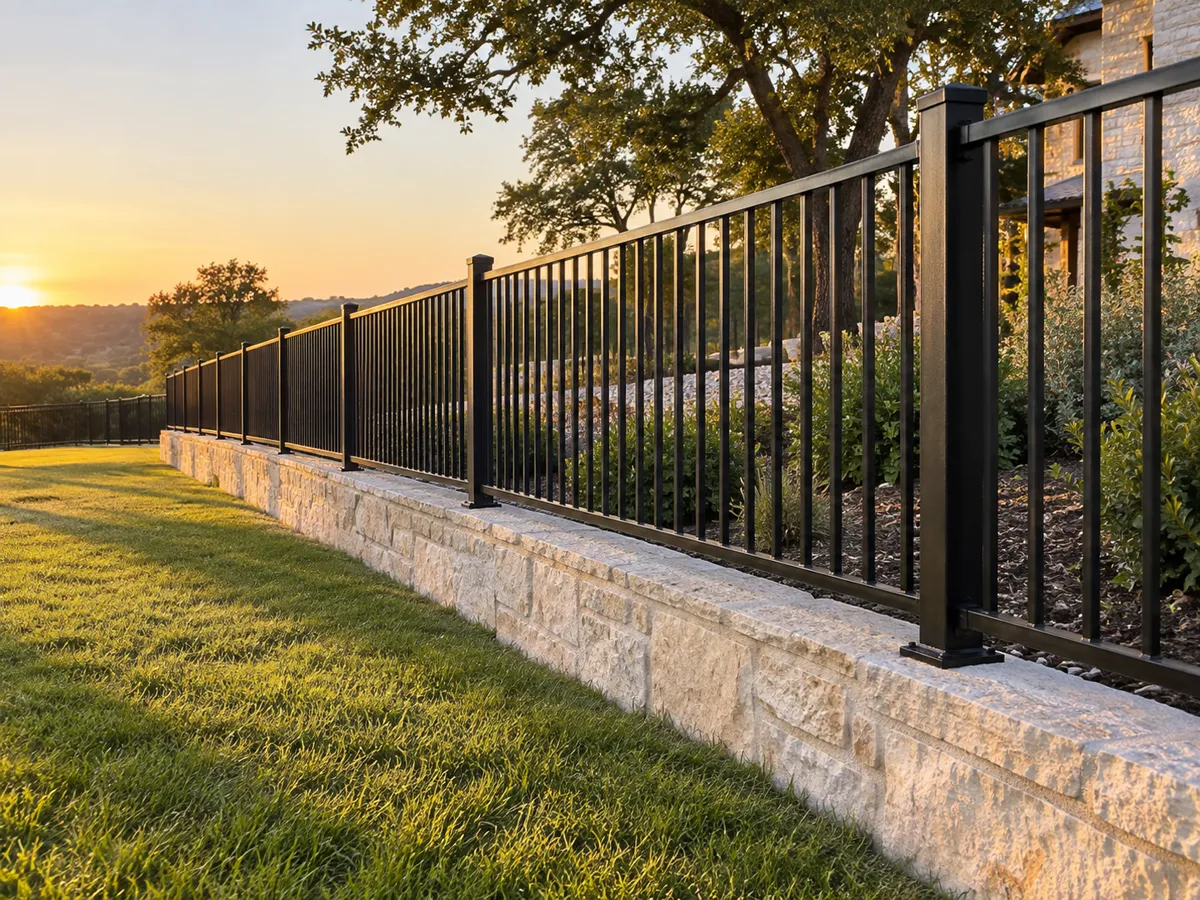
- Fencing: wrought iron style fencing, pool safety fencing, and commercial security and perimeter fencing.
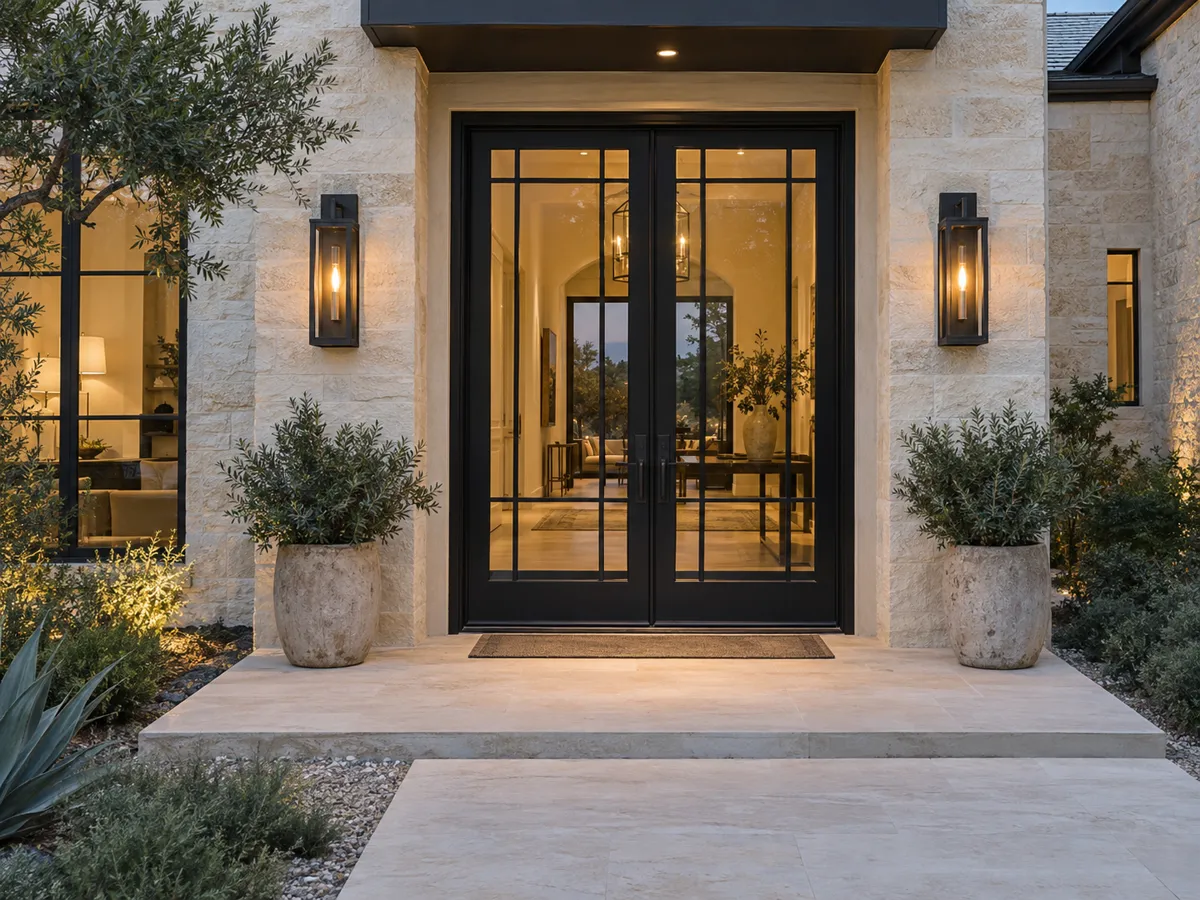
- Architectural ironwork: railings, straight and spiral staircases, balconies and Juliet balconies, and custom iron entry doors.
- Commercial and community entries: slide gate systems, HOA and gated community entrances, and maintenance contracts for gates that cycle all day.
Each of those services has its own page with the specifics. This page is the overview, and the right place to start when a job touches more than one of them.
Steel, True Wrought Iron and the Finish That Keeps Rust Off
Nearly every gate, fence and railing sold as wrought iron today is really mild steel. True wrought iron is an almost pure iron with a very low carbon content and thousands of fine slag fibres running through it, and large-scale production ended in 1973 when the Atlas Forge in Bolton, England, the last works of its kind, shut down. What little is still made goes to heritage restoration. So when we quote wrought iron work, we mean the look: forged-style pickets, scrolls, collars and finials, fabricated from steel that welds cleanly and is readily available.
Steel rusts, and the finish decides how long a gate stays looking new. Hot-dip galvanizing immerses the fabricated steel in molten zinc at roughly 450 degrees Celsius, bonding a zinc layer to the surface that weathers in place of the steel beneath it. Powder coating goes on as a dry powder, charged so it clings to the grounded part, then baked until it flows into a tough shell that resists chipping, scratching and fading better than liquid paint. Many owners choose both, zinc underneath and powder coat on top.
The weather here tests a finish from both ends. Austin summers frequently pass 95 degrees Fahrenheit, and winter still brings the odd ice storm, as Winter Storm Uri did in February 2021. A coating that only handles one of those is the wrong coating for an outdoor gate in Central Texas.
Automatic Gates, Access Control and UL 325 Safety
An automatic gate is a heavy moving machine at the edge of a road, and it answers to two separate standards. UL 325 covers the operator. It sorts gate openers into four classes, from Class I for homes of one to four families up to Class IV for restricted, guarded sites, and it requires at least two independent means of entrapment protection wherever a person could be caught. Photo eyes, contact edges and the operator's own force sensing can all count, and a monitored sensor that goes missing or fails keeps the operator from running at all.
ASTM F2200 covers the gate itself: openings kept small enough that a child cannot reach through, no protrusions on the bottom or leading edge that could snag, and a leaf balanced so it will not drift open or shut once disconnected from the operator. We build our frames to it, because a safe operator on a badly built gate is still a hazard.
Access control decides who the gate opens for. A keypad takes a PIN, a reader takes a fob or card, and an intercom or video intercom lets you see and speak to a visitor before letting them in. Community and business systems add a controller that logs every entry, so a manager can see who came through and when. A gate alone does not stop tailgating, which is why it works best as one layer alongside cameras and locks rather than as the whole security plan.
People on foot should never share the travel path of an automatic gate. Where residents or guests walk in, we add a separate pedestrian gate outside the operator's reach, which is what the standards call for.
What Metal Gates in Austin Cost, and What Moves the Number
We do not publish a price list. Two driveway gates of the same width can land a long way apart once the choices are made, so here is what actually moves a quote:
- Opening width and leaf count: one leaf or two, and how far each has to travel.
- Gate type: swing, slide or cantilever, which changes the hinges or rollers and how much clear ground the gate needs beside the drive.
- Slope and grade: a drive that climbs toward the house can rule out a swing leaf or call for a raked design.
- Material and weight: steel tube or heavier bar, decorative scrollwork, and the gauge of pickets and frame.
- Finish: galvanizing, powder coat, or both.
- Operator and duty cycle: a residential unit for a handful of cycles a day, or a commercial class operator built for constant use.
- Power at the gate: trenching a line from the house, or a solar operator with battery storage.
- Access control: keypad, intercom, video entry, and how many users the system has to manage.
- Safety devices: photo eyes and contact edges sized to the gate's entrapment zones.
- Columns and footings: masonry or steel columns, and what the digging meets in the limestone under western Austin.
- Approvals: HOA or POA architectural review, city permits where a code requires one, and any fire access hardware.
The honest number comes from a free on-site measure. We look at the opening, the slope, the ground and the power, and the written quote lists each of these choices so you can see exactly where the money goes.
The process
How a Gate Project Runs From First Call to Handover
Site visit and measure
The person who will lead the install measures the opening, the column or post positions, the fall of the drive and the distance to the street, and checks where power could come from.
Drawings and approvals
We draw the gate, columns and any fence to scale. You approve them, and if an association or a city needs a submittal, the same drawings go to them, so what gets approved is exactly what gets built.
Fabrication and finish
Steel is cut and welded in our shop only after the drawings are signed, then galvanized, powder coated or both.
Footings, install and setup
Columns and footings go in first. Then the leaves are hung, the operator is mounted and set up to UL 325, and every safety device is tested with the gate running before the crew leaves.
Handover
You get the remotes and codes, a walk through how to disconnect the operator and move the gate by hand, and the written warranty in your file.
Serving Austin and the Towns West of It
We work across Travis County, from central Austin out to the lake communities. The Balcones Escarpment runs through the area, and west of it the land rises into the rolling limestone hills of the Hill Country, which shapes how steep a drive is and what a column footing is dug into.
The bigger difference from town to town is the rulebook. Rollingwood, West Lake Hills, Sunset Valley, Lakeway and Volente each write their own fence and gate rules. Barton Creek, Steiner Ranch, Shady Hollow, Lost Creek and The Hills are governed largely by association architectural committees. Fire districts decide how an engine gets through a locked gate. Our locations page explains how those layers differ, and each town has a page of its own. Whatever the address, the job is checked against the current code or covenant when we quote it.
What we build
Gates, Fencing and Ironwork for the Whole Property
Twenty-seven services, from a single iron railing to a gated community entrance.
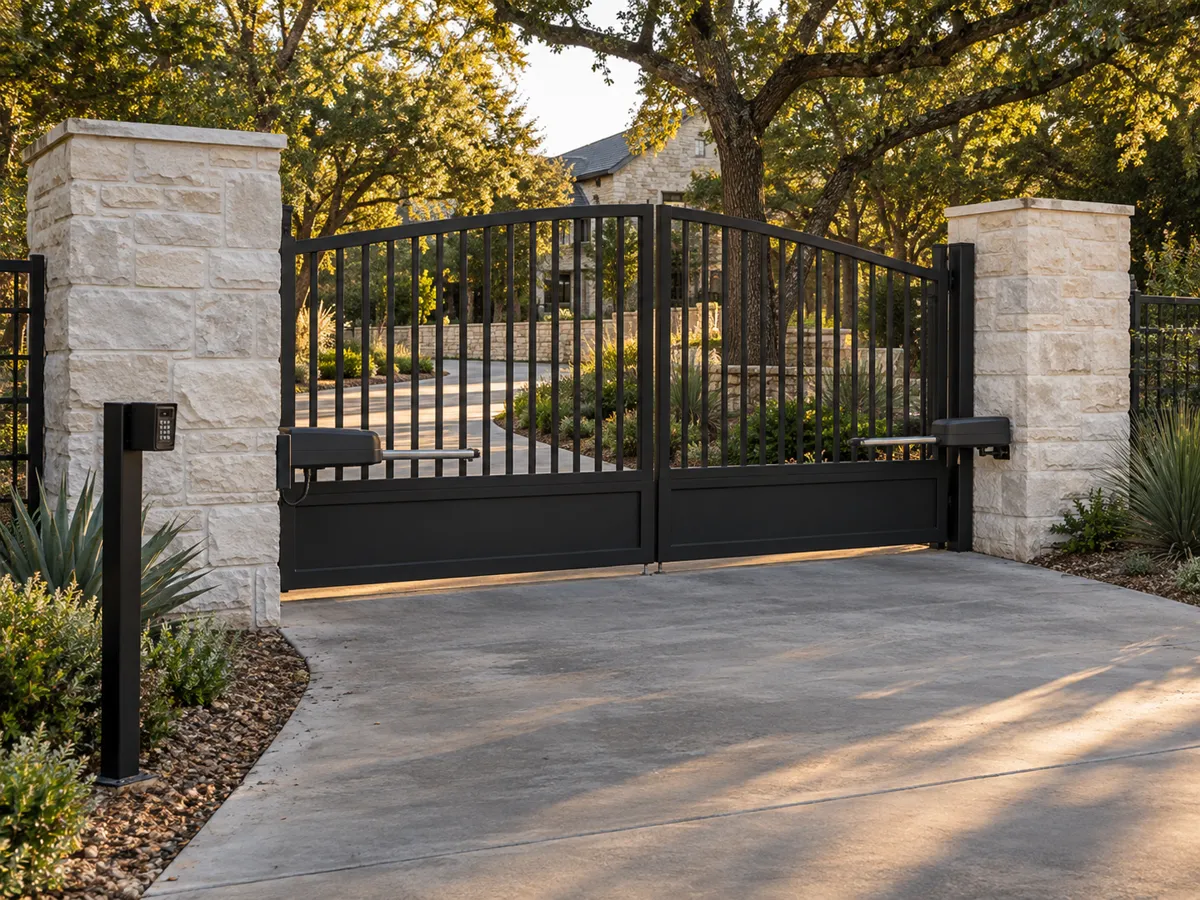 Automatic Driveway Gates
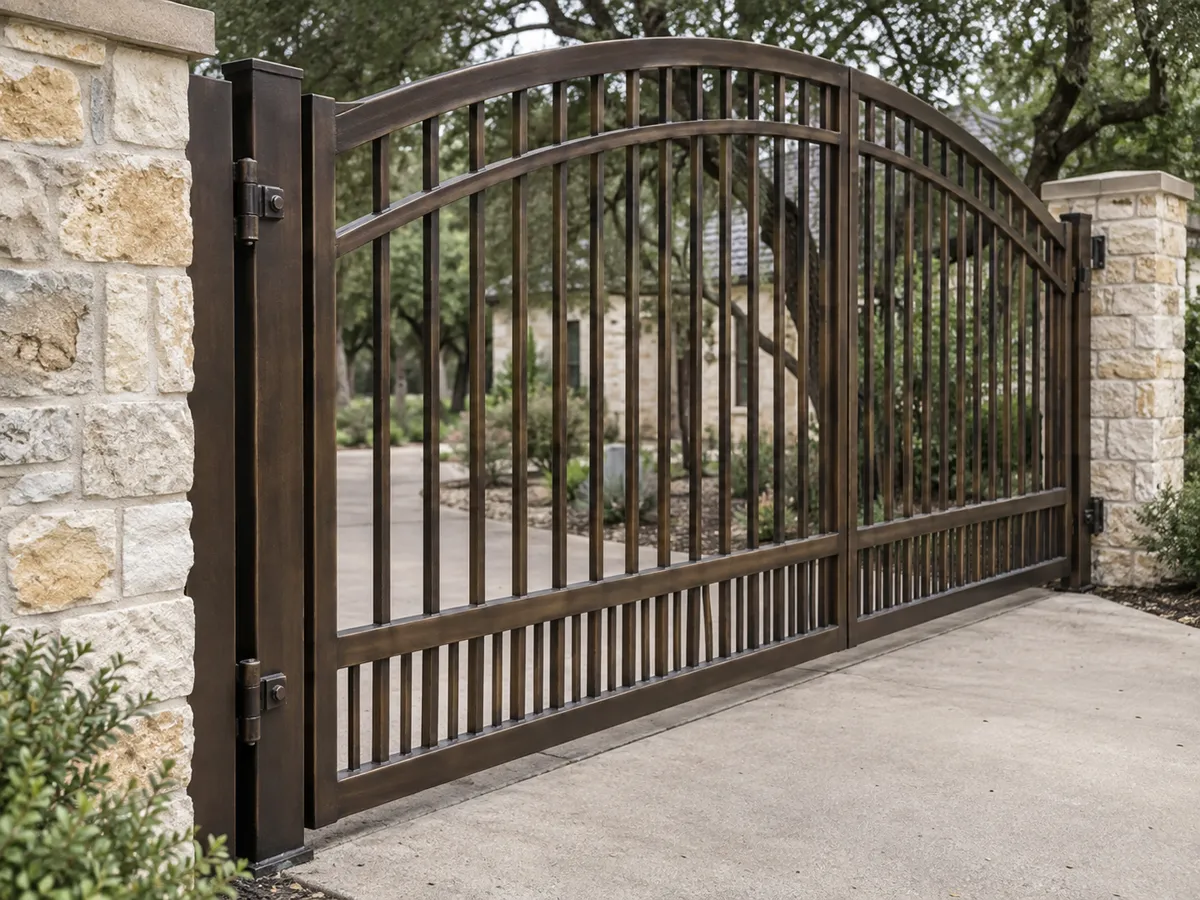 Custom Driveway Gate Fabrication
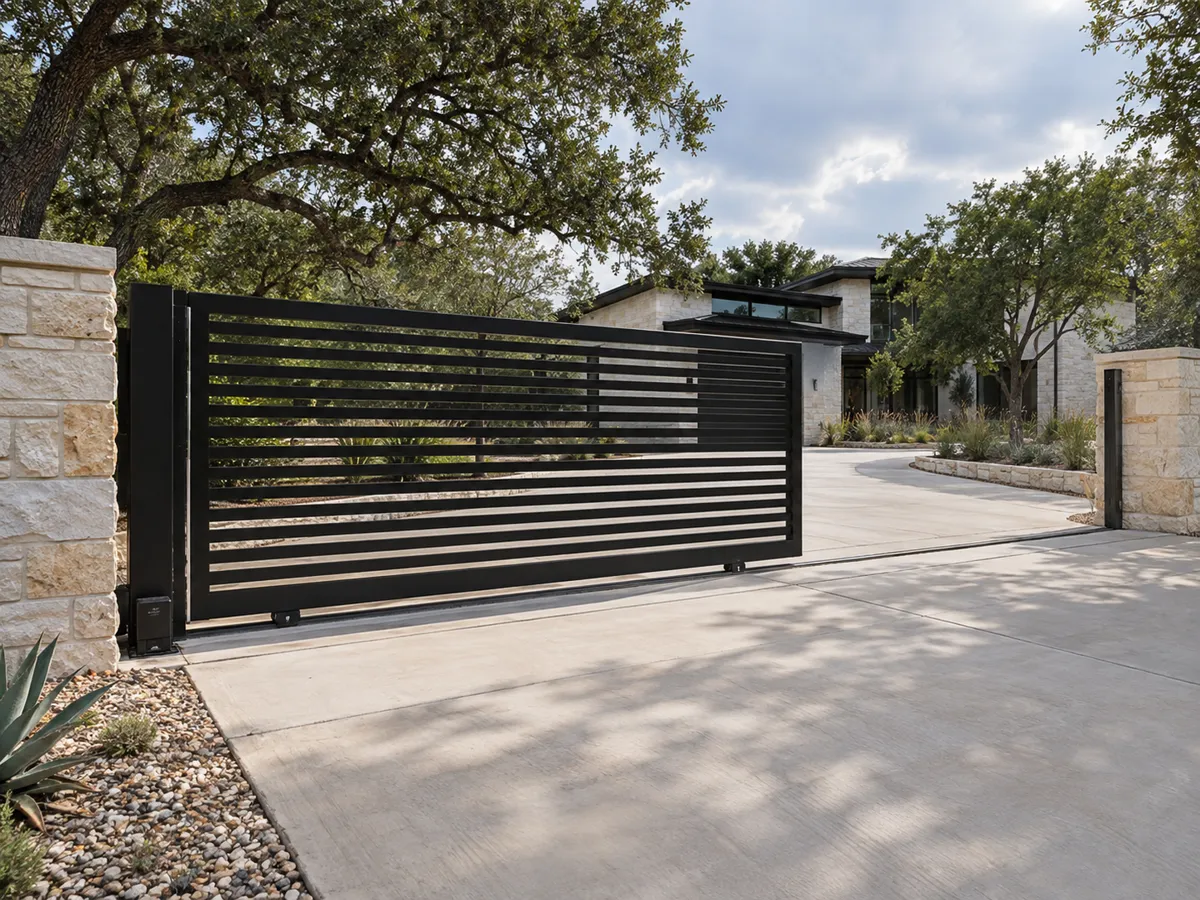 Sliding & Rolling Gates
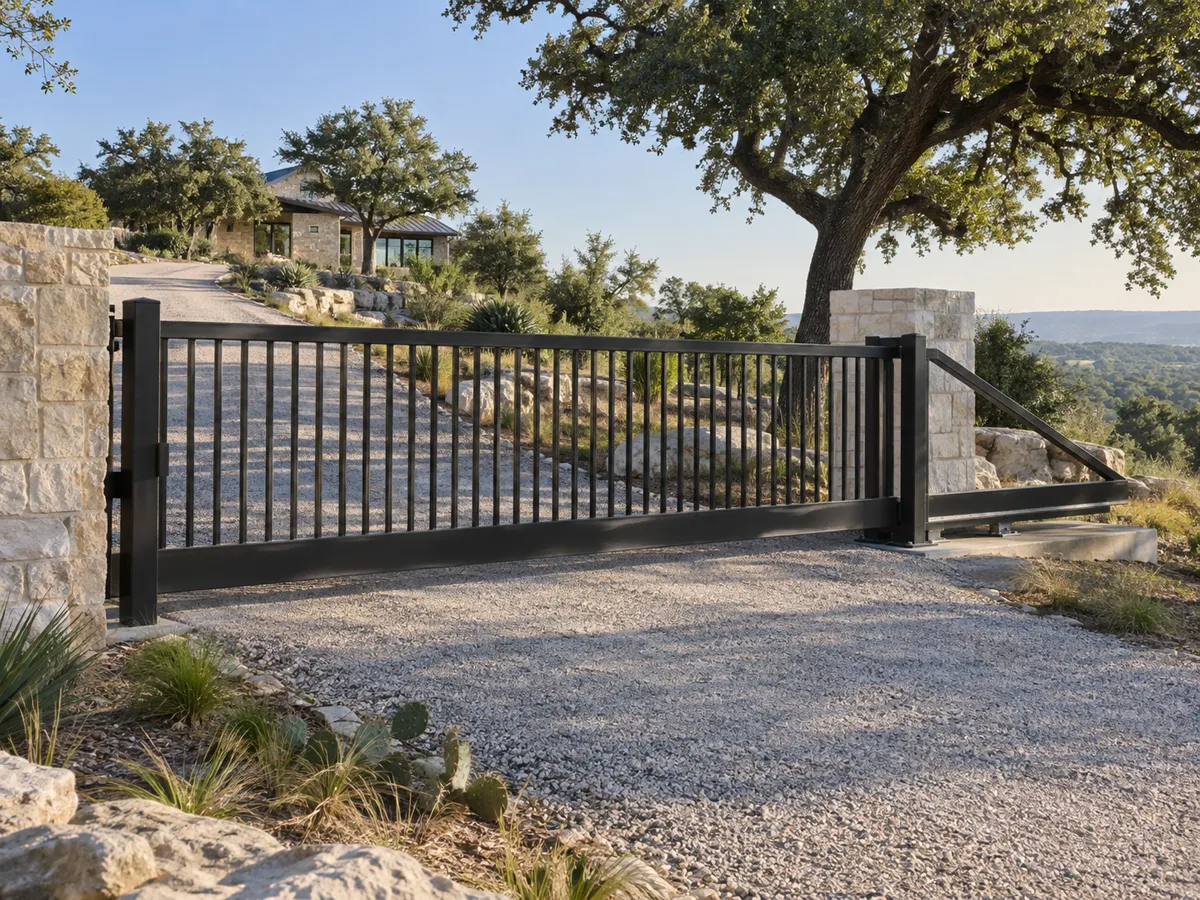 Cantilever Gates
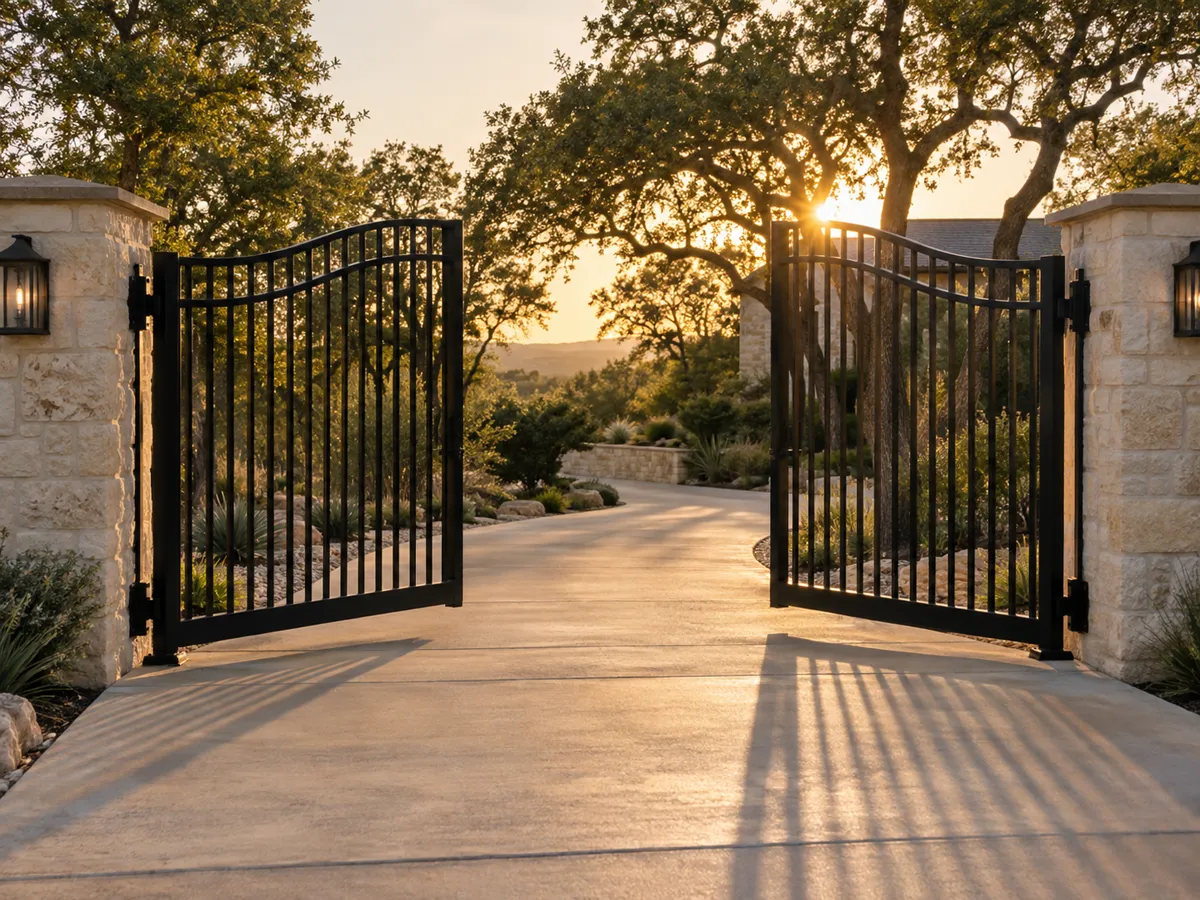 Dual Swing GatesEstate Entry Gates & Columns
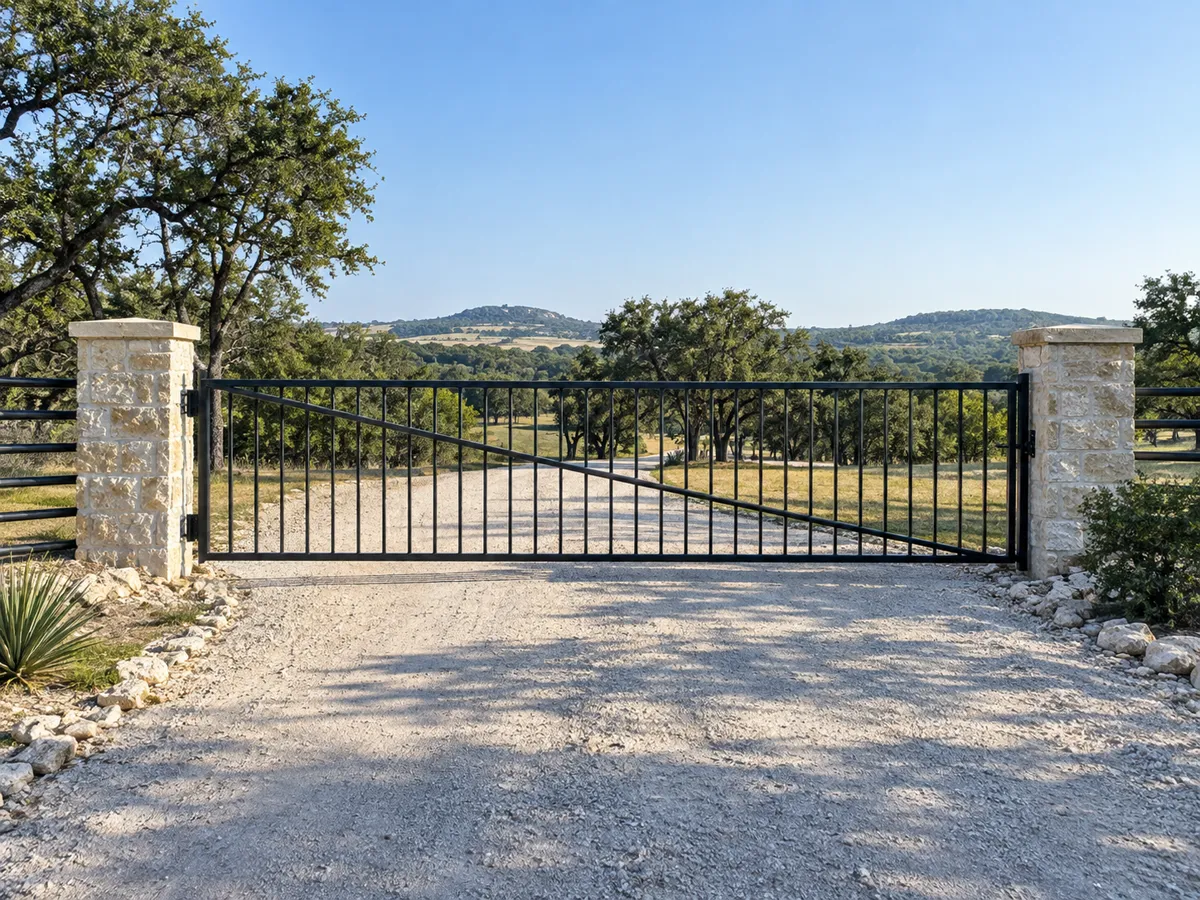 Ranch & Acreage Entry Gates
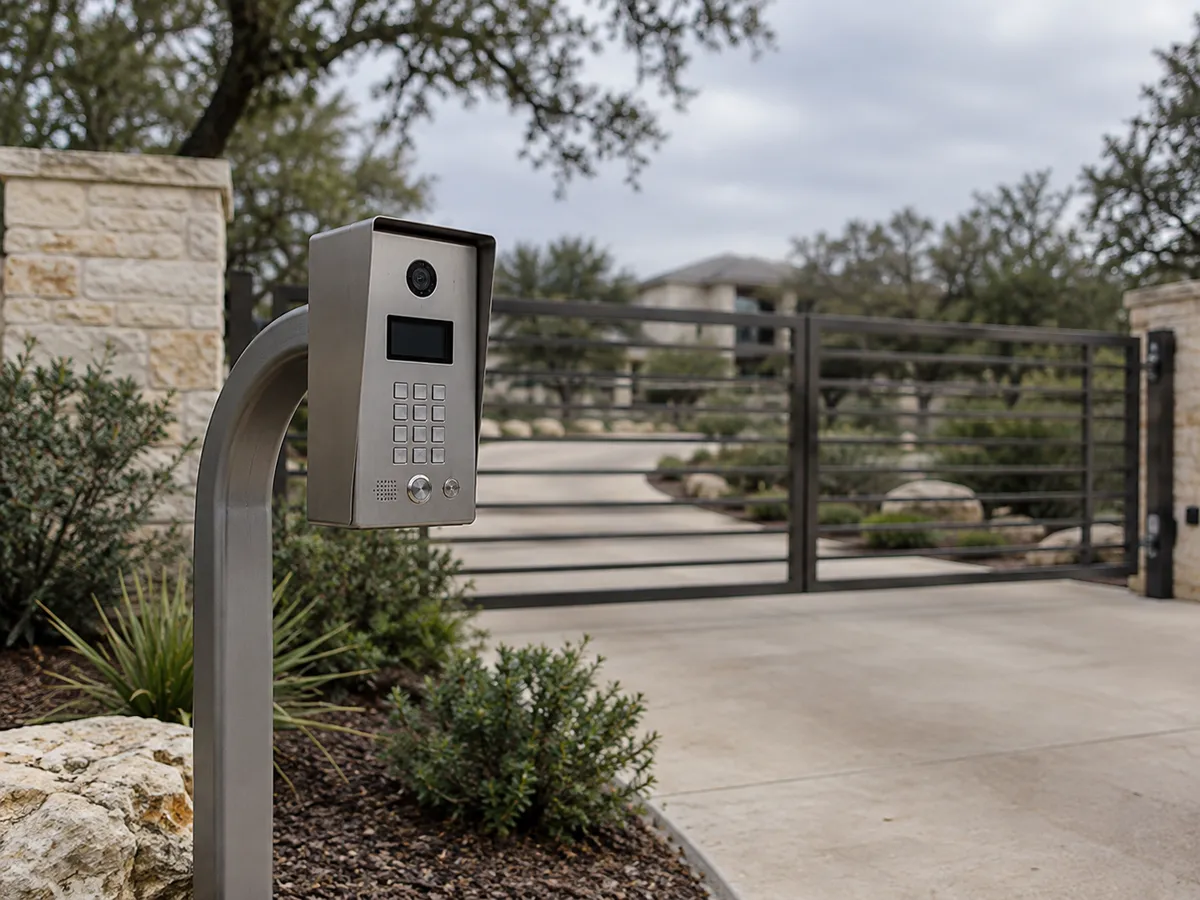 Gate Access Control & Intercoms
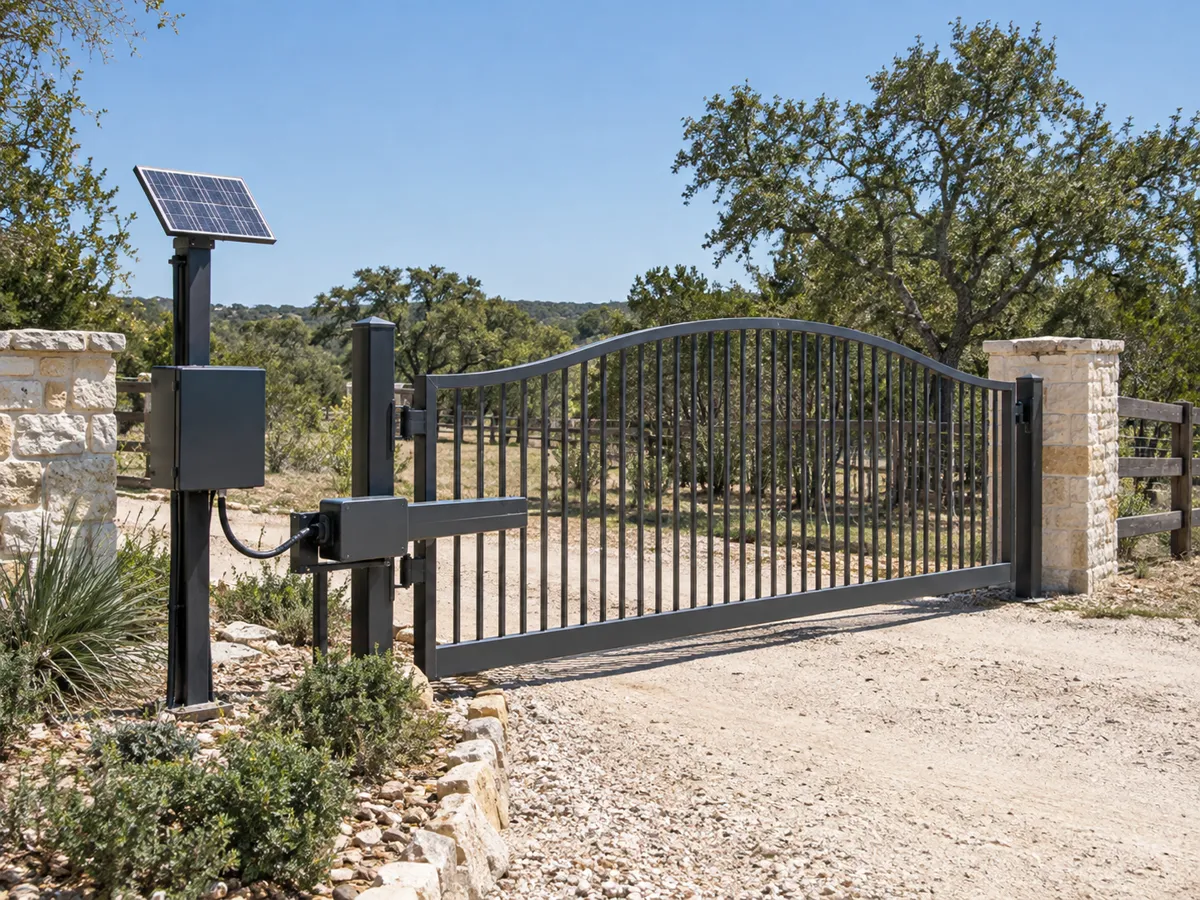 Solar Gate Operators
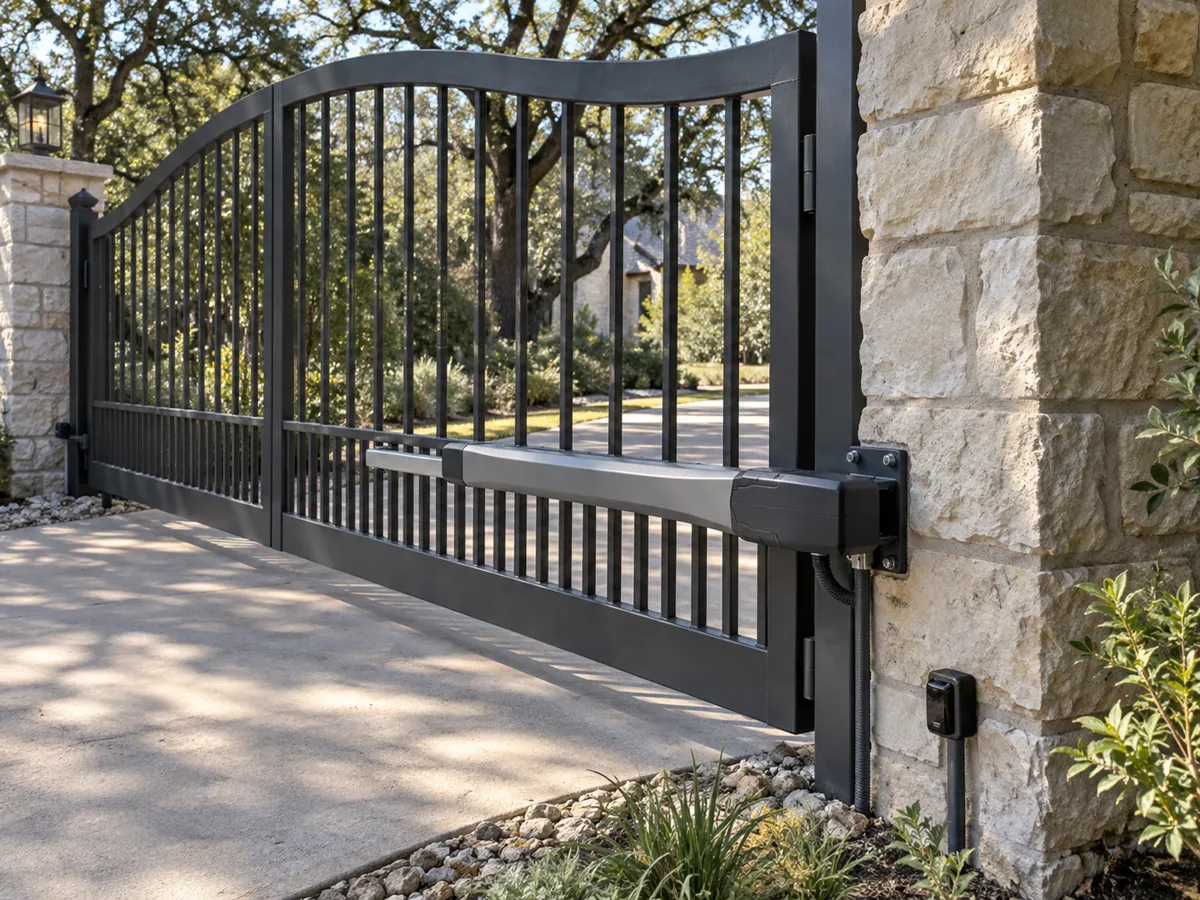 Gate Operator Installation & UL 325 RetrofitsWrought Iron Fencing
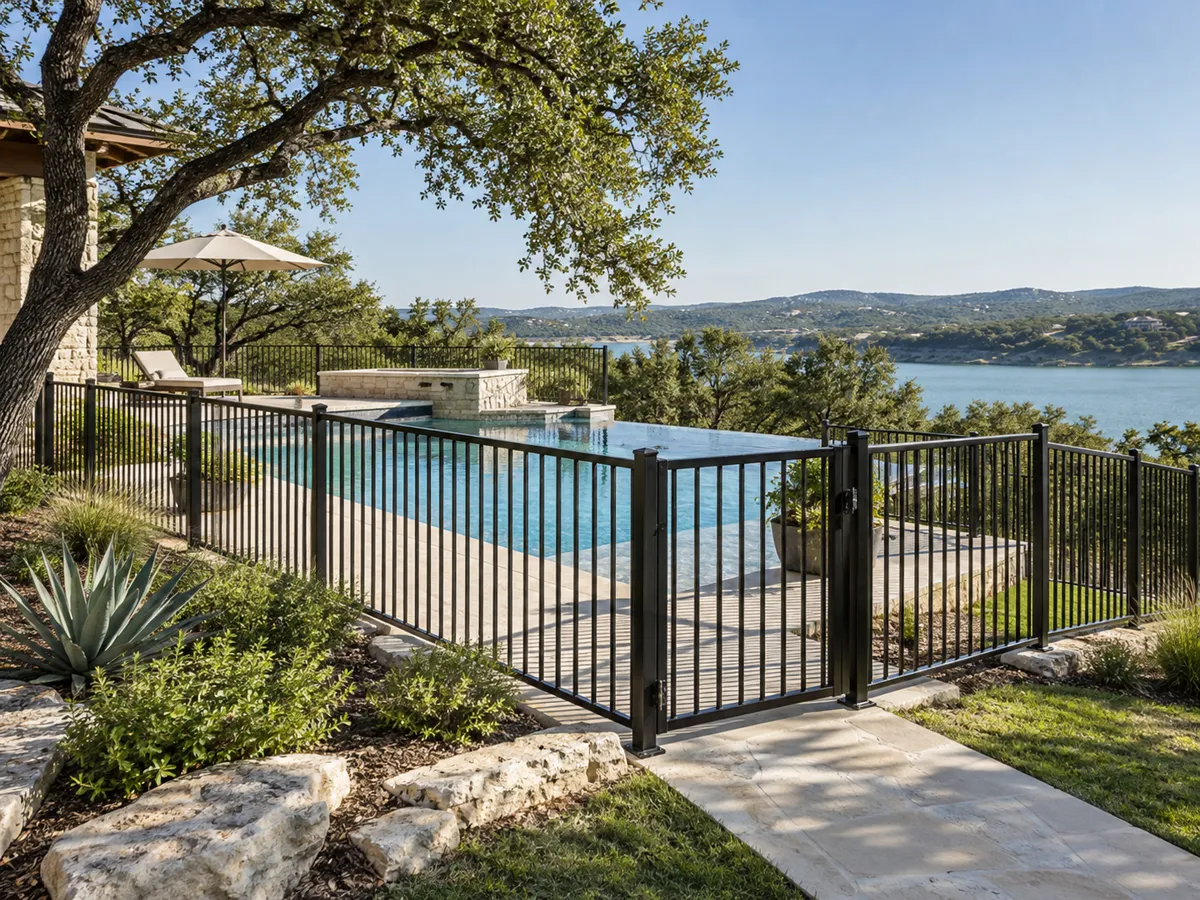 Pool Safety Fencing
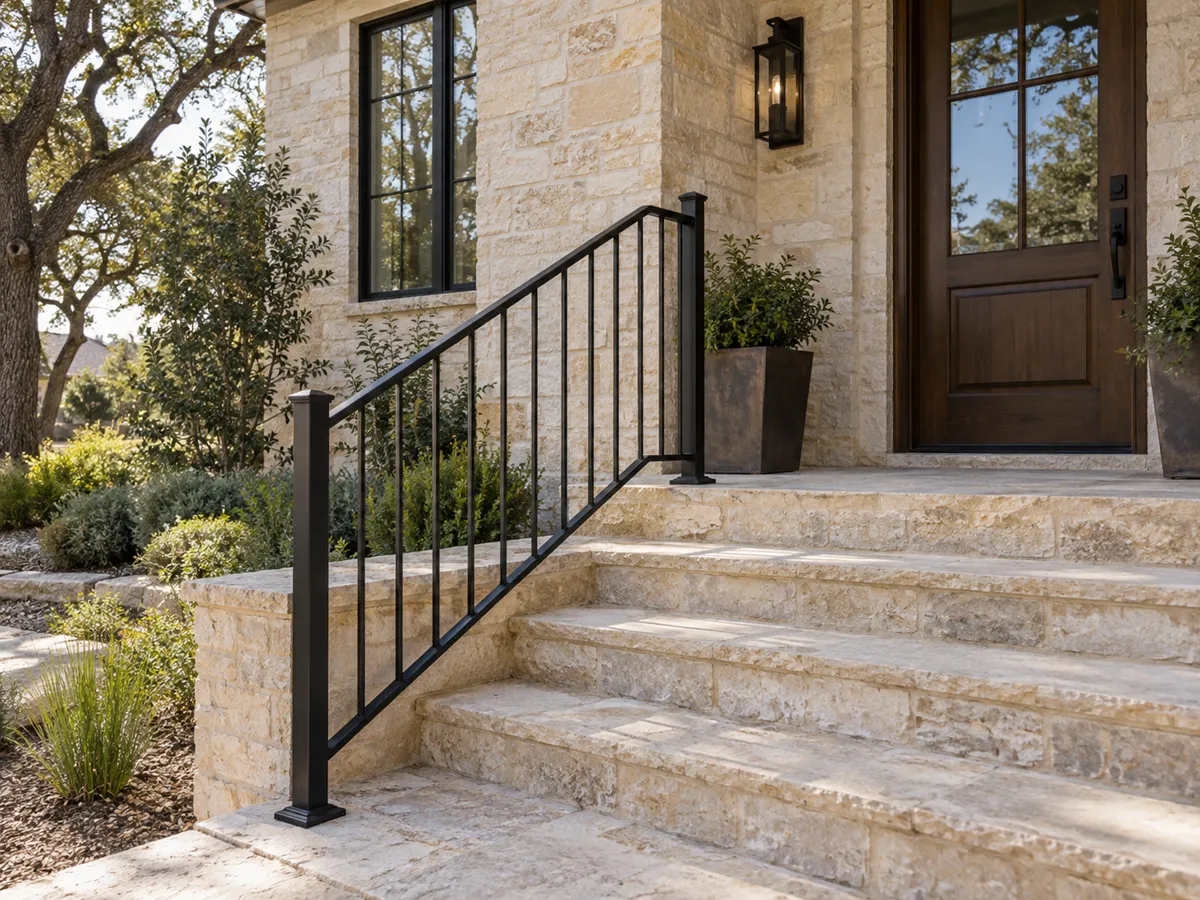 Iron Railings
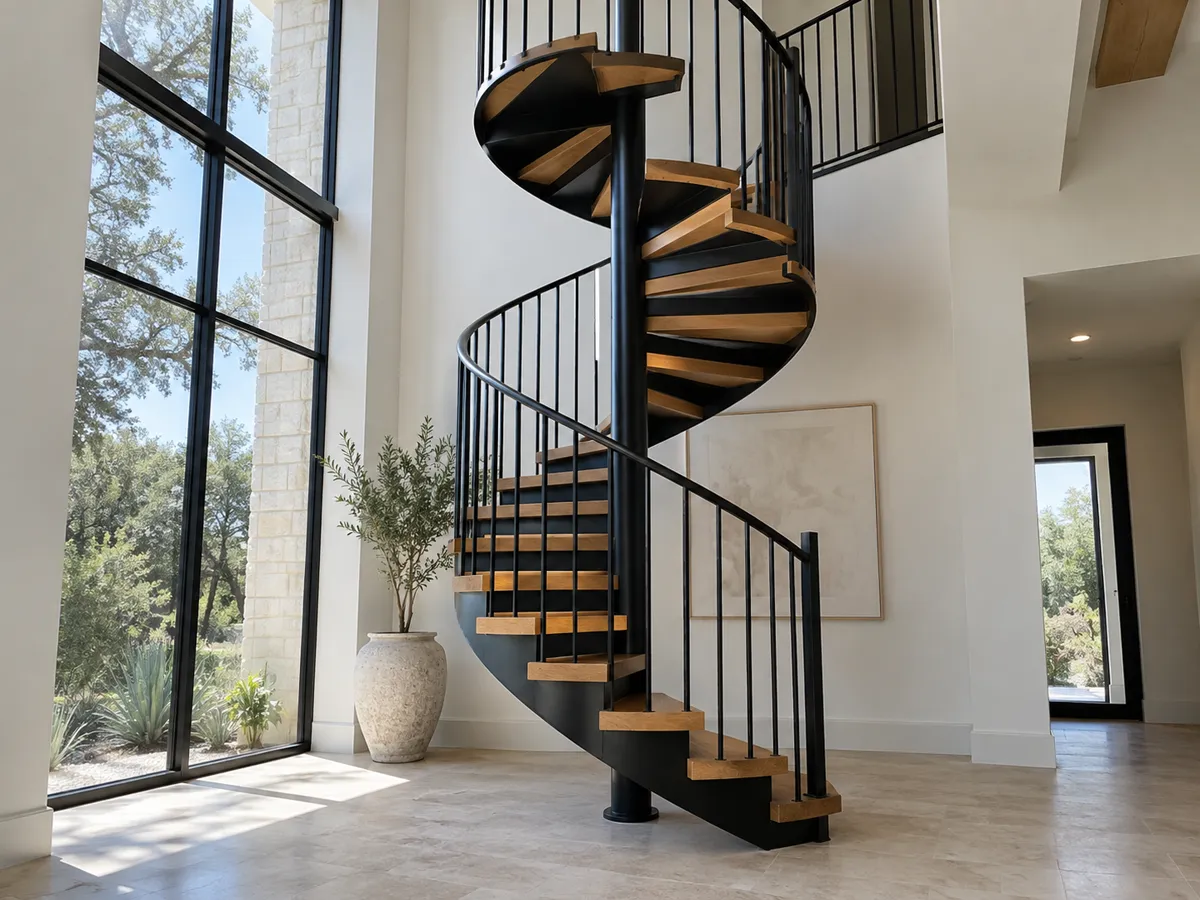 Iron & Spiral Staircases
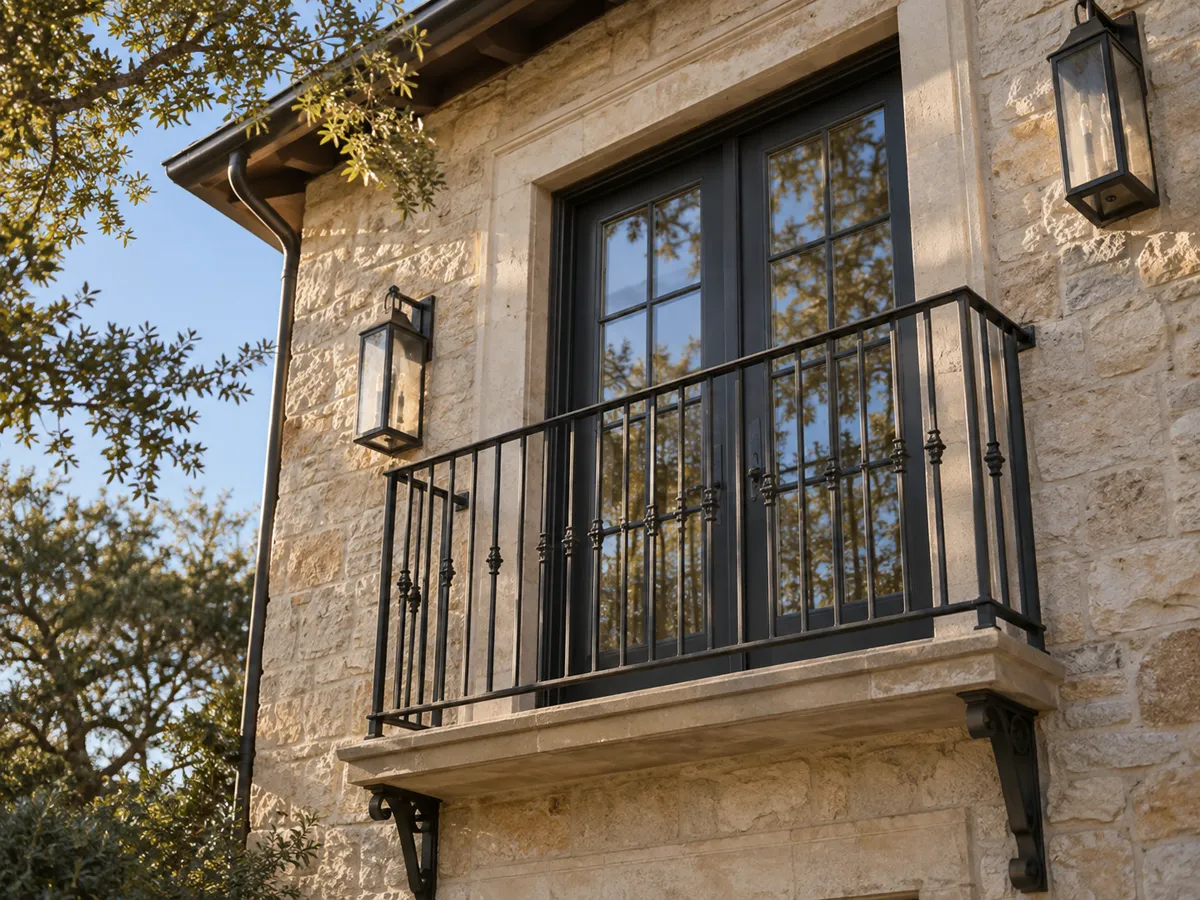 Iron Balconies & Juliet BalconiesCustom Iron Entry Doors
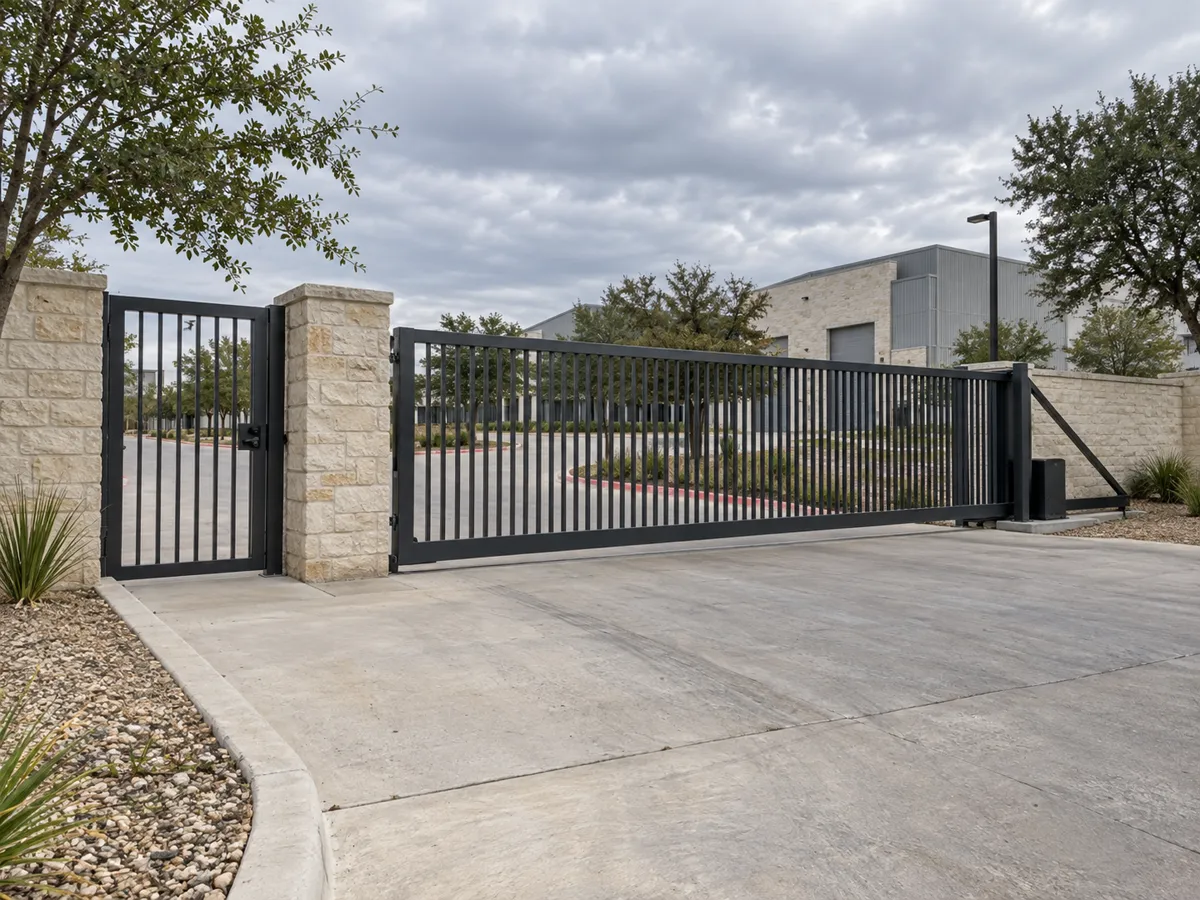 Commercial Gates & Slide Gate Systems
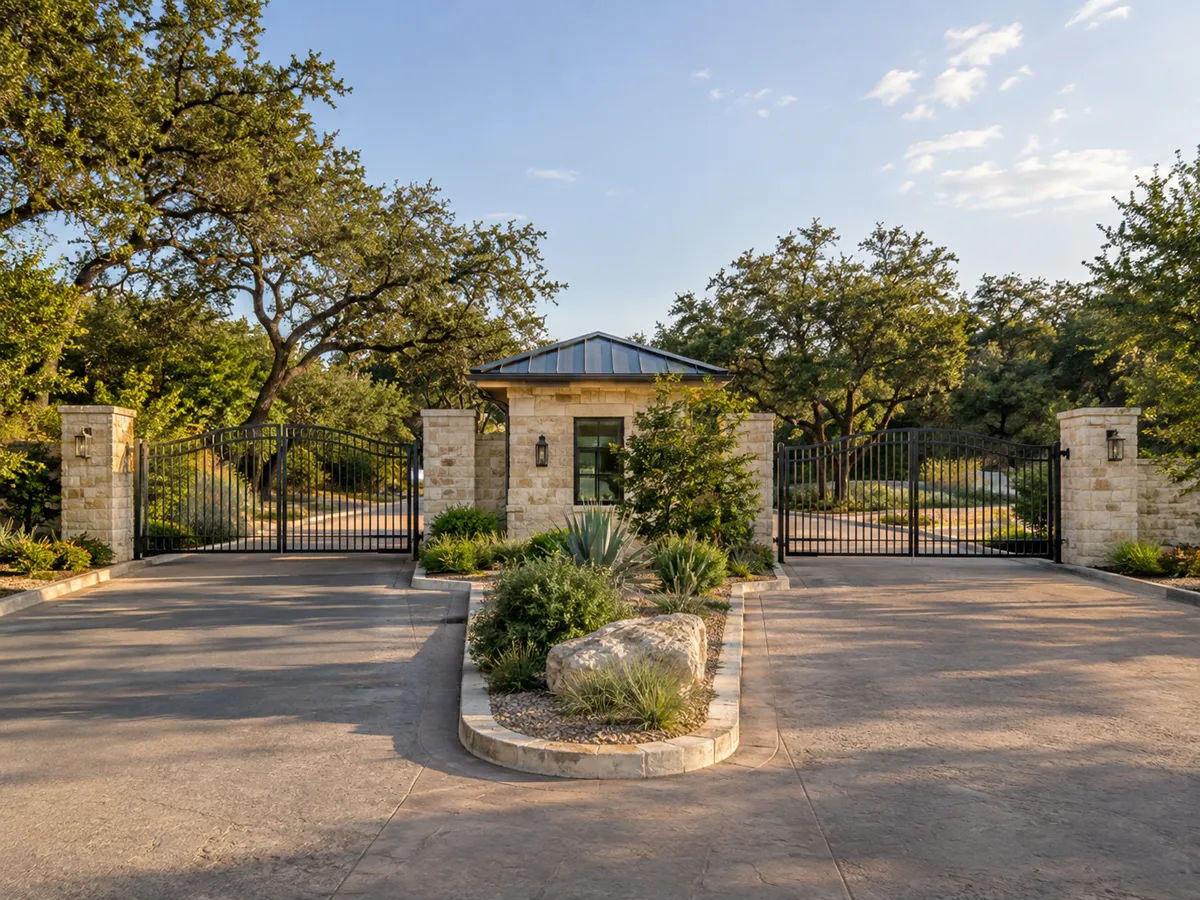 HOA, Gated Community & Multifamily Entry Systems
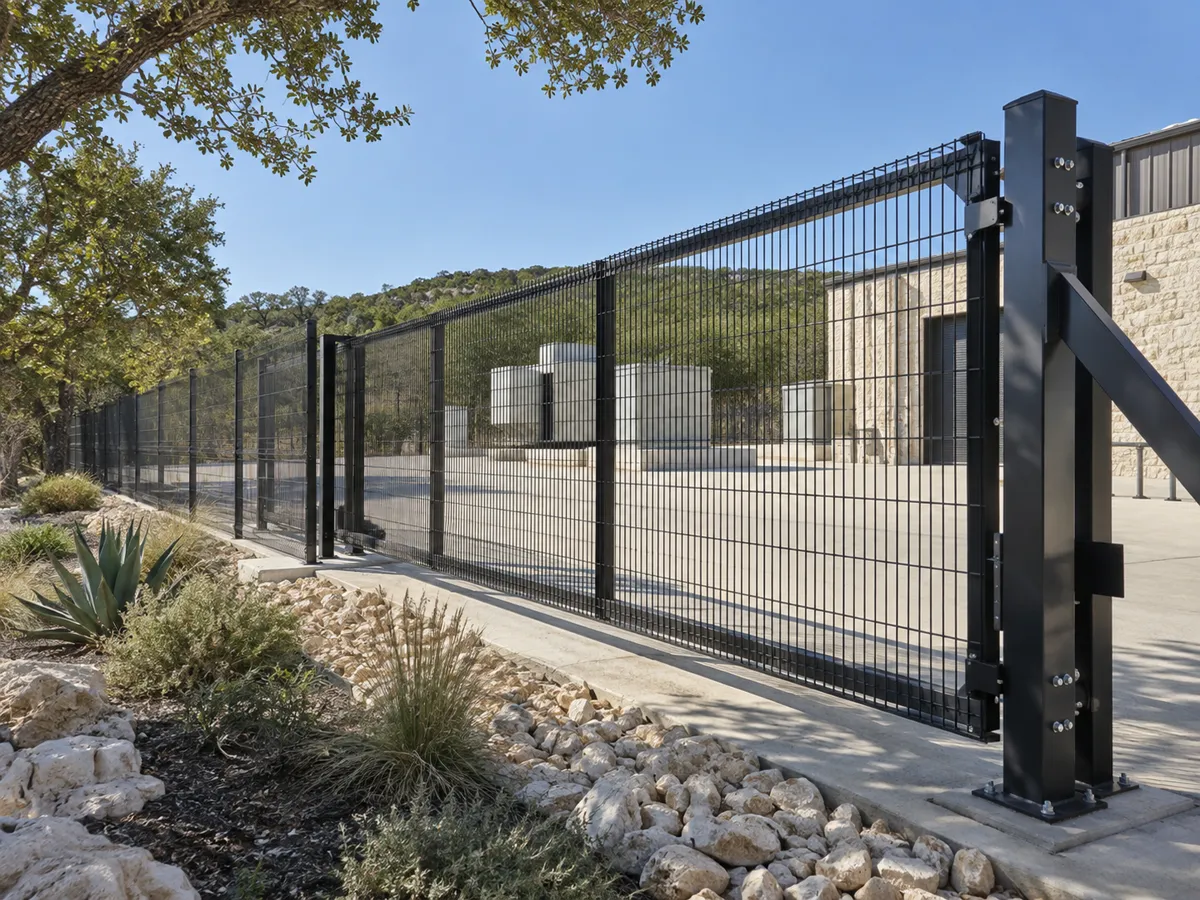 Commercial Security & Perimeter Fencing
 Gate Maintenance & Service Contracts
 Automatic Gate Repair
 Electric Gate Repair
 Gate Opener Repair & Replacement
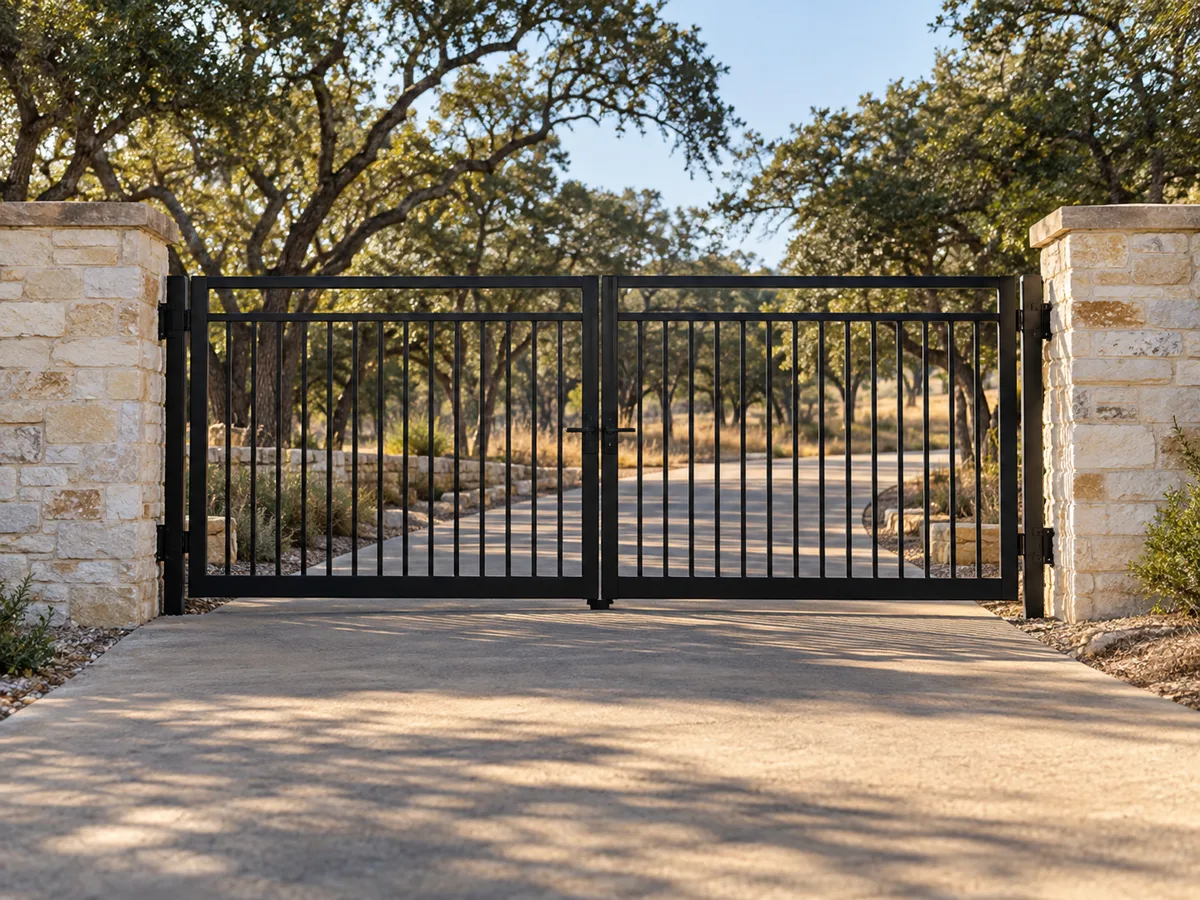 Gate Replacement & Upgrades
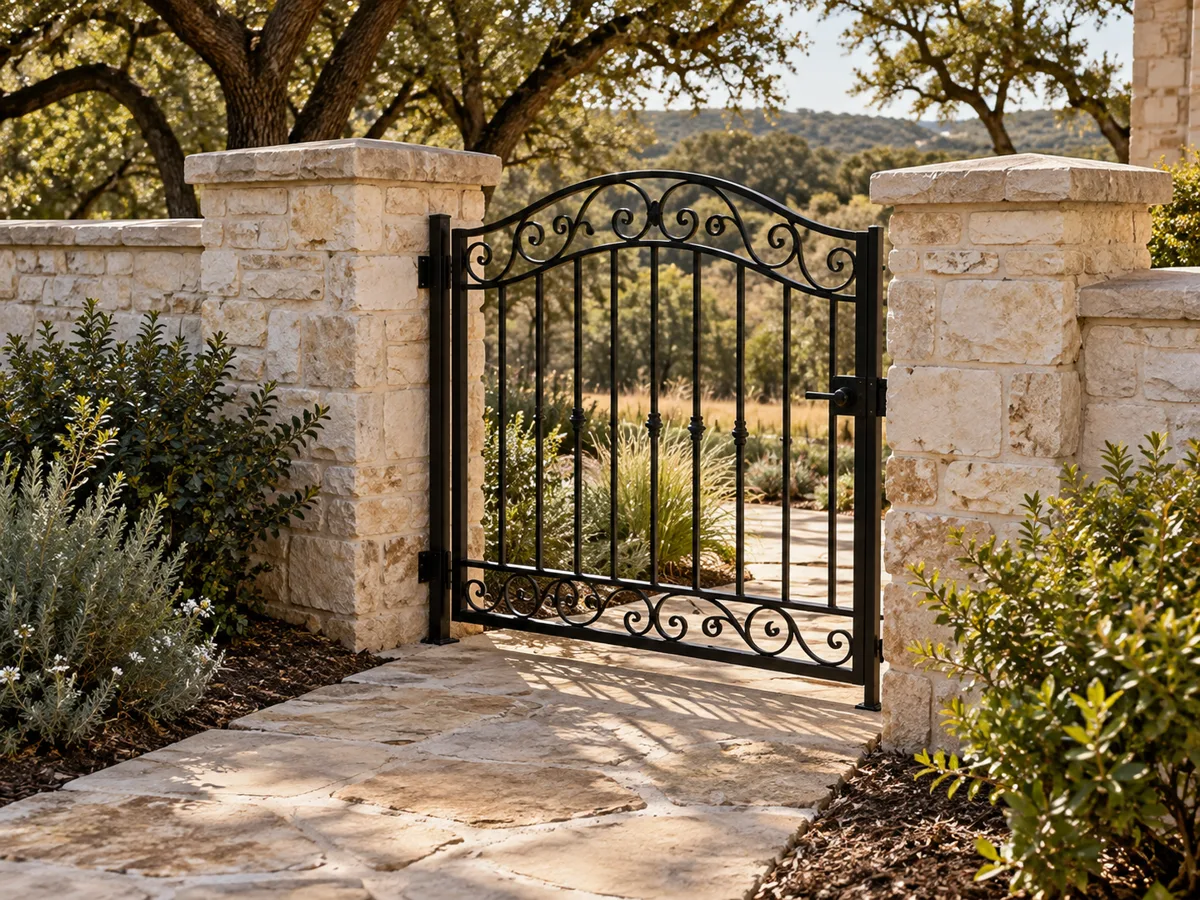 Custom Pedestrian Gates
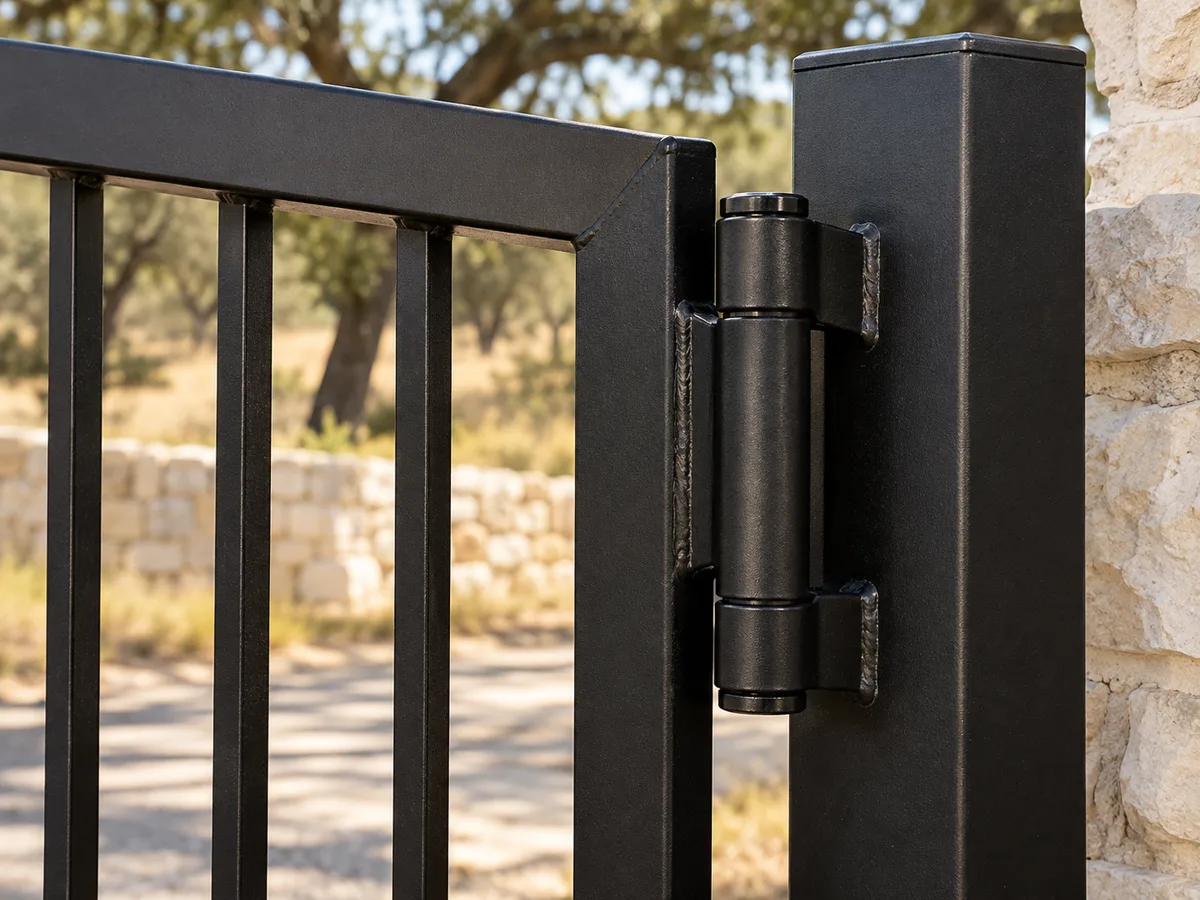 Steel Gate Installation
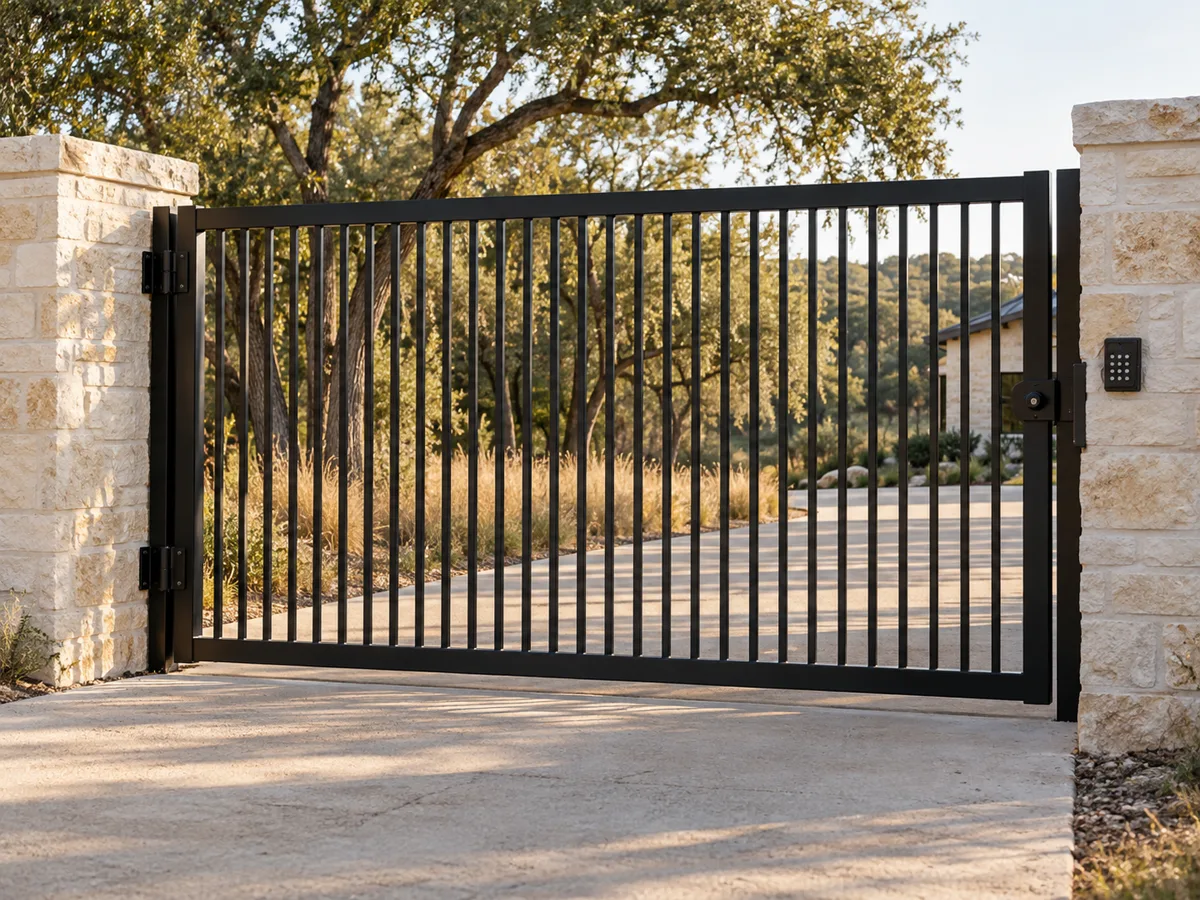 Security Gate Installation
Questions
Questions Owners Ask Us
How much does a metal gate cost in Austin?
There is no fixed price, because width, leaf count, swing or slide, the operator, power, access control and columns all change the number. The on-site measure is free, and it ends in a written quote that itemizes each of those choices.
Should my driveway have a swing gate or a sliding gate?
A swing gate needs a clear arc on the side it opens toward and suits a fairly level approach. A slide gate needs run-back space along the fence line instead, and it is the usual choice for a steep or short drive. A cantilever version slides with no track across the drive at all. We recommend one after seeing the site.
Who handles HOA or POA approval?
We prepare the scaled drawings, elevations and finish details an architectural committee asks for and help you submit them. Nothing is fabricated until the approval is in hand, and we build to exactly what was approved.
How long does a custom gate take to fabricate?
It depends on how quickly the drawings are signed, whether an association or city review is needed, and the finish you choose, since galvanizing and powder coat each add a step. We give you a schedule in writing with the quote.
What happens to an automatic gate in a power outage?
A battery backup can keep the operator cycling through an outage, and some local codes require an emergency power source on electric driveway gates. The gate can also be disconnected from the operator and moved by hand, and we show you how at handover.
How does the fire department get through a locked gate?
Depending on the town and fire district, that means a key switch the fire department can operate or an approved access box mounted at the gate. We confirm the requirement for your address and fit the hardware as part of the install.
Do you offer a warranty?
Yes. Every job comes with a written warranty, and its terms are set out in your quote before you sign anything.
What happens at the site visit?
We measure the opening and the slope, look at the ground where columns or posts will go, check for power, and talk through style, automation and access control. You leave with a clear picture of the options, and the written quote follows.
Do you work outside Austin?
Yes. We cover Austin and the surrounding Travis County communities, including Rollingwood, West Lake Hills, Sunset Valley, Shady Hollow, Barton Creek, Lost Creek, Steiner Ranch, The Hills, Lakeway and Volente.
Request your free site visit
Or call (512) 503-9203. Calls only, we do not receive text messages.
Talk to us about your gate
Free on-site measure across Austin and the west side. We call you back to set a time.
Calls only, we do not receive text messages.