What points toward repair
A single worn part, such as a gear set, coupling, brush set or chain. Parts that can still be sourced for that model. A gate that meets the current construction standard and only needs its drive back in shape.
Austin Metal Gates provides gate opener repair in Austin, TX, and is Travis County's trusted specialist in the drive unit that moves a gate, specializing in motor and gearbox service, arm and chain repair and limit and release adjustment. We offer straight repair-or-replace advice and repairs to openers we did not install.
Our team provides a bench-level look at the worn part, delivering an opener that runs smoothly and reverses correctly for both residential and commercial projects. The same crew that opens the unit does the repair, we confirm the leaf moves freely by hand before we blame the machine, and the operator is re-tested against UL 325 before we leave, with a written warranty on the repair.
From a worn gear inside the case to a stretched chain and a limit that has drifted, our team handles every detail. Serving Austin, Barton Creek, Lost Creek and Shady Hollow, we treat the opener as a machine with a life span, not a box to be swapped at the first complaint.
Why Austin Metal Gates
No stock panels cut down to fit, and no handoffs. The crew that measures your opening builds and installs the gate.
The operator is the part of the system that turns electricity into force. Every opener, whatever its shape, is a motor driving a reduction stage that trades speed for torque. That tradeoff is why a small motor can shift a heavy leaf, and it is also where wear collects.
This page covers that unit. If the gate sags, sticks or drags before the opener is asked to move it, our automatic gate repair page covers the steel. If the operator is silent because it is not getting power or instructions, our electric gate repair page covers the supply and controls. If the operator is running but the gate is not going anywhere, or it grinds, hums or strains, you are in the right place.
We open the unit, look at what has worn, and tell you which part it is before quoting a repair.
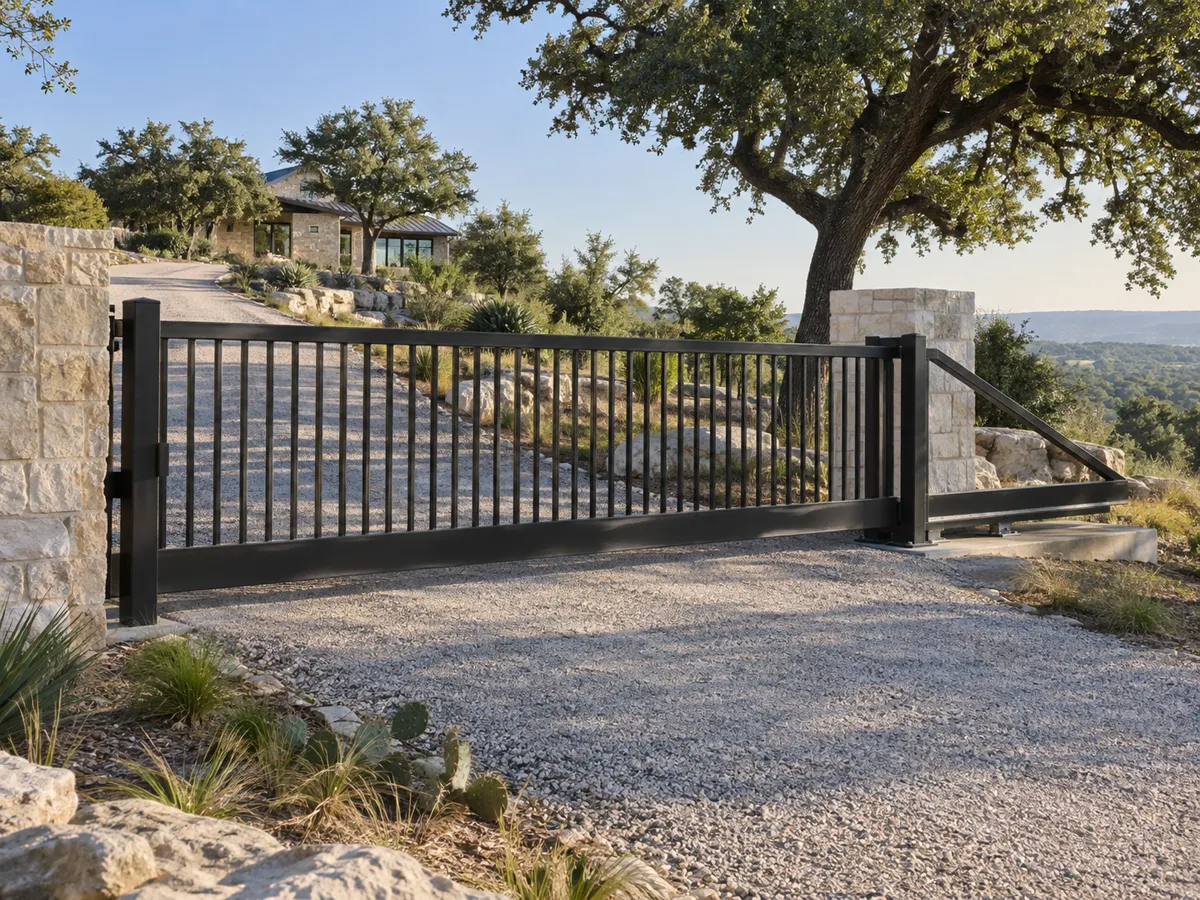
The drive type decides which parts fail. Swing openers come in several forms, and a slide gate is moved by a chain or a rack, so the wear points differ.
In every case we look at how the unit is fixed to the post and the leaf as well, since a bracket that has cracked can imitate a failed motor.
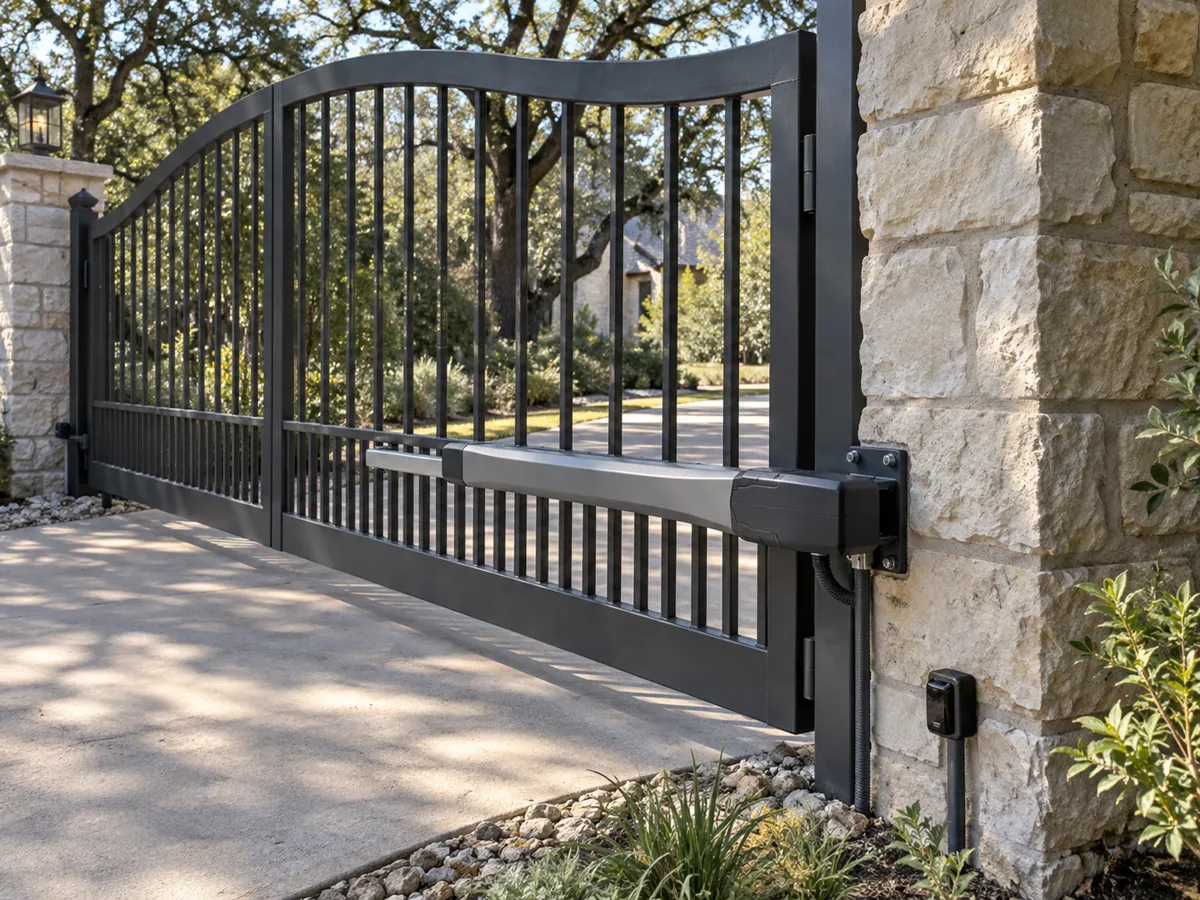
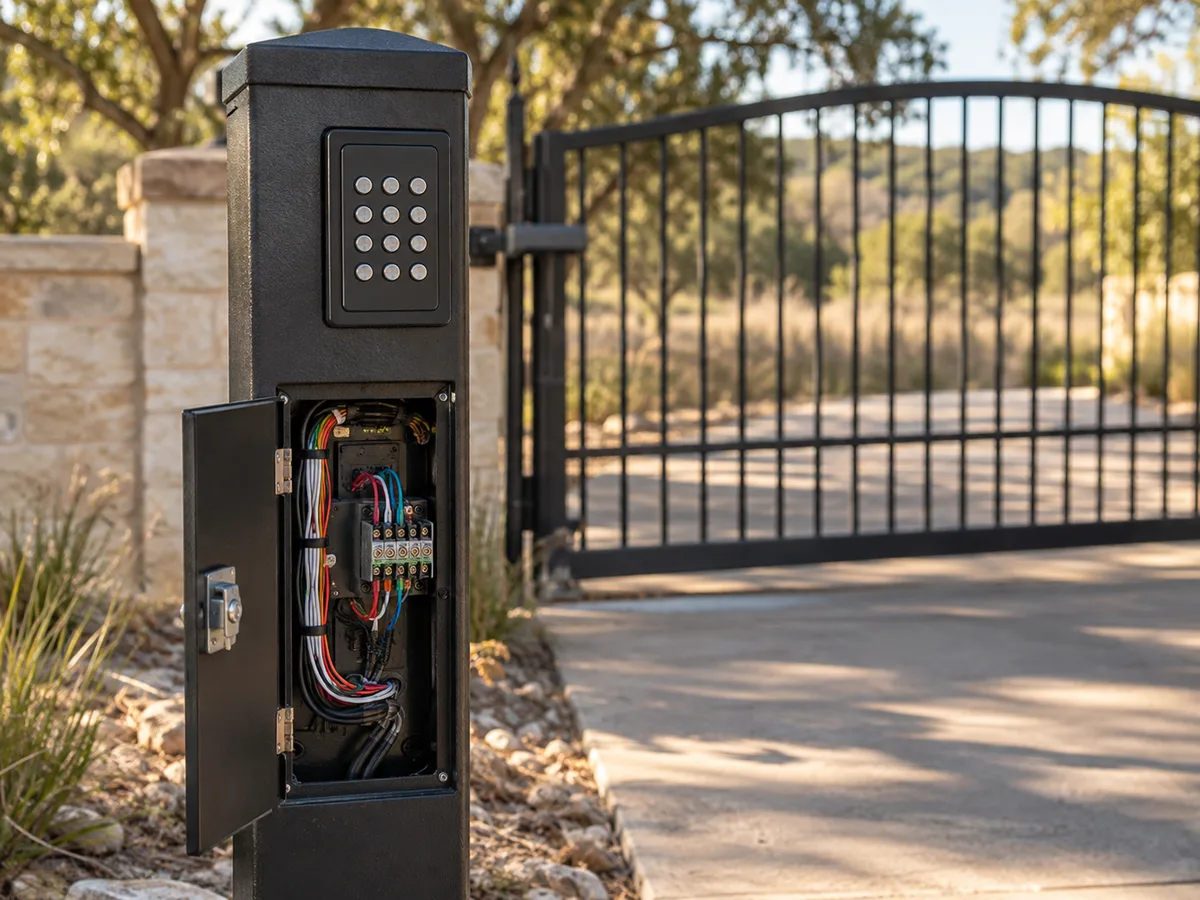
A limit tells the operator where the travel ends. Limit switches, magnets or a travel counter tell the machine the leaf has arrived. If those settings drift, the gate stops short of the post, slams into its stop or runs past it. Retuning a limit is a small job, but a limit that keeps drifting points at something else: a loose arm, a slipping chain or a binding leaf.
Force settings are part of the safety system. An operator that stops and reverses on contact has to be set so it reacts to a real obstruction without tripping every cycle. Turning the setting up to muscle through a stiff gate defeats the point of it, so we fix the stiffness and set the force for the gate as it should be.
The manual release lets the leaf be moved by hand when the operator is not driving it, and it is often the first thing to fail after years of disuse. A stuck or corroded release turns a power cut into a locked gate. We test the release on every gate we work on, free it up, replace it if it is worn, and show you how it operates.
Some openers are worth a rebuild and some are not. We do not hold a bias either way, and we say plainly which side of the line yours sits on.
A single worn part, such as a gear set, coupling, brush set or chain. Parts that can still be sourced for that model. A gate that meets the current construction standard and only needs its drive back in shape.
Several major parts failing together, a sign the whole unit is at the end of its life. Parts no longer made for that operator. An older unit that cannot accept monitored external entrapment devices. That last point matters most. UL 325 has required an operator to monitor its external entrapment devices since January 12, 2016, and an older opener may simply not be able to. If the unit cannot be made to comply, spending money to keep it running is spending it on the wrong machine. In that case we quote a new operator alongside the repair so you can compare the two on one page. A gate that has never had an opener at all is a fresh installation, and our gate operator installation page covers that.
The range between a light adjustment and a rebuilt drive is wide, so this page carries no figure. What moves the price:
Estimates from the diagnosis are subject to change if the unit reveals more damage once it is open. Your written quote sets the final price, and no work starts until you approve it.
The process
Four steps, and nothing is fabricated until you have signed off on the drawings and the price.
We measure the opening, the slope and where power can reach, and talk through style, automation and access.
You get scaled drawings for your approval and for any HOA or city review, with one written price.
Steel is cut and welded to the approved drawings, then galvanized, powder coated or both.
Columns and posts set, gate hung, operator set up to UL 325 and every safety device tested with you.



Questions
If one part has worn and replacements exist, usually yes. If several parts are failing at once, or the unit cannot accept monitored safety devices, replacement tends to be the better spend, and we put both options in front of you.
Yes. The work starts with the unit as it is, whoever fitted it, and we tell you what condition it is in before you decide anything.
We release the operator and confirm the gate moves freely by hand, then we run the unit and listen. We look at the motor, gearbox, drive, limits and release, and explain which part has failed and what it takes to fix it.
Either the limit has drifted, or something in the drive or the leaf is slipping or binding. We fix the cause instead of just resetting the limit, or it will drift again.
We can service it, but we will tell you if it cannot meet today's monitoring requirements. In that case replacement is worth pricing, because a working opener that cannot be made safe is a liability.
With battery backup the operator keeps running for a time. Without it, the manual release lets you move the gate by hand, and we test that release on every job.
We check the access hardware your fire district requires, such as a key switch or an access box, and confirm it still works after the repair. The Hills lists ESD 6 as its fire code official, and we confirm the local requirement for your address.
Swapping a like-for-like part inside the unit seldom does. Anything that changes how the gate looks may go to your architectural review first, and we supply drawings when it does.
Yes, opener repairs come with a written warranty. The quote states what it covers before you approve the job.
Free on-site measure across Austin and the west side. We call you back to set a time.
Calls only, we do not receive text messages.