
Rollingwood · West Lake Hills · Shady Hollow · Barton Creek
Metal Gates in Sunset Valley, With No Spikes Above the Rail
Austin Metal Gates designs metal gates in Sunset Valley, TX, as a trusted Travis County ironwork specialist, specializing in flat-top ornamental fencing, tight-picket driveway gates and pool barrier gates. We offer rear and side yard walk gates and custom iron railings.
- Free on-site measure
- Shop drawings you approve
- Operators set up to UL 325
- One written price
Gates and ironwork in Sunset Valley
Our team provides automatic gate operators, delivering smooth daily use for homes and sturdy, low-upkeep steel for both residential and commercial projects. We weld every panel in our shop from drawings you approve, and the crew that measures your fence line is the one that sets the posts.
From picket spacing held under two inches above the top rail to a full perimeter run with its driveway gate, our team handles every detail. Serving Sunset Valley, Shady Hollow and Rollingwood, we recheck each design against the city code on the day we quote.
Why Austin Metal Gates
How We Work
No stock panels cut down to fit, and no handoffs. The crew that measures your opening builds and installs the gate.
No Fence Permit in Sunset Valley, but a Code That Still Applies
Sunset Valley is a small city about 5 miles southwest of downtown Austin, entirely surrounded by Austin's city limits, with US Highway 290 running through it. Its permit FAQ answers the fence question directly: no permit is needed for a fence, however fences must comply with Section 150.106 of the Land Development Code.
That second half is where the design work lives. Skipping a permit does not mean skipping rules, and an iron fence that breaks Section 150.106 is still a violation even though nobody reviewed it first. So the review happens in our drawings instead. Each elevation we send you is checked against the section before you approve it, and again against the current code at quote time, because codes change.
One more clause matters for owners with an older fence. Replacing more than 50 percent of a fence brings the whole fence under the current rules. If you plan to replace most of an aging run and keep a stretch of it, the kept stretch may need to change too. We look at the existing fence at the site visit and tell you where that line falls.
The Spike and Picket Rule Behind Every Sunset Valley Iron Gate
Section 150.106(A)(12) bans two things ornamental iron often carries. The first is spiked pickets, spiked bars or other spiked decorative elements above the top horizontal backer rail. The second is subtler: vertical pickets above the top rail that are separated by more than two inches and less than nine inches. Any fence creating a substantial risk of entrapment or impalement is prohibited outright.
The middle band is the one to watch: the code treats a gap of that size as an entrapment risk, wide enough for a head or a limb to pass in and narrow enough to catch it. So a Sunset Valley gate or fence is built in one of three ways:
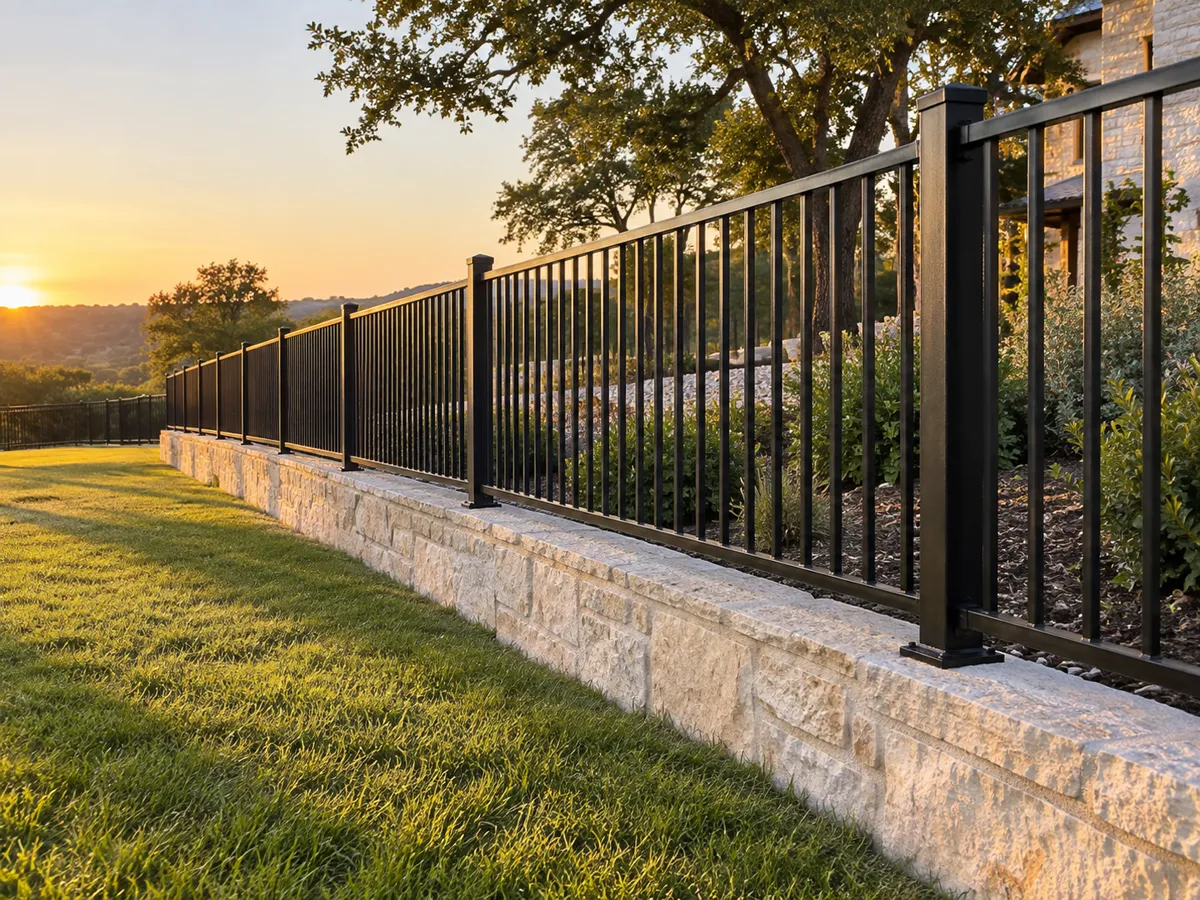
- A flush top, where every picket stops at the top rail and nothing rises above it. This is the cleanest of the three.
- Pickets that continue above the rail but sit two inches apart or closer, which reads as a dense, screen-like crown.
- A capped design with a continuous rail over the picket ends, so nothing is exposed at all.
Driveway gates, walk gates and pool gates all follow the same rule, and a matching top across every piece keeps the property consistent.
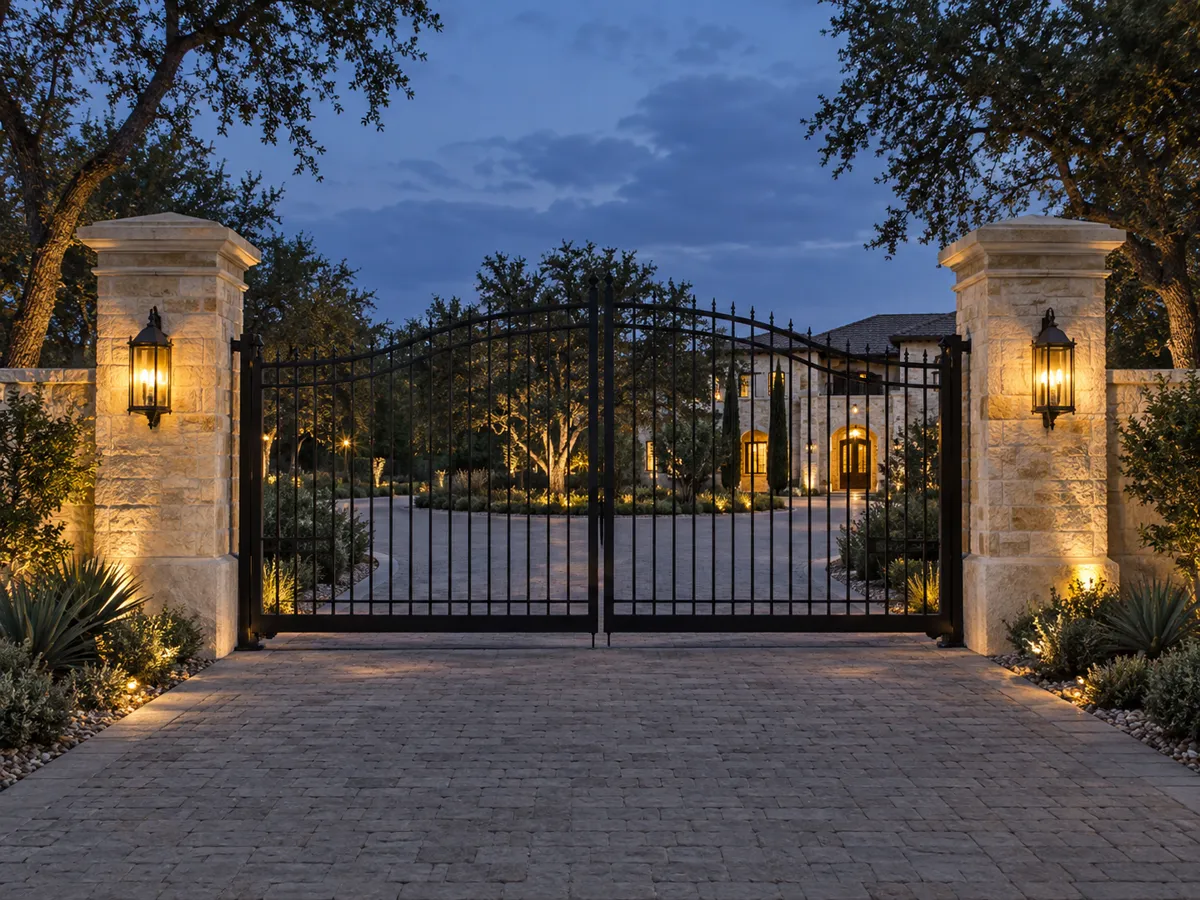
Ornamental or Solid: The One to Four Ratio and Height Limits
The code sorts every fence into one of two kinds by a ratio. An ornamental fence has an open design with a ratio of solid material to open space of not more than one to four. Anything denser is a solid fence, whatever it is made of. An iron fence with heavy bar, close pickets and decorative panels can drift across that line, so we calculate the ratio on the drawing rather than eyeballing it.
For solid fences the height rules are written out. On a property line, a solid fence averages 6 feet, with 7 feet as the maximum, or 8 feet with written consent from the neighbor and a qualifying grade change or climbable structure. Within the building setback lines a solid fence may reach 8 feet.
If the open look is what drew you to iron, keeping the design on the ornamental side of the ratio preserves it. Where privacy matters along one boundary, a solid section can join an ornamental run, and we mark each on the drawing so the ratio and the height are clear for every stretch.
Pool Barrier Gates, Railings and Automated Driveway Gates
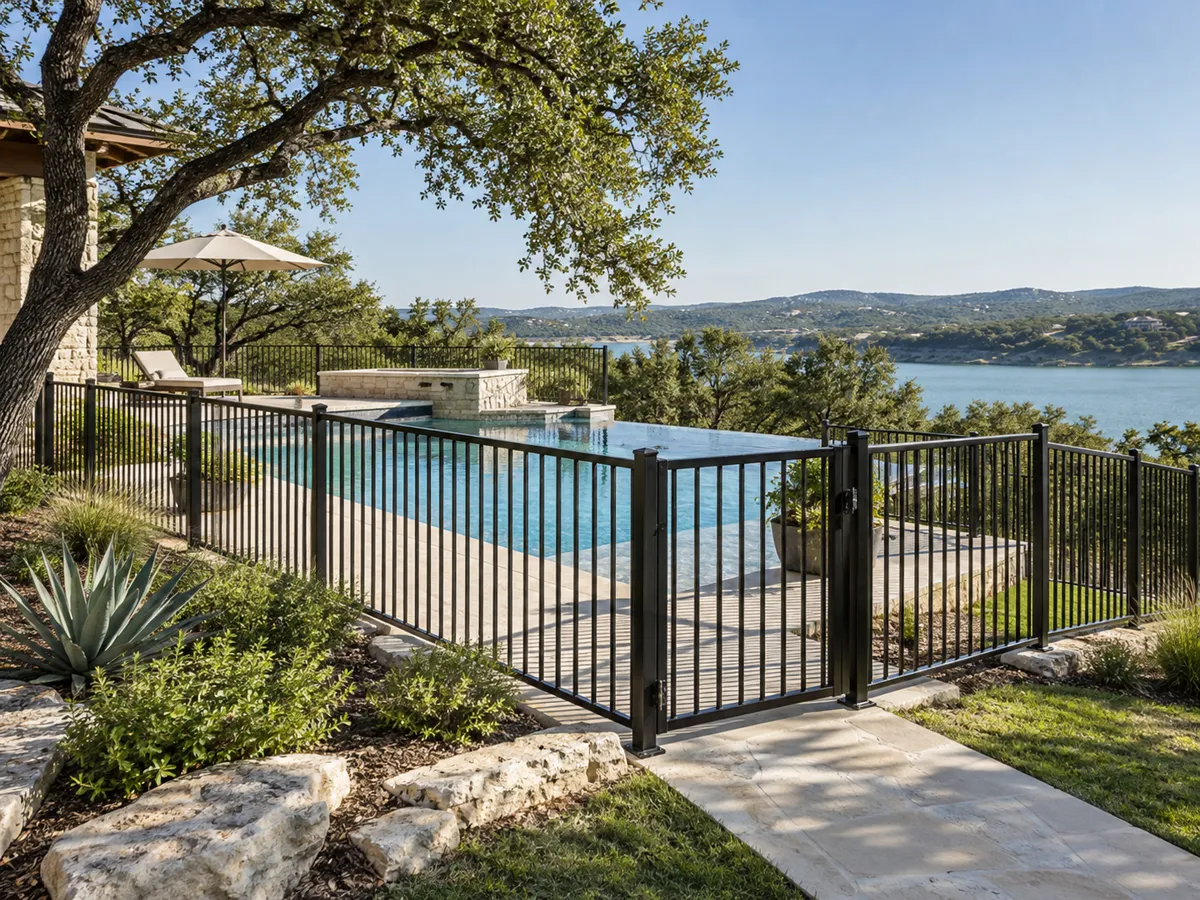
A fence serving as a pool barrier must meet the pool code the city has adopted. We draw pool barrier panels and their gates to that code, confirm the current edition with the city before fabrication, and keep the flush top so the spike rule is met at the same time.
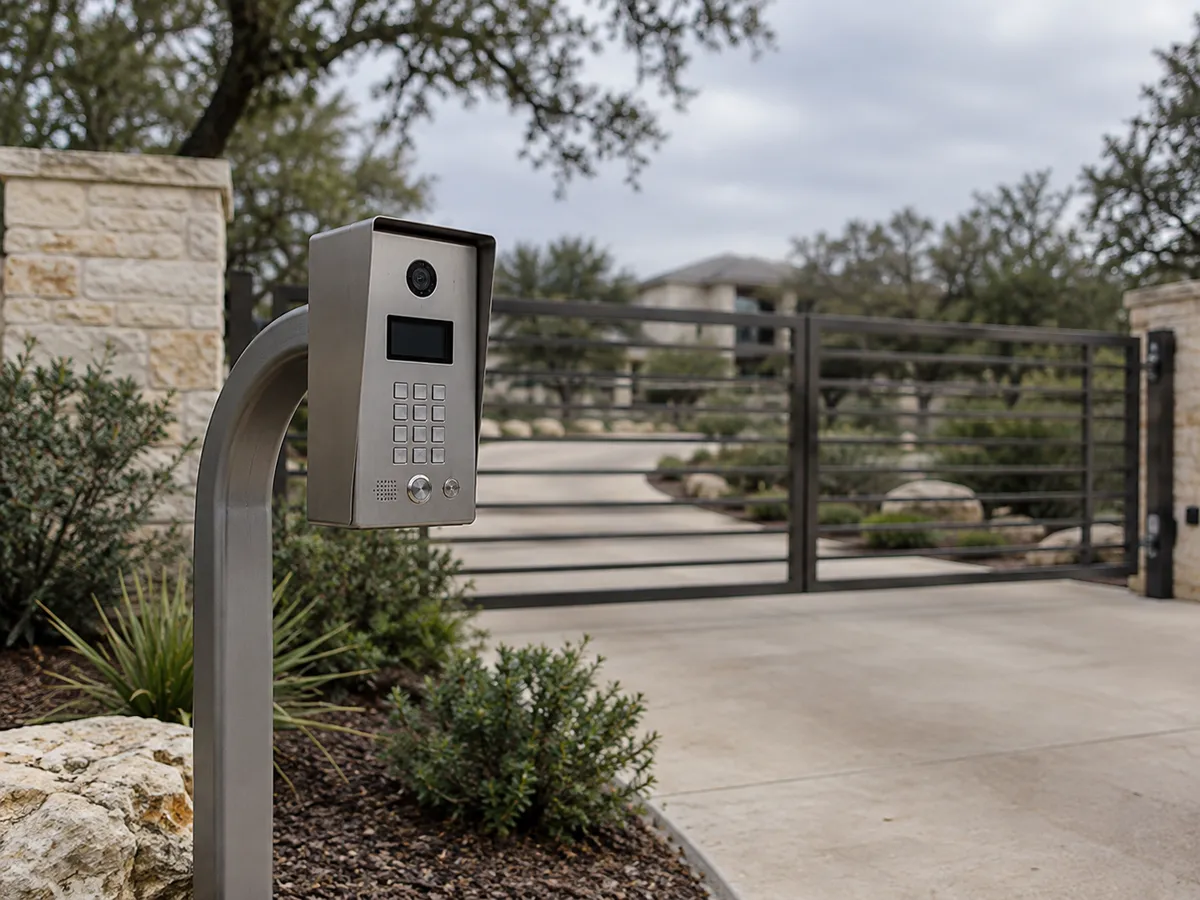
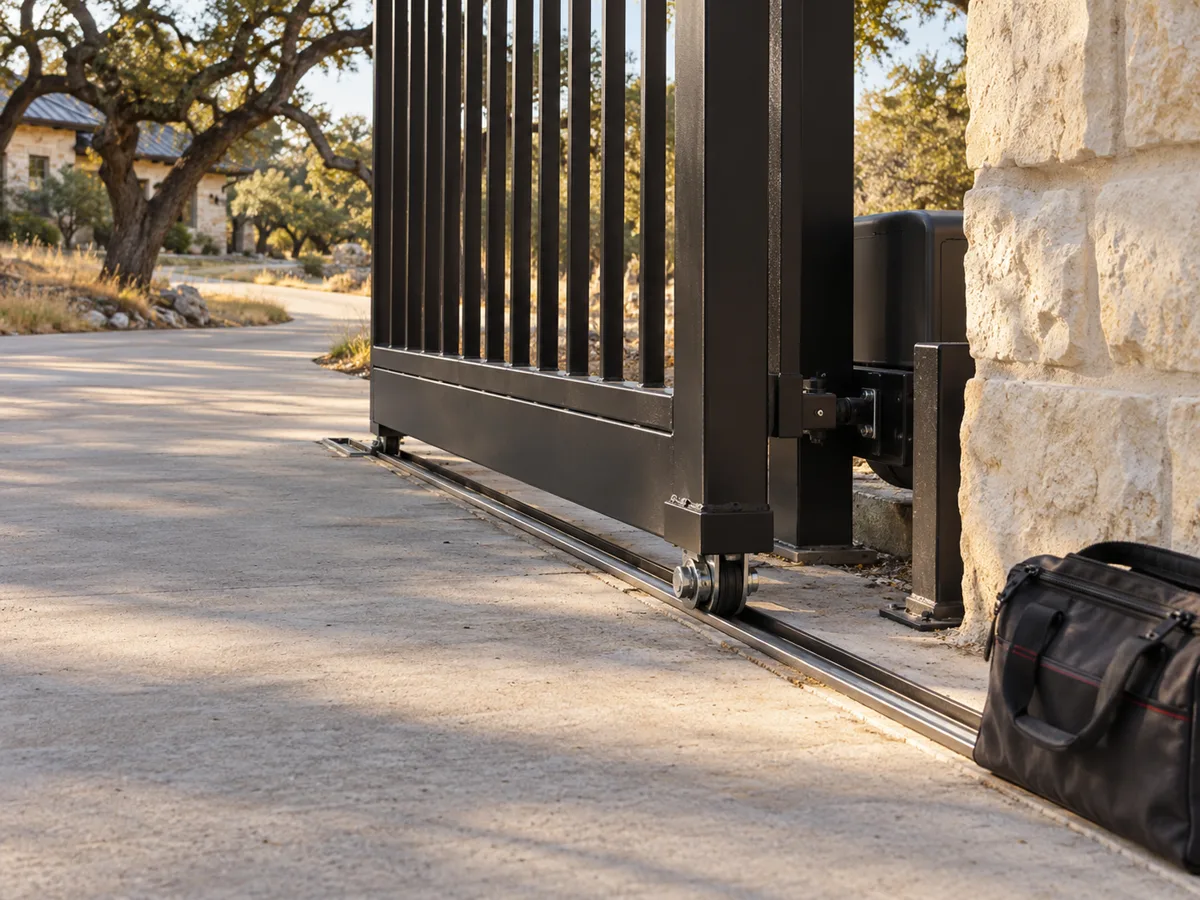
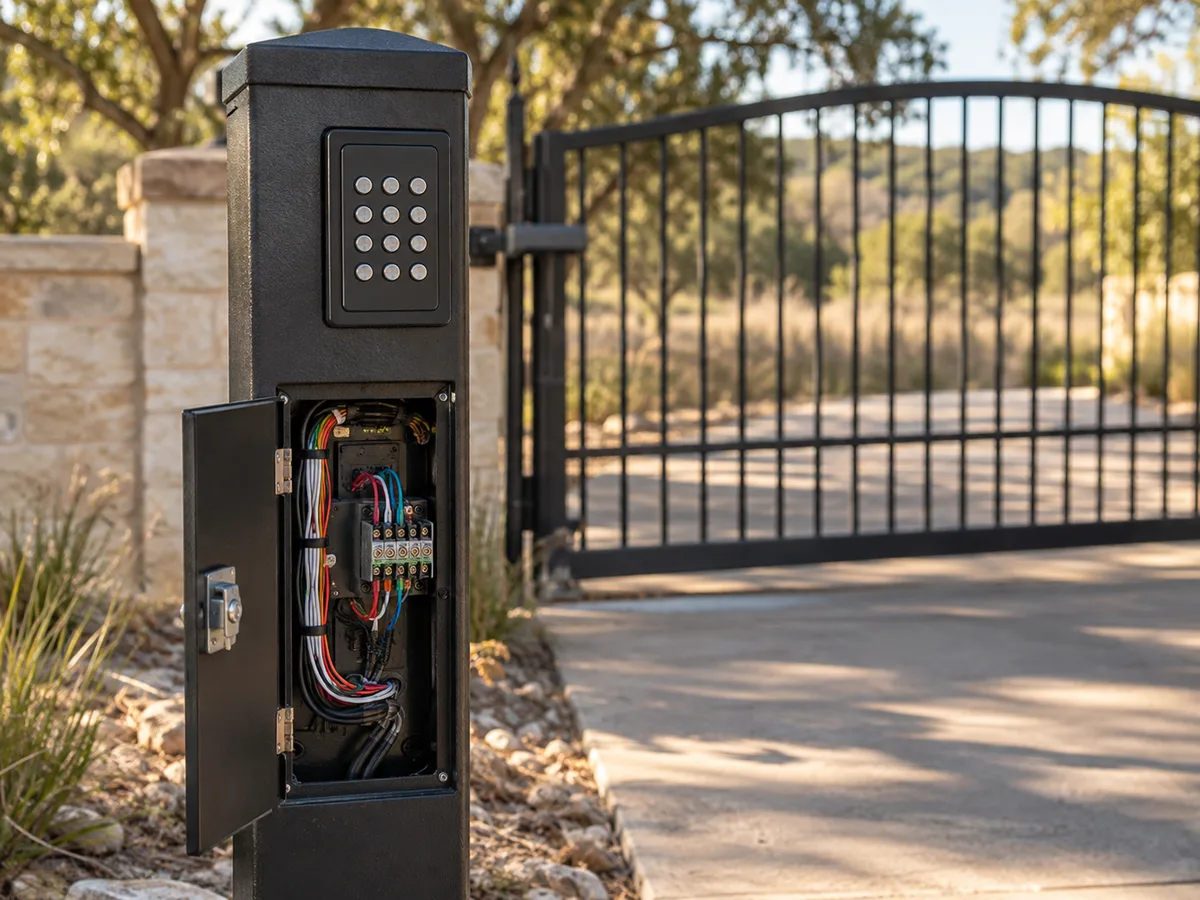
Driveway gates here can swing or slide. A dual swing pair suits a wide, level approach; a slide gate suits a drive where there is no room for the leaves to open. Either can be automated with an operator sized to the gate's weight and daily use, photo eyes across the opening, a keypad or remotes, and a backup battery for outages. Every operator is set up to UL 325, the United States safety standard for automatic gate operators.
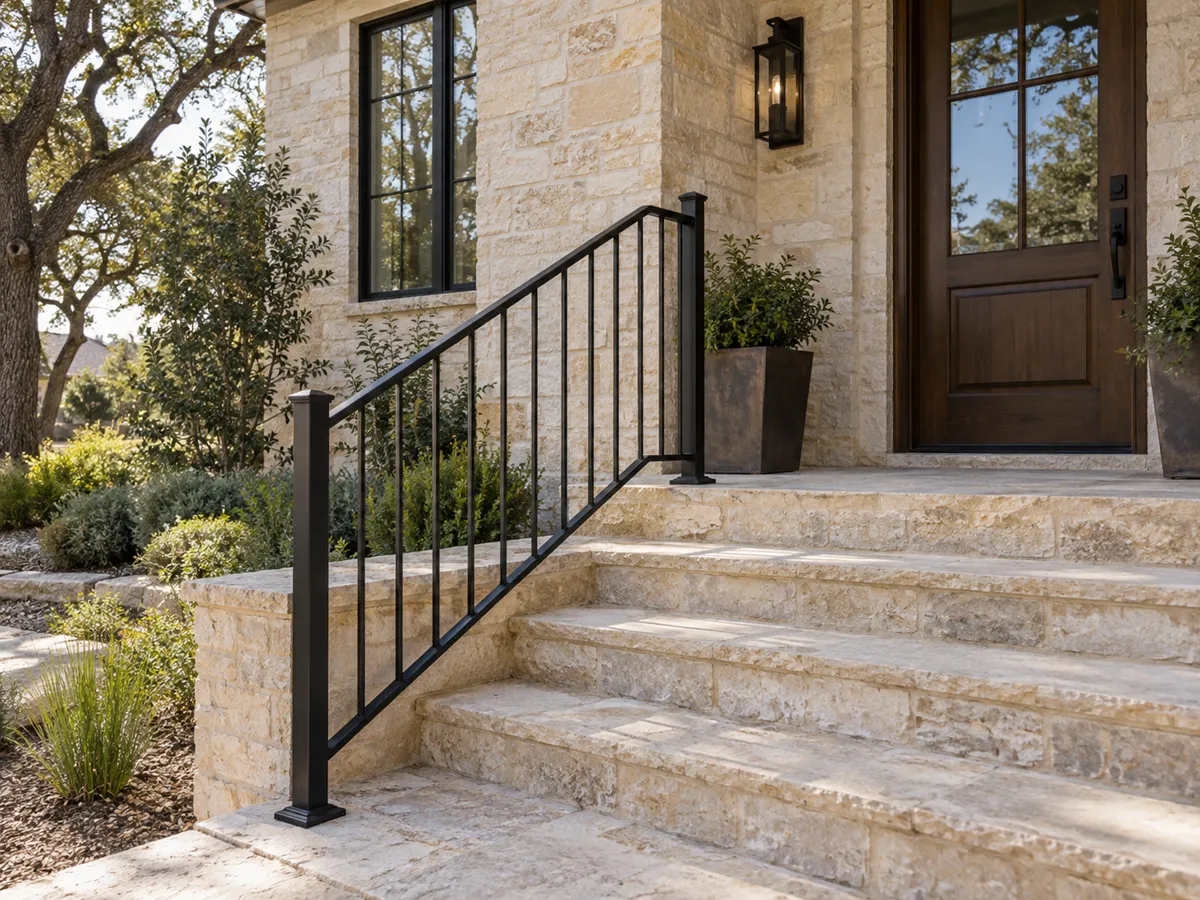
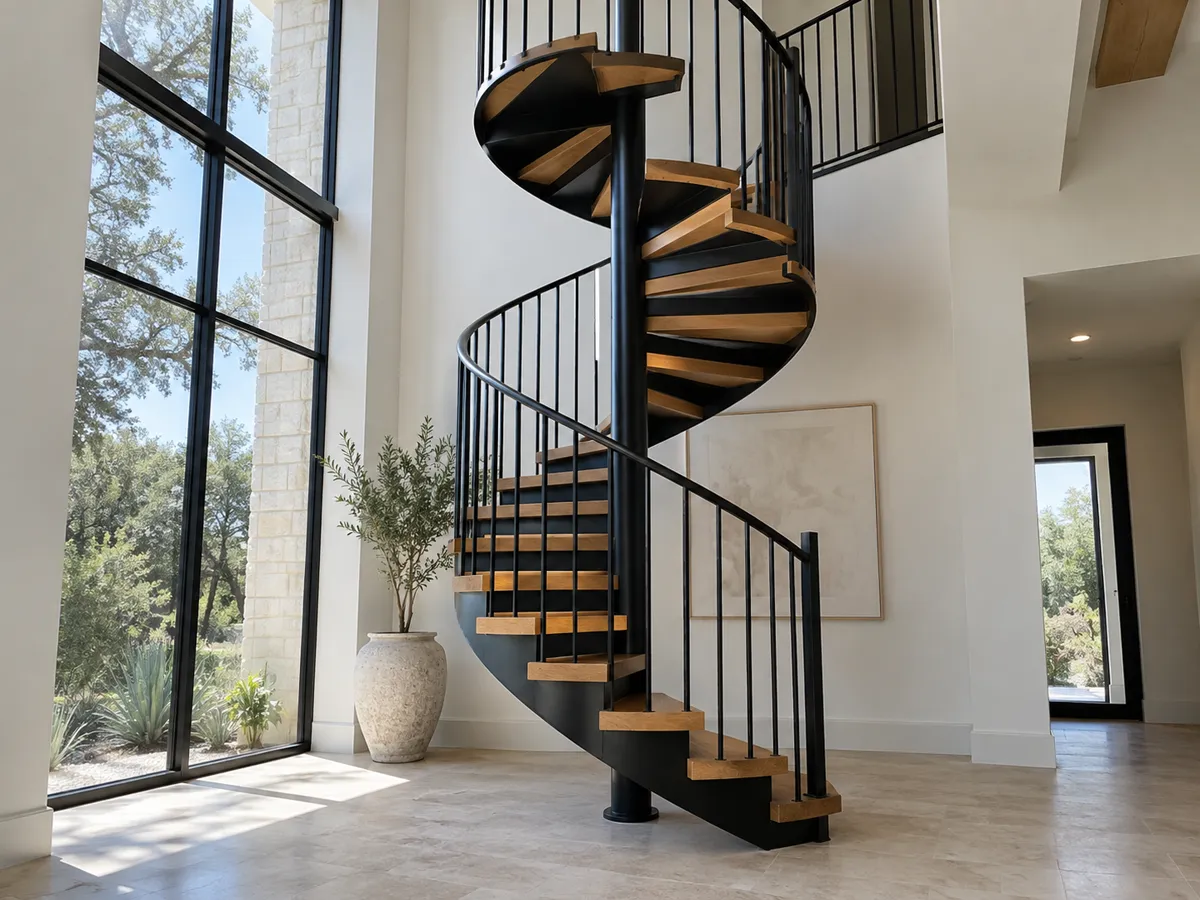
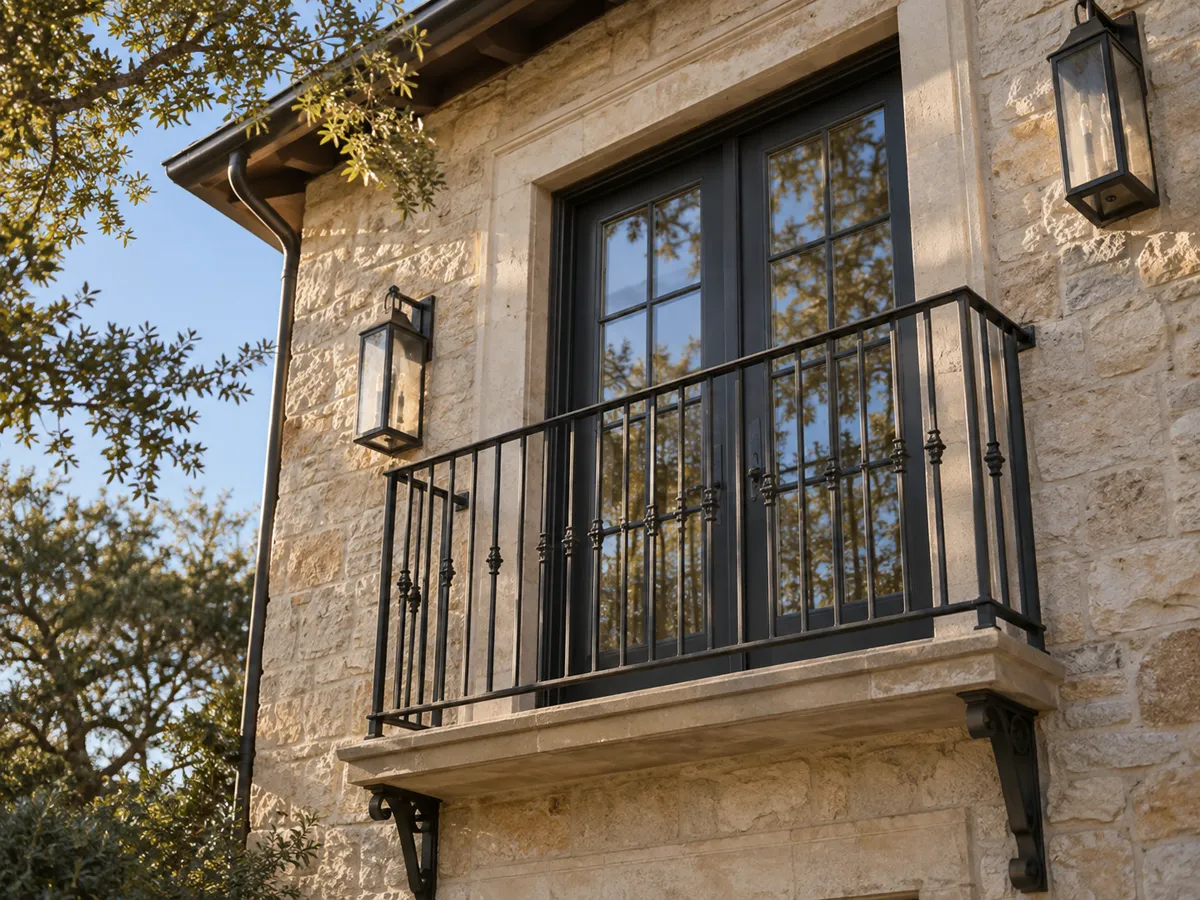
Railings round out the job. Porch and stair railings in mild steel, detailed to match the fence pattern, carry the design onto the house itself.
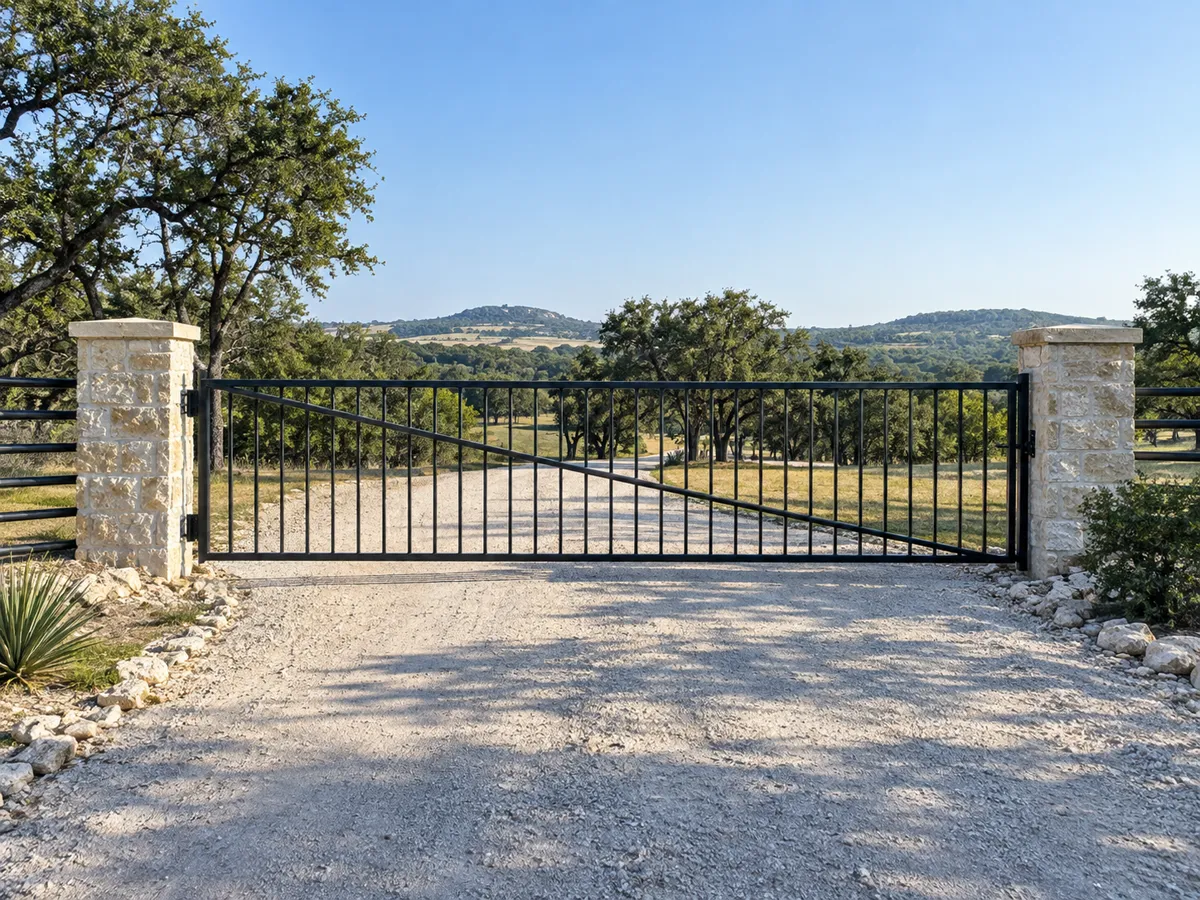
What Drives the Cost of an Iron Fence or Gate in Sunset Valley
We do not print prices. Every job is measured and quoted in writing, and these are the factors that set the figure:
- Run length and the number of gates, from a single walk gate to a full perimeter with a driveway entry.
- The top design. A flush top is efficient; a tight-spaced crown above the rail uses far more pickets.
- Picket and frame gauge, and whether the fence stays ornamental or becomes solid by the ratio.
- Gate width and leaf count, and swing versus slide.
- Grade changes that call for stepped or racked panels.
- Finish: galvanized steel under powder coat, or powder coat alone.
- The operator, power at the gate by trench or solar panel, keypad or intercom, and safety devices.
- Posts, footings and any masonry columns.
- Removal of an old fence, and whether replacing more than half of it pulls the rest into the current rules.
The site visit costs nothing, and the quote that follows is written.
How We Build a Sunset Valley Gate, Measure to Hang
The first step is the property. Our installers walk the fence line, measure every opening and the grade, look at any existing fence, and mark where power would run for an automated gate.
From that we produce shop drawings showing the top design, picket spacing, the solid to open ratio, post positions and each gate's swing or slide path. You approve them before cutting starts. Because there is no permit review in Sunset Valley, the drawing is the review, and we treat it that way.
Fabrication and welding are done in our own shop. Steel is galvanized and powder coated before delivery, and then the same crew sets posts, hangs panels and gates, fits latches and hinges, and commissions any operator in front of you. A written warranty comes with the finished work.
The process
From Site Visit to a Gate That Runs
Four steps, and nothing is fabricated until you have signed off on the drawings and the price.
Free site visit
We measure the opening, the slope and where power can reach, and talk through style, automation and access.
Drawings and a written price
You get scaled drawings for your approval and for any HOA or city review, with one written price.
Fabricated in our shop
Steel is cut and welded to the approved drawings, then galvanized, powder coated or both.
Installed and tested
Columns and posts set, gate hung, operator set up to UL 325 and every safety device tested with you.
Gates, Fences and Ironwork We Build
Questions
Sunset Valley: Gate and Fence Questions
Do I need a permit for an iron fence or gate in Sunset Valley?
No. The city's permit FAQ says a fence needs no permit, but it must comply with Section 150.106 of the Land Development Code. We design to that section and check it against the current code at quote time.
Can my new iron fence have spear tops?
Not in Sunset Valley. The code bans spiked elements above the top rail and pickets above the rail spaced between two and nine inches apart. We build flush tops, tight-spaced crowns or capped designs instead.
What does an iron fence with a driveway gate cost here?
It depends on run length, the number and width of gates, the top design, steel gauge, finish, the operator and its power, and posts and footings. We give a written quote after a free measure.
Swing gate or slide gate for my Sunset Valley driveway?
A wide, level approach suits a swing pair. A drive with no room for the leaves to open suits a slide gate. We measure the drive and the space beside it and recommend one.
What if I only replace part of my old fence?
Replacing more than 50 percent of a fence brings the whole fence under the current rules, so a kept section may have to change as well. We assess the existing fence at the site visit.
What happens to an automatic gate when the power goes out?
We install a backup battery so the gate keeps operating, and every operator carries a manual release for opening it by hand.
How long does fabrication take?
Lead time depends on the size of the job and the shop schedule. We put a fabrication date in writing once you approve the drawings.
What do I get at the end of the job?
A finished installation, a walkthrough of how the gates and any operator work, and a written warranty.
Talk to us about a gate in Sunset Valley
Free on-site measure across Austin and the west side. We call you back to set a time.
Calls only, we do not receive text messages.