Skip to content

Wrought Iron Gate Installation in Austin, Forged Detail That Lasts

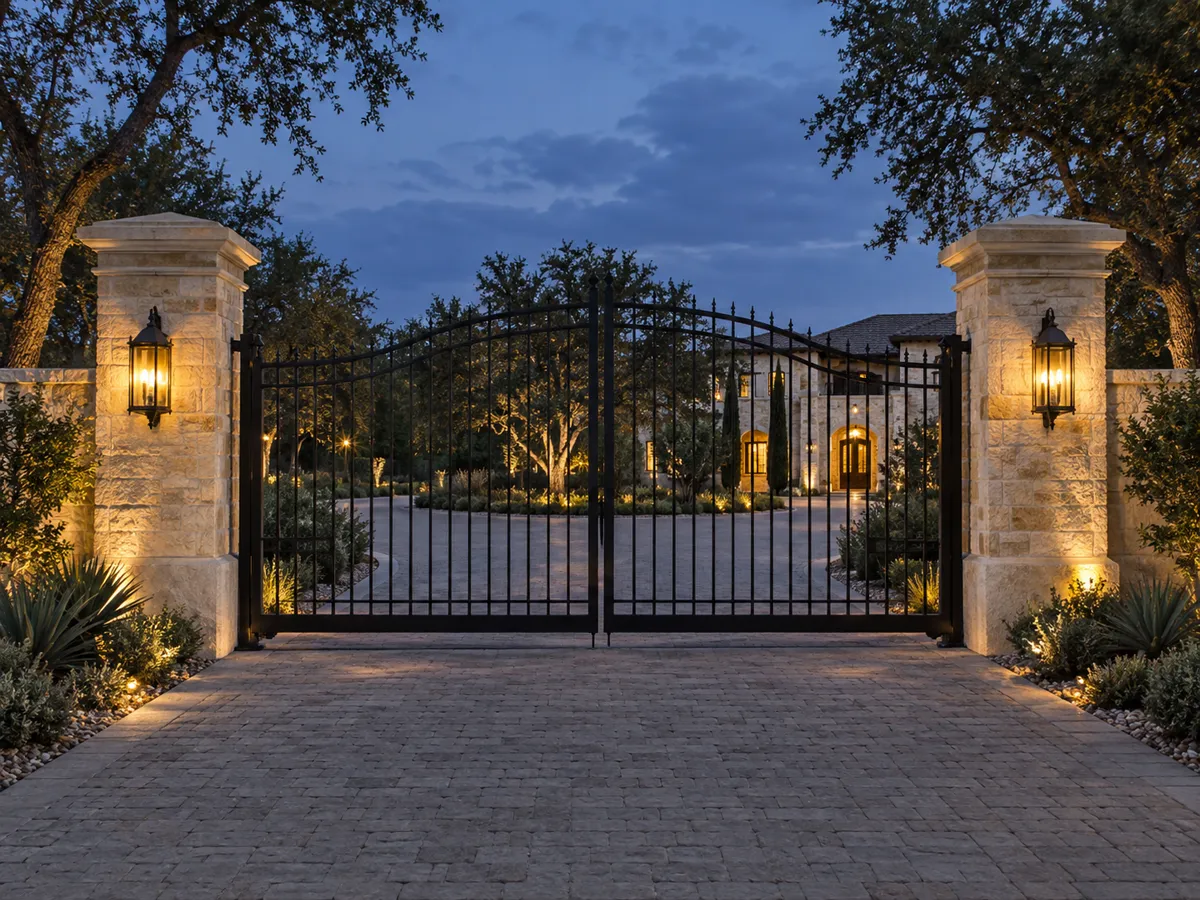
Austin Metal Gates takes on wrought iron gate installation in Austin, TX, and is Travis County's trusted specialist in forged ornamental entries, specializing in hand-bent scrollwork, arched top rails and forged finials. We offer hot-forged collars and twists and duplex finishes made for Austin humidity.

  • Free on-site measure
  • Scroll layouts you approve
  • Forged in our own shop
  • One written price

Request a free site visit

About our wrought iron gates

Our team provides a forging plan for every curve and collar, delivering a period-correct gate for traditional and Mediterranean homes and durable, finish-protected ironwork for both residential and commercial projects. The same crew that measures the opening and the arch draws the gate's scroll layout, and we heat, bend and weld each piece in our own shop.

From wrapping a collar around two scrolls to setting the finished leaves on their hinges, our team handles every detail. Serving Austin, Rollingwood, Barton Creek and Lost Creek, we build for homes where the entry is the first piece of the facade a visitor sees.

Why Austin Metal Gates

How We Work

Forged detail made by hand, not bought by the box. The same people draw, forge, finish and hang your gate.

Measured on siteThe opening, the arch and the columns, measured where the gate will hang
Scrolls drawn full sizeYou approve the layout of every scroll and collar before forging starts
Forged in our shopScrolls bent, collars wrapped and twists turned by hand, not cast in bulk
Finished for humidityGalvanized, then powder coated, so the detail lasts in Austin weather

Real Wrought Iron Versus Ornamental Steel

Almost every gate sold as wrought iron today is forged mild steel. We tell you that plainly, because the name describes a look and a way of working more than the metal.

What wrought iron actually is

True wrought iron is a very low carbon iron with threads of slag running through it, made by puddling and worked by hand. Commercial production in the United States ended in the 20th century, so new material is scarce and mostly reclaimed. It is beautiful and resists corrosion well, but it is rarely practical for a new gate.

Why forged steel is not a downgrade

Mild steel forges, bends and welds cleanly, is stronger than wrought iron and is available in every size we need. What makes a gate wrought in character is the work: heated scrolls, wrapped collars, tapered ends and hammered texture. A forged steel gate made that way looks and feels the part.

The Forged Details

The difference between a forged gate and a stamped one is in the details you can touch. Each one below is made in our shop rather than ordered as a casting.

Scrolls and collars

C and S scrolls are heated and bent around a jig so each curve is smooth and matches its pair. Where two scrolls meet, we wrap a hot collar around them instead of hiding a weld, the traditional joint that gives ironwork its handmade look.

Arched tops, finials and twists

Top rails can be flat, an eyebrow arch that rises toward the center, or a full arch matched to a doorway. Pickets can end in spear or ball finials, carry a hand-turned twist or open into a basket. We draw the combination you choose before forging begins.

Hammered texture and tapered ends

Hand forging leaves marks a casting never shows: picket ends drawn out to a taper, a light hammered face on the rails and slight variation from one scroll to the next. Owners of older homes often ask for exactly that texture, because it matches the hand-made iron on porches and balconies around central Austin.

The Austin Homes That Suit Forged Iron

Ornamental iron belongs on homes with traditional roots. In Austin that means Mediterranean and Tuscan styles, older central neighborhoods and many limestone estates on the west side.

Mediterranean and Tuscan

Stucco walls, clay tile roofs and arched windows pair naturally with an arched top rail, scroll bands and a deep black or oil-rubbed finish. The gate's arch should echo the home's arches, so we take its radius from the house, not from a pattern book.

Traditional and limestone estates

On a limestone house with a formal entry, restraint works best: straight pickets with a single scroll band, collars at each joint and simple finials. The ironwork frames the stone instead of competing with it, and it suits a front walk gate as well as a drive.

Rust, Humidity and Finish

Iron rusts, and Austin summers are humid. Ornamental gates rust first at the joints and inside scrolls, where water and dew collect and paint is hardest to apply.

Why iron rusts here

Gulf moisture keeps summer mornings damp, irrigation wets the lower rails most days and spring hail chips finishes. Scrolls, collars and baskets trap water in tight places, which is why a cheap painted gate shows rust at its joints within a few seasons.

Galvanize first, then powder coat

We hot-dip galvanize the finished gate so zinc reaches inside every scroll and joint, then powder coat over it. Known as a duplex system, the zinc protects the steel even where the topcoat is chipped, which a painted finish cannot do.

Care through the year

Rinse the gate a few times a year, look over the lower rails and joints each spring after hail season, and touch up any chip promptly. A light coat of wax on the topcoat helps water bead off. That is typically all the care a duplex finish needs.

Hanging Heavy Ornamental Leaves

Forged gates are heavy, and ornament adds weight at the far end of the leaf, where it pulls hardest on the hinges and the posts.

Posts, hinges and stone columns

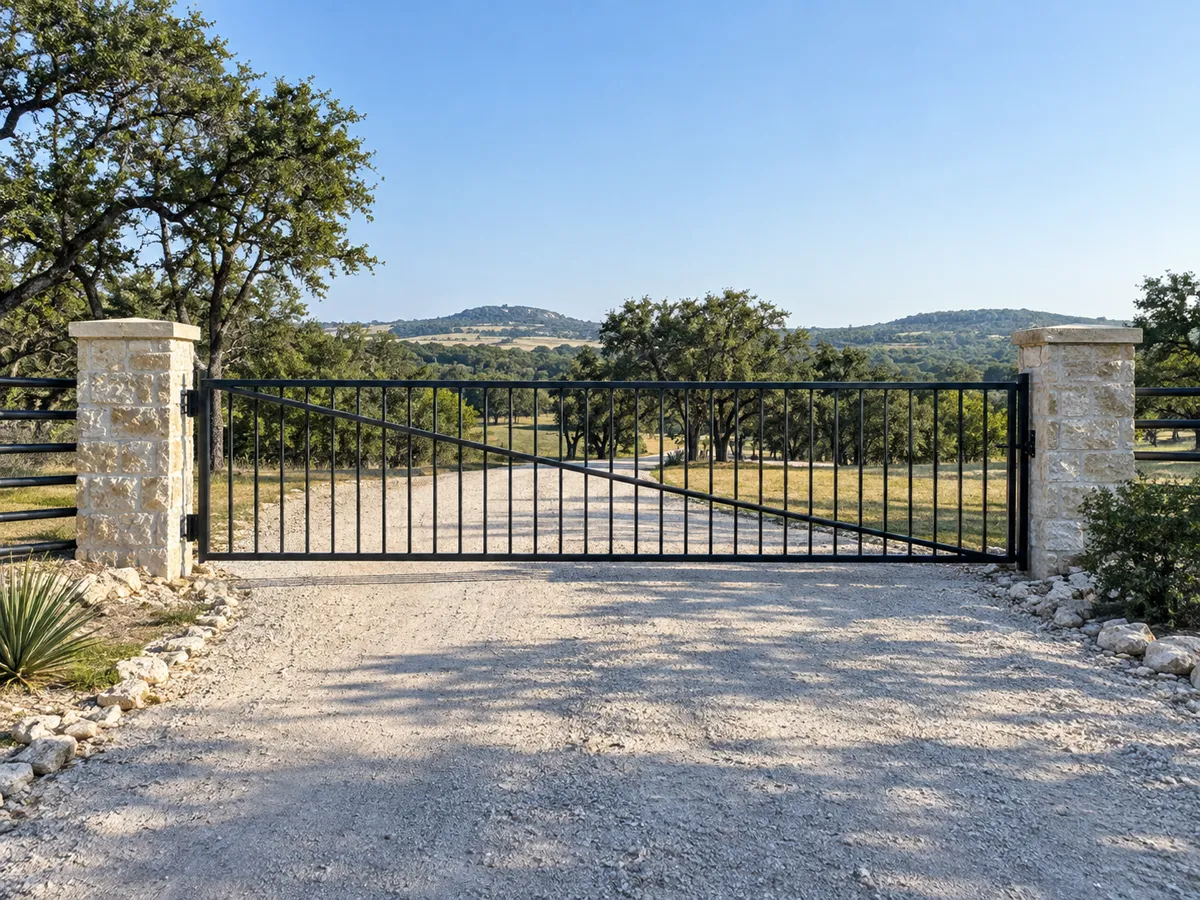
We hang ornamental leaves on heavy ball-bearing hinges and steel posts set in deep footings, or on steel cores built inside limestone columns. A diagonal brace hidden in the scroll layout stops the leaf from sagging over the years.

Automating a forged gate

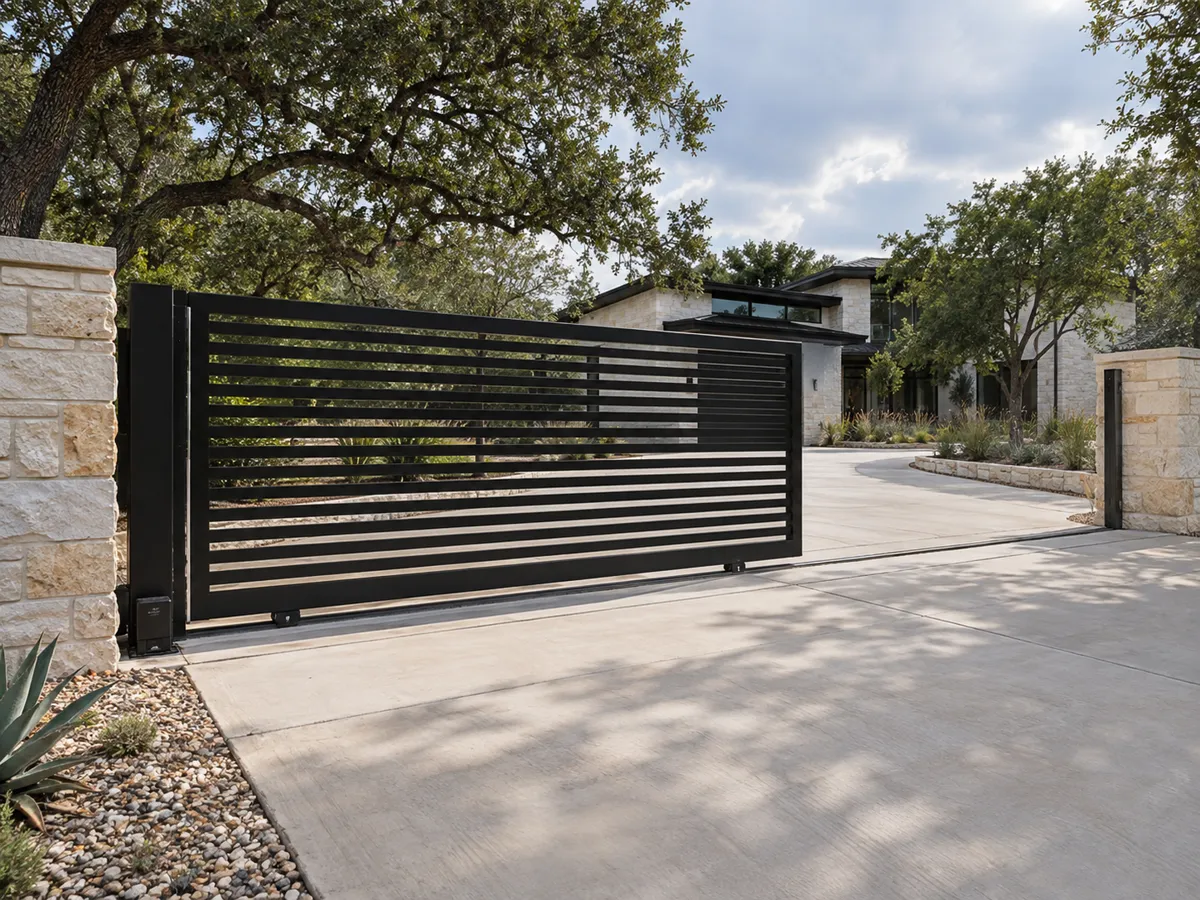
Forged gates automate well when the operator is sized for their weight. On an automated gate we screen scroll openings near the ground and add photo eyes and edges, so the ornament never becomes a pinch point.

Matching walk gates and hardware

A drive gate rarely stands alone. We forge matching pedestrian gates, latches, drop rods and pull handles from the same drawings, so the scroll pattern runs unbroken from the drive to the front walk. Hardware is finished in the same duplex system as the gate, so it ages at the same rate rather than rusting first.

What Shapes the Cost of a Wrought Iron Gate

Ornamental iron is priced from the scroll layout, because hand forging takes far more time than straight pickets. What moves the number:

  • Size and shape: width, height and a flat, eyebrow or full arch top.
  • Amount of forged detail: scrolls, collars, twists, baskets and finials.
  • Material: forged mild steel, or reclaimed wrought iron where it can be sourced.
  • Finish: galvanizing, powder coat color and any aged effect.
  • Columns and hinges, including steel cores in stone.
  • Automation and safety screening, if the gate will open on its own.

Forged gates typically take an estimated eight to twelve weeks from approved drawing to installation.

To carry the same forged look along the property line, see our ornamental steel fence runs. For grand drive entries with columns and lighting, see estate gate entries. Or visit the Austin Metal Gates home page for everything we build.

The process

From Scroll Drawing to a Gate on Its Hinges

Four steps, and no iron is heated until you have approved the scroll layout and the price.

  1. Free site visit

    We measure the opening and the arch, look at the house and talk through the detail you want.

  2. Scroll layout and a written price

    You get a full-size layout of the ornament and an elevation for review, with one written price.

  3. Forged and finished

    Scrolls bent, collars wrapped and the frame welded in our shop, then galvanized and powder coated.

  4. Hung and adjusted

    Posts or column cores set, leaves hung on bearing hinges and adjusted until they swing true.

More of What We Build

Questions

Wrought Iron Gates: Common Questions

How much does a wrought iron gate cost?

It typically depends on how much forged detail it carries. Straight pickets cost far less than full scrollwork and an arched top. Your written quote sets the final price.

Is your gate real wrought iron?

Usually it is forged mild steel, which is what nearly all modern wrought iron gates are. We say so in the quote, and can source reclaimed wrought iron on request where it is available.

Will a wrought iron gate rust?

Bare iron will. A galvanized and powder coated gate resists rust for many years with simple care, even in humid summers.

How long does a forged gate take?

An estimated eight to twelve weeks from approved drawing to installation, depending on the amount of detail.

Can a wrought iron gate be automated?

Yes. We size the operator for the weight, screen low scroll openings and add photo eyes and edges for safety.

Does my HOA need to approve the design?

Often, yes. We provide the elevation, finish notes and site plan your association reviews.

Do you work in my area?

Yes, throughout Travis County: Austin, Rollingwood, Barton Creek, Lost Creek, West Lake Hills, The Hills, Lakeway, Steiner Ranch, Shady Hollow and Sunset Valley.

Is there a warranty on the finish?

Yes, a written warranty covers workmanship and finish, provided with your quote so you can read it first.

Free site visit

Talk to us about a wrought iron gate

Free on-site measure across Austin and the west side. We call you back to set a time.

Call (512) 503-9203

Calls only, we do not receive text messages.

Call (512) 503-9203