Skip to content

Electric Gate Installation in Austin, Powered Safely From the Panel Out

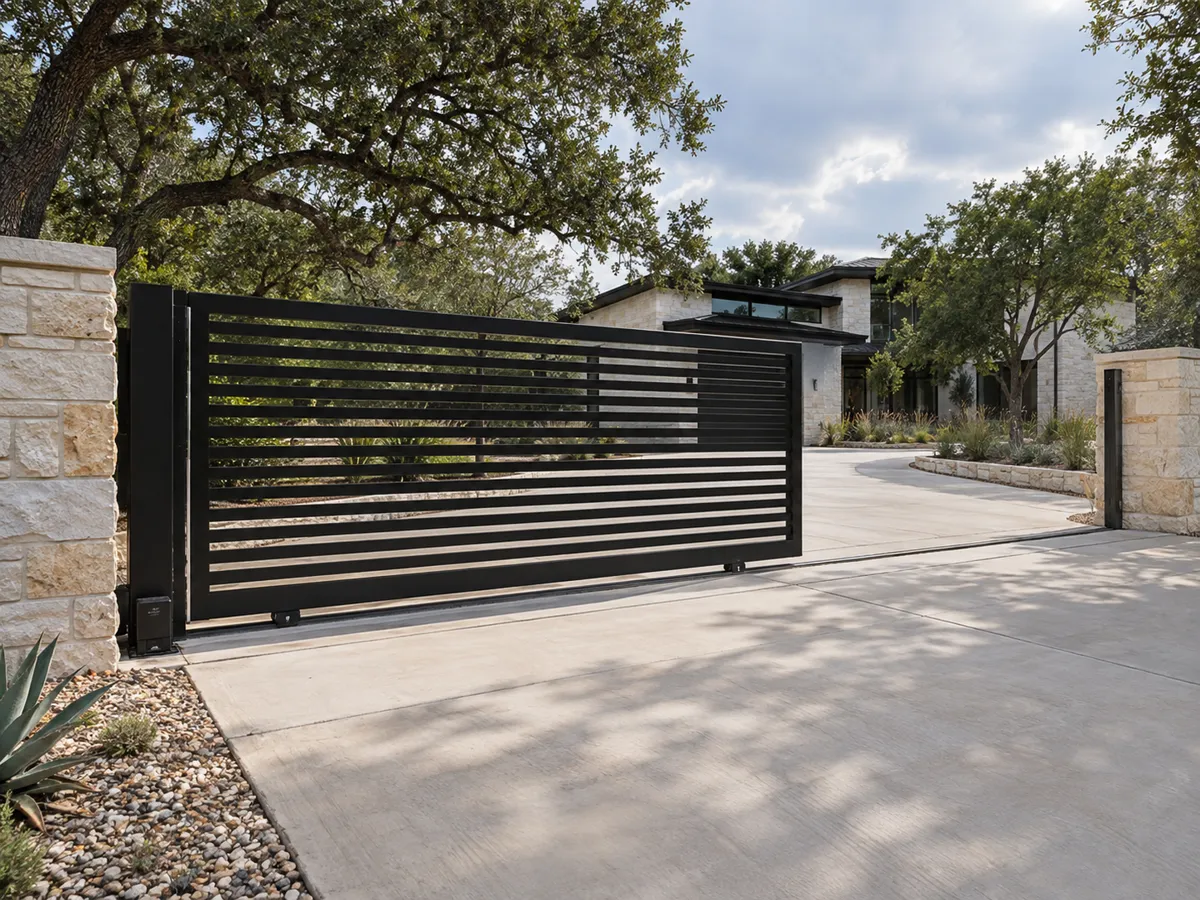
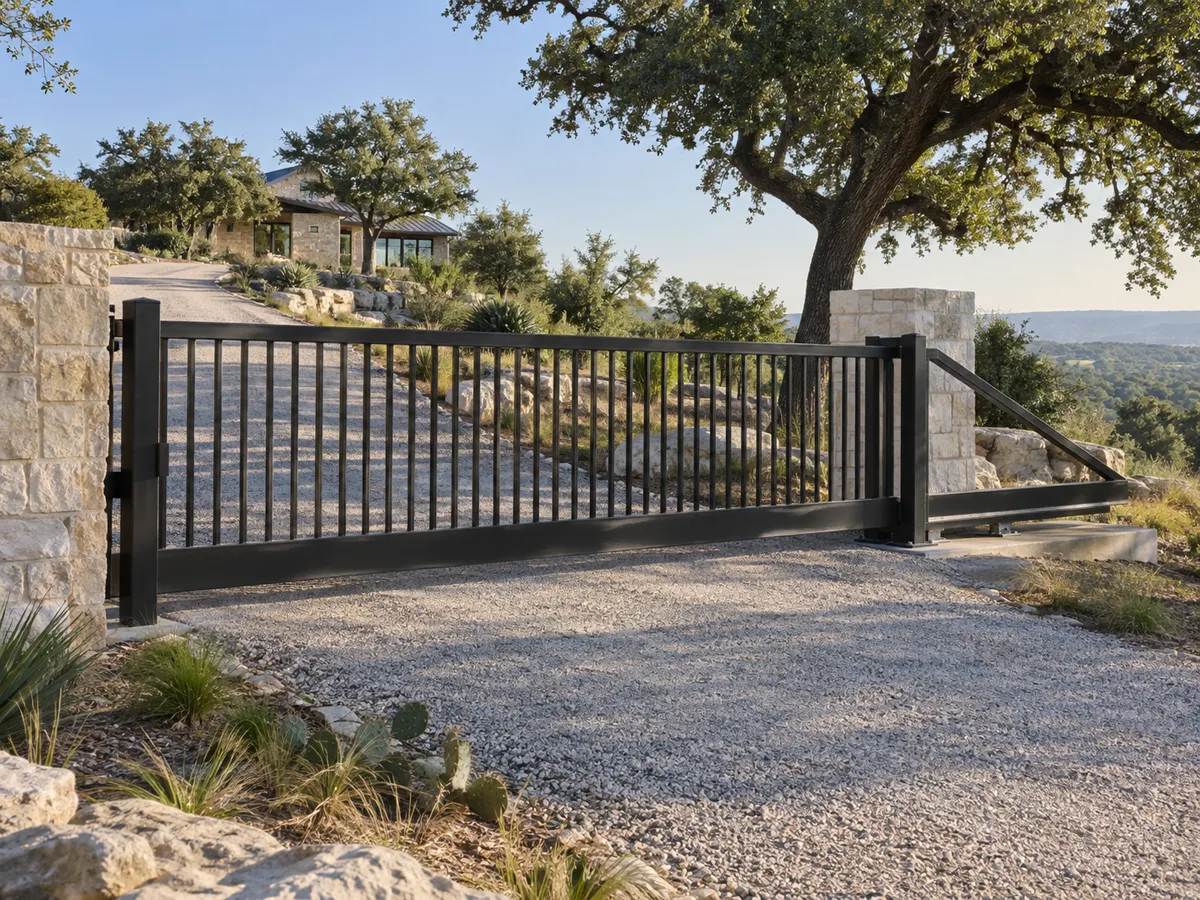
Austin Metal Gates plans and wires electric gate installation in Austin, TX, and is Travis County's trusted specialist in gate power, specializing in dedicated branch circuits, buried conduit runs and low-voltage control wiring. We offer surge protection at both ends of the run and battery backup sized for long outages.

  • Free on-site measure
  • Permitted circuits
  • Surge protection standard
  • One written price

Request a free site visit

About our electric gate work

Our team provides a power plan drawn before the trench is cut, delivering an entry that keeps working through summer storms for homeowners and a permitted, inspectable installation for both residential and commercial projects. The same crew that measures the run from your panel to the opening builds the frame in our own shop and sets the operator to UL 325 before handing it over.

From choosing the breaker space in your panel to sealing the last conduit fitting inside the operator housing, our team handles every detail. Serving Austin, Bee Cave, Dripping Springs and Volente, we work on both sides of the utility map, from Austin Energy service in town to Pedernales Electric territory to the west.

Why Austin Metal Gates

How We Work

Power is planned first, not added at the end. The run, the trench and the controls are drawn before we quote.

Run measured on sitePanel location, trench path and the ground along it, walked with you
Permit pulledNew circuits go through the right city's electrical permit and inspection
Protected both endsSurge protection at the panel and at the operator, plus a ground at the gate
Set up to UL 325Operator and safety devices tested on the finished power before we leave

Where the Power Comes From

Almost every residential gate runs on a dedicated circuit from the home's own panel. The utility only gets involved when the gate sits so far from the house that a separate service makes more sense.

A dedicated circuit from the panel

The operator gets its own breaker, sized for the motor, the heater or fan in the housing, and the accessories it powers. Sharing a circuit with landscape lights or a pump is the most common cause of gates that stall in the evening. We check panel capacity and open spaces at the site visit.

Austin Energy or Pedernales Electric

Inside the city, power comes from Austin Energy; across much of the west side, from Pedernales Electric Cooperative. If a gate sits at the end of a long drive and a new metered service is cheaper than a long trench, we coordinate the request with whichever utility serves your address.

Trenching Through Limestone and Clay

The trench is usually the biggest part of the electrical job, and the Balcones Escarpment decides what it involves. Rock to the west and expansive clay to the east each need their own approach.

West of the escarpment

Around Bee Cave, Lakeway and Dripping Springs, limestone sits inches below the surface. We cut the trench with a rock saw or trencher rather than a shovel, and choose a conduit type that meets the electrical code at the depth the rock allows. Expect a rock trench to typically take longer, estimated at a day or more for a long run.

East side clay

Blackland Prairie clay swells when wet and shrinks in August. Rigid conduit fixed at both ends can crack or pull apart as the ground moves, so we add expansion fittings where the run meets the column and the house, and slope the trench so water does not sit in it.

Permits, Disconnects and Inspection

A new gate circuit is new electrical work, and inside Austin it needs a permit and an inspection. Doing it properly also protects the warranty on the operator.

City of Austin electrical permit

Inside the city limits, a new circuit to a gate is permitted through the Development Services Department and inspected before the work is covered. A licensed electrician pulls the permit, and we schedule the trench so the inspector can see it open where required.

A disconnect at the gate

We fit a lockable disconnect within sight of the operator, so anyone servicing the gate can cut power on the spot instead of walking back to the house. Inspectors look for it, and technicians rely on it.

Outside the city

Lakeway, Bee Cave, West Lake Hills and other cities run their own permits, and some unincorporated lots follow county or utility rules instead. We confirm which applies to your address when we quote.

Surge, Lightning and the Control Board

A buried wire hundreds of feet long acts like an antenna in a Central Texas thunderstorm. Most dead control boards we replace were killed by a surge, not by wear.

Surge protection at both ends

We install a surge protector at the panel end of the circuit and another at the operator, with a ground rod at the gate. Low-voltage lines for keypads and loops get their own protection, because a strike nearby can enter on those wires as easily as on the power feed.

Heat and fire ants

Control boards suffer when a housing sits in full sun through a run of 100 F days, so we place and vent housings to shed heat. Fire ants are drawn to electrical equipment and can short a board, so every conduit entry is sealed and the housing is checked for nests at service visits.

Low-Voltage Runs and Backup Power

The power feed is only half the wiring. Keypads, intercoms, photo eyes and vehicle loops all need their own low-voltage cable back to the operator.

Separate conduit for low voltage

Control wiring runs in its own conduit, apart from the line voltage, so the motor does not induce noise on the keypad or loop circuits. We leave a pull string in every run, which makes adding a camera or intercom later a matter of hours, not a new trench.

Battery backup and solar

The February 2021 winter storm left many Austin homes without power for days, and gates without batteries stayed shut or open. We size battery backup for your traffic, and where a trench would be very long, a solar charged operator can avoid the line voltage run altogether.

What Shapes the Cost of an Electric Gate Install

The electrical side is priced from the walked run, because distance and ground change the labor more than anything else. What moves the number:

  • Distance from the panel to the gate, which sets wire size and trench length.
  • Ground along the run: rock, clay, paving or landscaping to cross.
  • Panel capacity, and whether a breaker space is free.
  • Permit and inspection for the city that covers your address.
  • Disconnect, surge protection and grounding at the gate.
  • Low-voltage runs for keypads, intercoms, loops and photo eyes.
  • Battery backup or solar charging.

A typical residential power run is estimated at one to three days of work once the permit is issued.

Choosing the motor itself is a separate decision; our gate openers and automation page compares the operator types we install. For the call box and code pad at the drive, see intercom and keypad entry. You can also return to our Austin gate shop's home page for every service we offer.

The process

From Panel to a Gate That Opens

Four steps, and no trench is dug until the run, the permit and the price are agreed.

  1. Free site visit

    We find the panel, walk the trench path to the opening and note rock, clay, trees and paving along the way.

  2. Power plan and a written price

    You get the route, the circuit size, the backup option and one written price, and we start the permit.

  3. Trench, conduit and inspection

    Conduit is laid, wire pulled and the work inspected where the city requires it before backfill.

  4. Powered up and tested

    Operator connected, surge and disconnect fitted, and every safety device tested on live power with you.

More of What We Build

Questions

Electric Gates: Common Questions

How much does it cost to run power to a gate?

It is typically driven by distance and ground. A short run through soil costs far less than a long run through limestone. Your written quote sets the final price after we walk the route.

Do I need a permit for an electric gate in Austin?

Inside the City of Austin, a new gate circuit needs an electrical permit and inspection. Other cities have their own rules, and we confirm yours at the quote.

Can the gate run on solar instead?

Often, yes, for lighter gates and moderate traffic. On a busy or heavy gate, line power with battery backup is usually the more reliable choice.

What happens when the power goes out?

With battery backup the gate keeps cycling for a time, and every operator has a manual release so it can be opened by hand.

How do you protect the gate from lightning?

Surge protection at the panel and the operator, a ground rod at the gate and protection on the low-voltage lines. Nothing stops a direct strike, but this stops most board failures.

How long does the electrical work take?

An estimated one to three days on site for most homes once the permit is issued, longer for long runs through rock.

Do you work in my area?

Yes, throughout Travis County: Austin, Bee Cave, Dripping Springs, Volente, Lakeway, West Lake Hills, Rollingwood, Lost Creek, The Hills, Shady Hollow and Sunset Valley.

Is the electrical work covered by a warranty?

Yes, our written warranty covers the installation, and it comes with your quote so you can read it first.

Free site visit

Talk to us about powering your gate

Free on-site measure across Austin and the west side. We call you back to set a time.

Call (512) 503-9203

Calls only, we do not receive text messages.

Call (512) 503-9203