The front courtyard wall
Many Austin homes put a walled forecourt between the street and the front door, and the gate in that wall is the main entry for visitors. It needs to look right from the street and swing without scraping the paving.
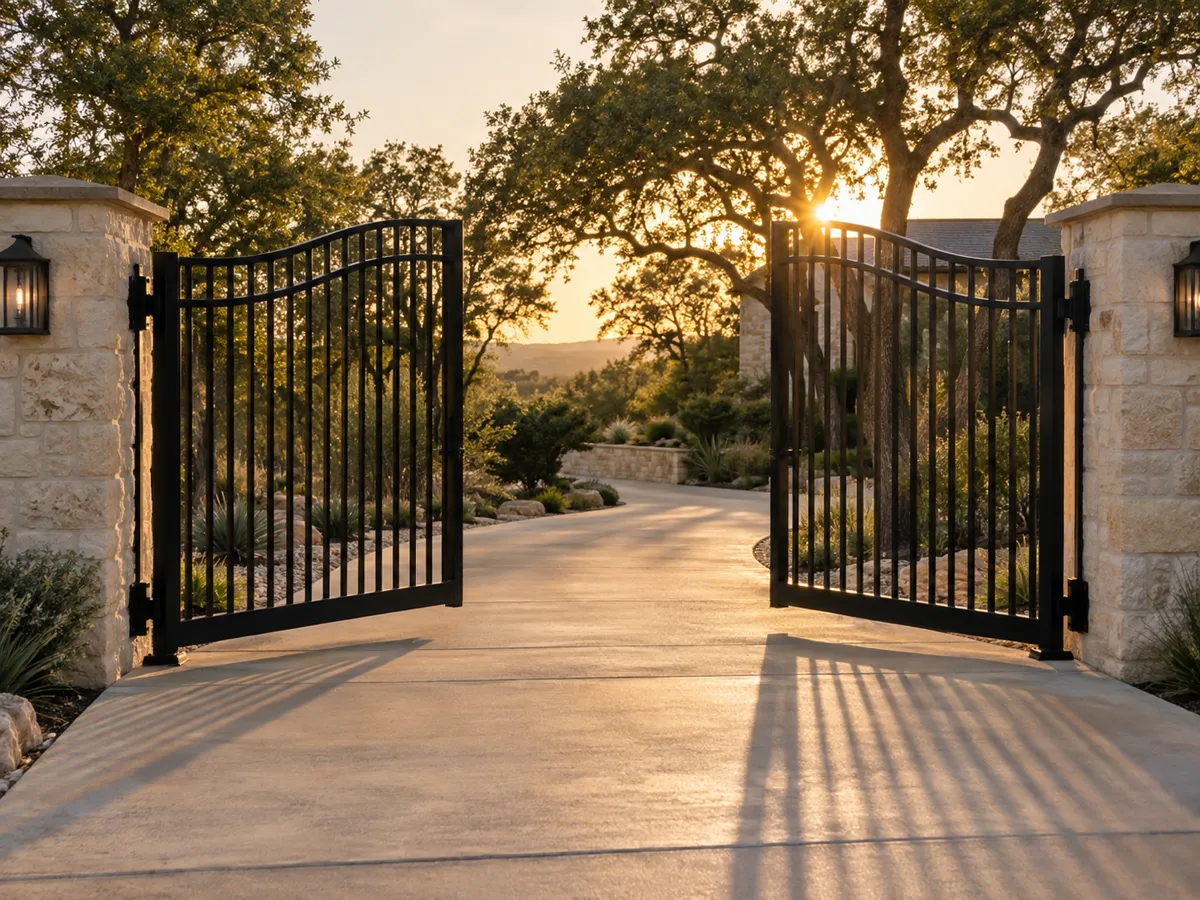
Austin Metal Gates builds courtyard entry gates in Austin, TX: arched and flat-top walk gates in steel or aluminum, fitted into stucco, limestone and masonry walls, with closers and latches made for a gate you touch every day. Each one is drawn from a measurement of your actual opening.
A courtyard gate is the first thing a guest touches, so it has to feel solid in the hand and close without a fight. We visit the property, measure the opening and the wall around it, and draw a gate that fits that opening as it really stands. The drawing you approve names the metal, the finish and every piece of hardware.
Austin courtyards sit behind stucco, cut limestone, stacked stone and brick, and each wall asks for different anchoring. Serving Austin along with Rollingwood, West Lake Hills and Lakeway, we hang hinges into the masonry or into a steel jamb, set the latch strike and finish the work so the gate looks like part of the house.
Why Austin Metal Gates
A walk gate is judged up close, every day. We measure the opening, draw the leaf before cutting steel and test the latch and closer with you before we leave.
A courtyard gate is sized for people, not cars. It sits in a wall, opens many times a day and works more like a front door than a driveway gate, so the details are different from the start.
Many Austin homes put a walled forecourt between the street and the front door, and the gate in that wall is the main entry for visitors. It needs to look right from the street and swing without scraping the paving.
A narrow gate between the house and a boundary wall keeps pets in, screens the side yard and gives the landscape crew a way through. These openings are often the least square on the property.
A walk gate that guards a pool deck or an outdoor living court has to latch every time and sit at a height the rules allow. We cover those rules on our pool gates page and build the leaf to match.
Shared courtyards at condominiums, offices and restaurants get heavier daily traffic, so the closer, hinges and latch are chosen for that load and for staff who will not baby the gate.
Steel is the usual choice for a courtyard gate, and aluminum is the quiet alternative when weight and rust matter more than a heavy look. A steel leaf feels substantial and takes ornate shapes well. An aluminum leaf stays light, which suits a closer and a thin wall, and it never rusts, as covered on our aluminum gates page.
Finish decides how the gate ages in Texas, because summer sun and hail do more damage to coatings than rain does. We prime bare steel, then apply powder coat in a dark, softly textured color that hides small marks. Light colors show chalking sooner in strong sun, and we say so when a homeowner asks for one.
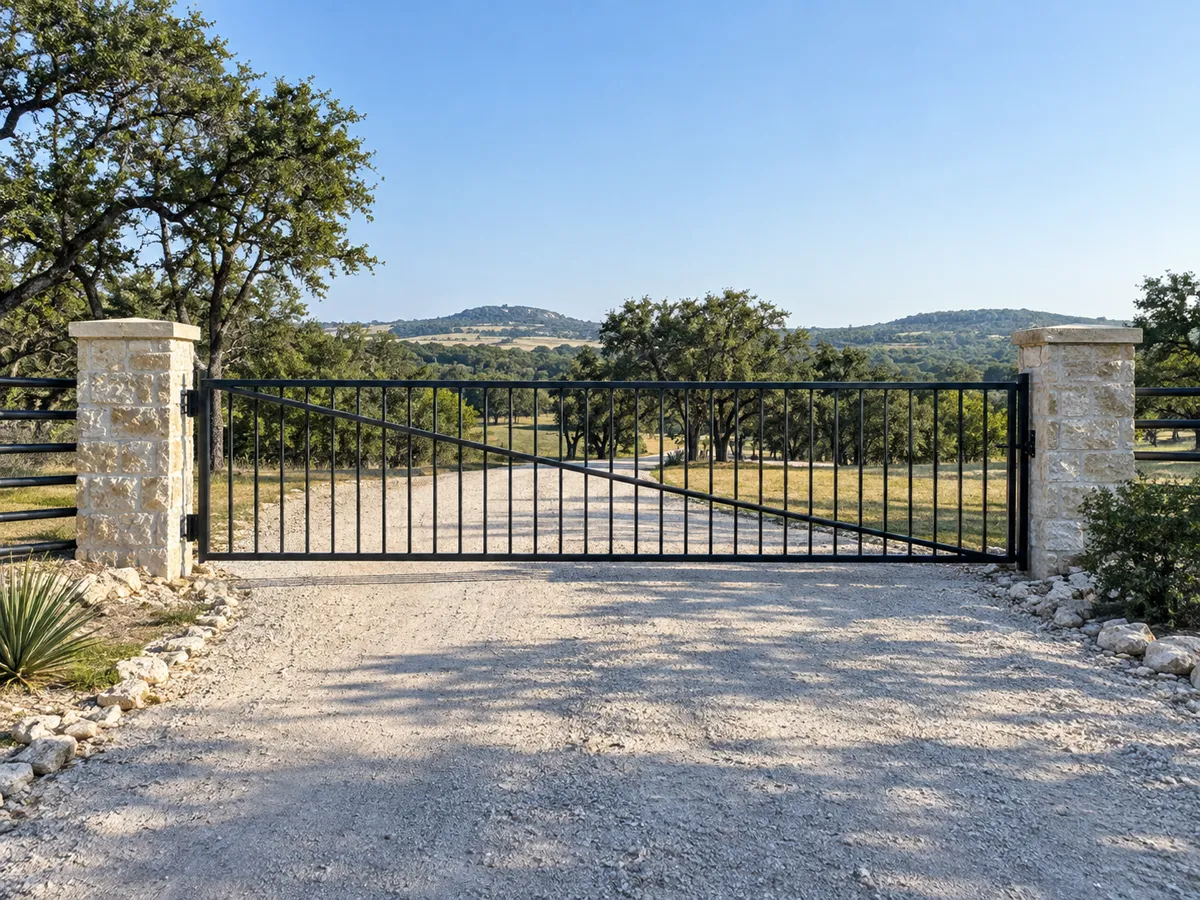
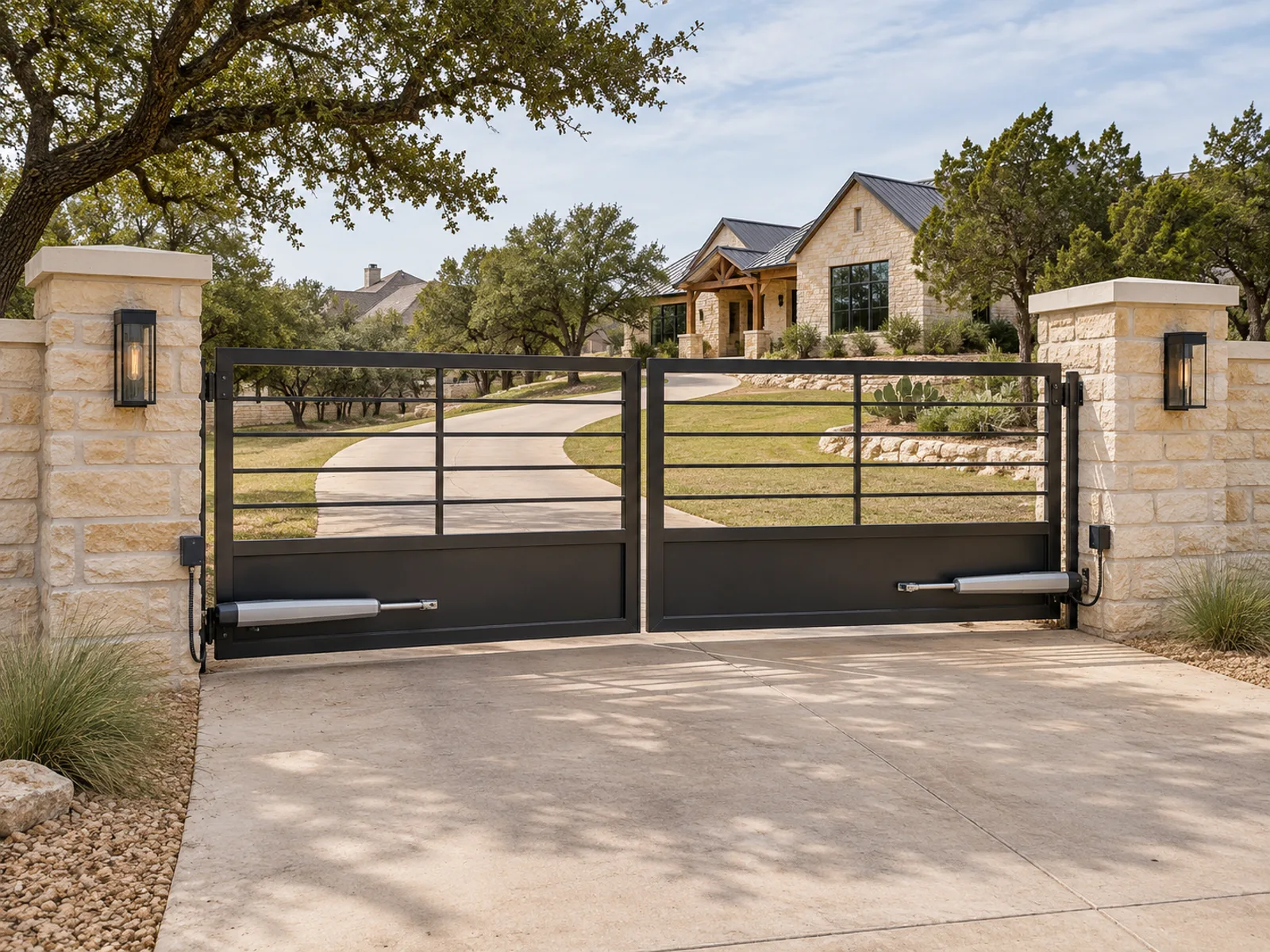
A courtyard gate often pairs with the fence that continues along the property, so we plan the two together. Ornamental steel fencing can carry the same bars, finish and post caps, and a larger estate gate entry at the drive can echo the courtyard leaf. Where the courtyard gate is the only door in a wall, a matching iron pivot entry door carries the same look to the front of the house.
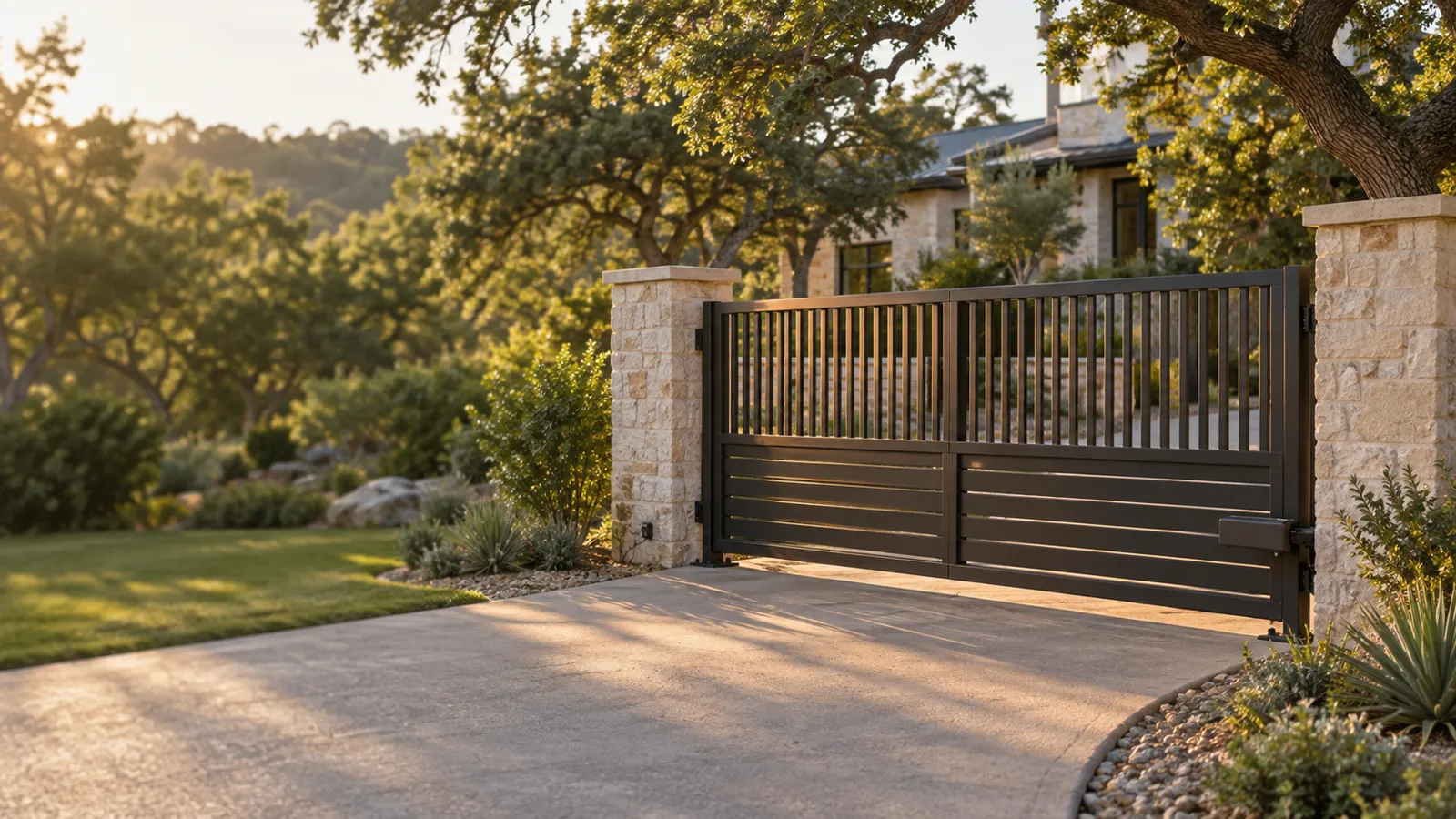
Old and new walls both drift out of true. A leaf made to a round-number size will rub on one side and show daylight on the other, so we take the measurements before anything is drawn.
We check how far each jamb leans, whether the sill runs level and how deep the wall is where the hinges will sit. A thick limestone wall offers a different mounting than a thin stucco one.
For an arched top we trace the curve at full size or record a careful profile. A half-round arch and a shallower one can pass for each other from the street, yet a ready-made gate top will fit neither.
We leave a narrow, even reveal around the whole leaf. Texas clay shifts footings through wet and dry spells, and paint adds thickness over the years, so a fit with no slack ends up binding.
Most courtyard gates swing inward so they never sweep across a sidewalk. Paving levels, steps and the place a visitor stands settle the question, and all three get checked on site.
Hardware carries a walk gate. No motor does the work, so every hinge, closer and latch is felt by the person using it, and a weak one shows up as sag or rattle within a season.
Heavy barrel or pin hinges anchored into the masonry or a steel jamb carry the weight. In full Texas sun, dark steel runs hot, so we pick hinges with room to move and grease points you can reach.
A hydraulic closer meters the swing. The better ones have a separate latching stage, so the final few degrees move faster and the bolt seats every time instead of stopping a hair short.
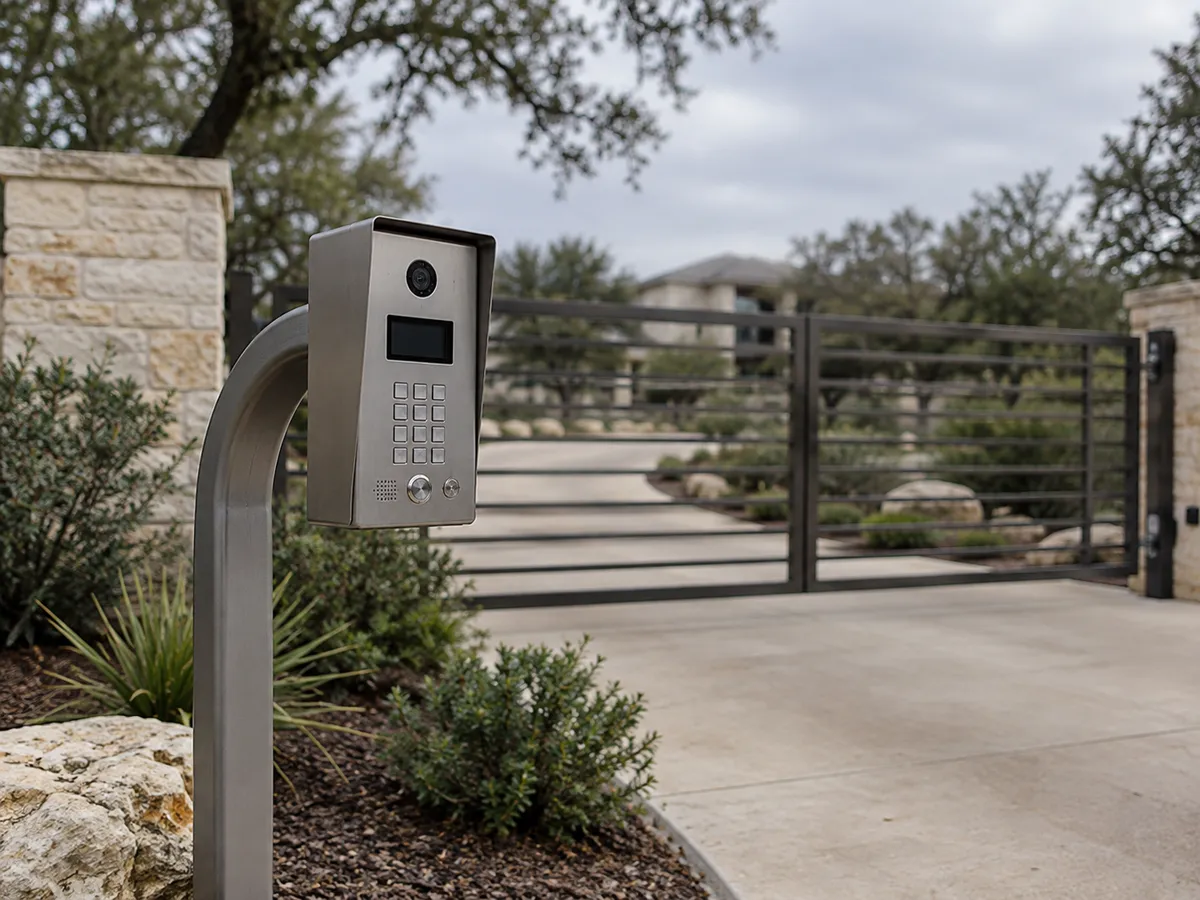
Choose from a thumb latch or lever for daily use, a keyed deadbolt for privacy, a drop rod on the stationary leaf of a pair, or an electric strike and keypad that let a guest in from inside the house.
Stainless fasteners keep rust streaks off a light stucco wall, and sleeves or sealed anchors keep water out of the masonry around each hinge.
The quote comes from the measurement, and it follows a fixed order. No figure appears here, since the arch, the scrollwork, the wall and the hardware change the answer too much for any estimate to mean something before we see the opening.
The final price is set by the written quote after a free visit. Request a visit through the form and have photos of the opening and a note of any HOA on hand. For a pedestrian entry in a longer fence line, our pedestrian entry gates page shows the same approach on a larger scale.
Whatever you choose should look original to the house. Central Texas homes mix Spanish and Mediterranean revival, Hill Country ranch and farmhouse, and newer contemporary work, and each wants a different line.
Window grilles, balcony rails, lanterns and door hardware tell us what the house already says. We borrow bar size, scroll pattern, collars and finish from them so the gate belongs.
Austin limestone has a warm, pale tone and a rough texture. A plain dark gate with clean pickets often looks best against it, while heavier scrollwork suits an arched opening in smooth stucco.
A flat-top gate with square tube and tight vertical bars suits a contemporary courtyard, and a simple picket leaf with a thumb latch fits a farmhouse wall. For slatted privacy, see our horizontal slat gates.
What shops call wrought iron now is really mild steel, bent and welded to resemble forged work. It accepts a zinc-rich primer and a textured powder coat, which is what lets it cope with Austin sun.
The process
Four steps, with no cutting of metal until the drawing and the written scope carry your signature.
We visit, measure the opening and the wall, take a template of any arch and note the paving, the swing and where power would run for a strike.
You receive a scaled drawing and a written quote naming the metal, the finish, the hardware and any access control, plus review drawings if your HOA asks.
The leaf is built and finished in our shop, then hung on the wall or jamb, adjusted for an even gap and fitted with its closer and latch.
We open and close the gate with you, tune the closer so the latch catches, test any keypad or strike and walk the finished work.
Service area
Questions
Yes. We measure and photograph the iron already on the house, then draw the gate with the same bar size, scroll shape and color, and you see that drawing before any steel is cut.
The leaf is built to the wall as it stands. We record the lean and the arch shape on site, so the finished gate shows an even reveal instead of a tapered gap.
Inward is the normal choice, since a leaf swinging out would cross the sidewalk or street edge. Steps, paving heights and where a visitor waits can change that, so we confirm it at the visit.
Yes, with a keypad, intercom or electric strike wired to the gate. We plan the conduit route in the drawing stage so cable never runs across the face of the wall.
A hydraulic closer, or a damped self-closing hinge, set to a slow swing with a quicker final stage so the latch catches. A leaf hung true and kept light holds that setting for years.
Only if the coating is neglected. We prime and powder coat the steel and use stainless fasteners, and a chip should be touched up before it spreads. If you want no rust risk, choose aluminum.
Often. Many Austin communities review visible exterior changes, and some cities regulate walls and gates near the street. Tell us your address and we prepare scaled drawings and finish samples for whoever reviews it.
Yes. Shared courtyards see far more use than a private one, so we pick closers and locks rated for that traffic and write a scope a board or manager can sign.
Request a visit through the form and we will phone to set a time. Boards, managers and builders can attach photos or a plan for a bid.
Calls only, we do not receive text messages.