Skip to content

Steel Gate Installation in Austin, Specified Down to the Wall Thickness

Austin Metal Gates handles steel gate installation in Austin, TX, and is Travis County's trusted specialist in heavy-wall welded frames, specializing in hot-dip galvanized steel, UV-stable powder coat finishes and sealed ball-bearing hinge hardware. We offer solid-panel steel leaves and open picket or slat designs.

  • Free on-site measure
  • Steel sizes on the quote
  • Galvanized before coating
  • One written price

Request a free site visit

About our steel gates

Our team provides a written steel schedule for every gate, naming the tube size, wall thickness and coating system, delivering a frame that holds square through Austin summers for homeowners and a duty-rated build for both residential and commercial projects. We weld each joint in our own shop, and the same crew that measured your opening sets the posts and hangs the leaf.

From drilling vent holes so molten zinc can coat each tube inside and out to torquing the last hinge bolt on a plumb post, our team handles every detail. Serving Austin, Rollingwood, West Lake Hills and Barton Creek, we put the numbers behind the steel in writing before anything is cut.

Why Austin Metal Gates

How We Work

You see the steel before you pay for it. Every size and coat is listed on paper, and one crew carries it from measure to hinge.

Sizes in writingFrame tube, post, picket and wall thickness listed line by line on your quote
Zinc, then colourHot-dip galvanized for rust, then powder coated for colour and sun
Full perimeter weldsEvery joint welded all the way around and dressed before it is finished
Hinges rated to weightBearing hinges chosen for the finished leaf, not a catalogue average

Tube, Post and Picket Sizes

A steel gate is three parts working together: the frame that holds its shape, the hinge post that carries it, and the infill that gives it a face. Each one is sized to the opening, not picked from a standard kit.

Frame and infill

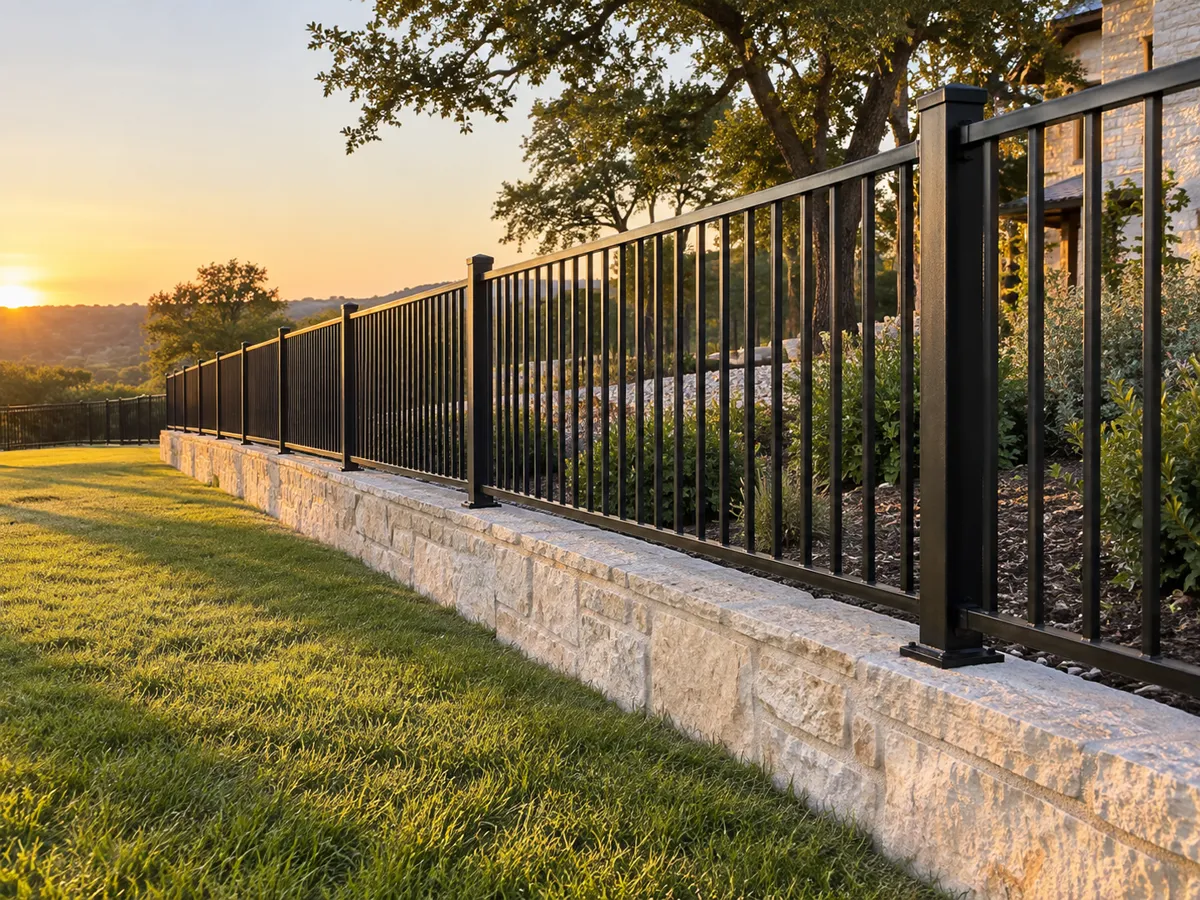
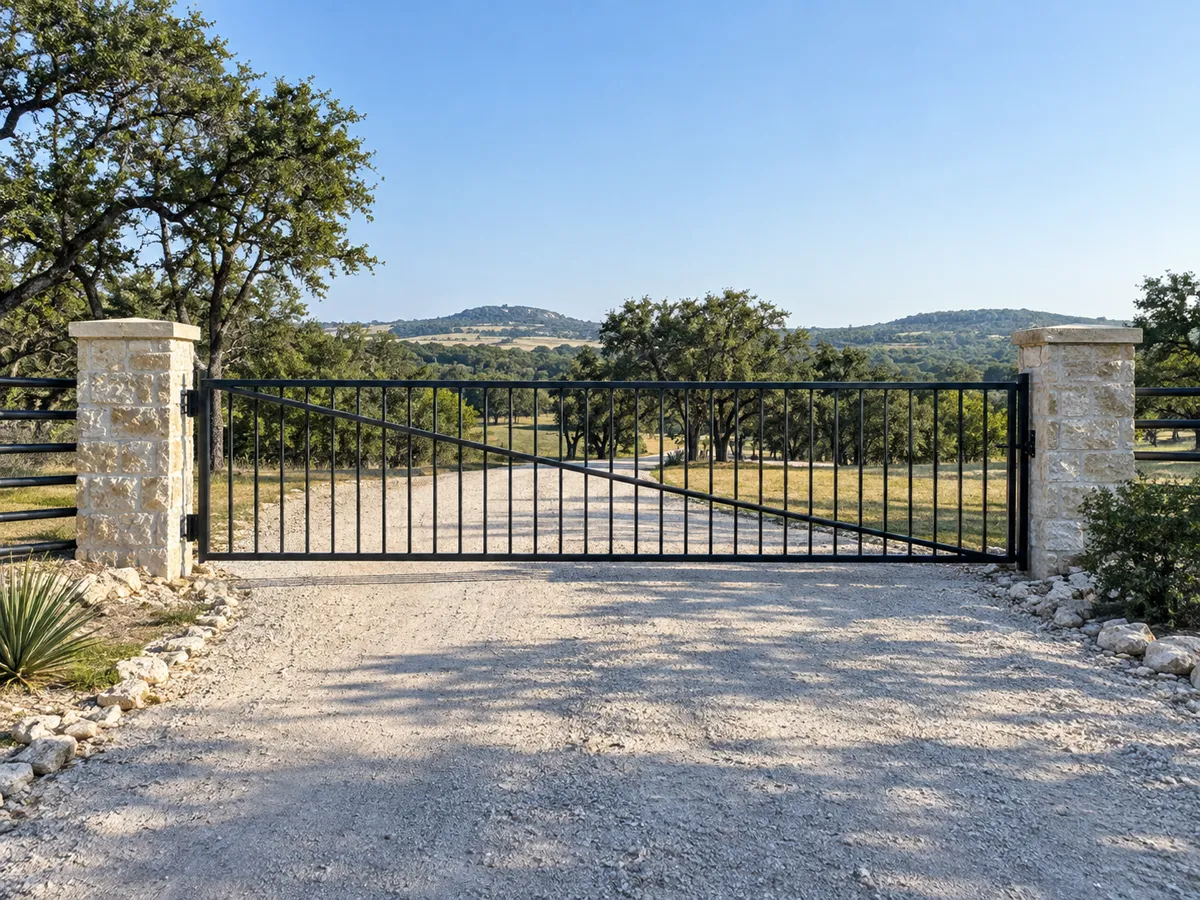
On a typical residential drive leaf we frame in 2 by 2 or 2 by 3 inch square tube, stepping up to 2 by 4 inch on wide or solid leaves. Pickets usually run in 3/4 inch or 1 inch square bar or tube, spaced to suit privacy, pets and any pool barrier rule that applies to the opening.

Hinge posts

The hinge post does more work than any other piece of steel on the job, because the whole leaf hangs off one edge of it. We typically set 4 by 4 inch posts on walk gates and 6 by 6 inch posts on drive leaves, with a heavier wall on long or solid panels, and we cap every post so rain cannot sit inside it.

Wall Thickness and What Gauge Really Means

Two tubes can look identical from the drive and differ by half in strength. The difference is wall thickness, usually stated as a gauge, where a smaller number means thicker steel.

The numbers behind the gauge

In square tubing, 16 gauge is about 0.065 inch of wall, 14 gauge about 0.083 inch and 11 gauge about 0.120 inch. Thin 16 gauge frames are common on low-cost kit gates and tend to rack and sag once a leaf passes 10 feet. Most of our drive leaves are framed in 11 gauge, with 3/16 inch wall on the hinge posts of heavy builds.

Why it matters in Austin

A thicker wall also leaves more steel for rust to work through if the coating is ever chipped by a mower or a trailer hitch. Combined with galvanizing, that margin is a large part of why a well-built steel gate here can serve for decades, an estimate that depends on care and exposure.

Galvanizing, Then Powder Coat, Under the Texas Sun

Bare steel rusts, and paint on bare steel rusts underneath. We protect a gate in two layers, known in the trade as a duplex system, because Austin throws heat, hail and humid spring storms at it in the same year.

Hot-dip galvanizing

After welding, the finished frame is dipped in molten zinc at about 840 F, which bonds a zinc layer to every surface it reaches, inside the tubes included. That is why we drill vent and drain holes in each closed section before it goes in the bath. A hollow frame without them traps air, comes out bare inside, and can rust from the inside out.

Powder coat that survives UV

Powder sticks poorly to fresh zinc unless the surface is lightly blasted and preheated, so we have it prepared before coating. We specify a UV-stable polyester powder, because epoxy powders chalk and fade quickly under Central Texas sun, where summer highs routinely pass 100 F and a dark gate face runs far hotter than the air.

Weld Quality You Can Check Yourself

Most gate failures we are called to look at start at a joint, not in the middle of a tube. A weld that looks tidy from the street can still be a tack and a smear of filler.

Welded all the way around

Every frame joint is welded on all four faces, not tacked on the visible side. A tacked joint lets the frame flex at that corner, cracks the coating and lets water in exactly where the steel is weakest.

Ground clean, not hidden

We grind each weld smooth where it shows and leave it full where it does not, then inspect it before galvanizing. Grinding a weld flush to make it pretty can remove the strength it was there to add.

Square before it leaves

The frame is checked corner to corner on the shop table. A leaf that leaves the shop out of square will never hang true, no matter how carefully the posts are set.

Solid Panel, Picket or Slat, and the Hinge Each One Needs

The face you choose changes the weight of the leaf and the wind it catches, so it changes the hinge and the post as well. We size those last, once the face is settled.

Picket and slat faces

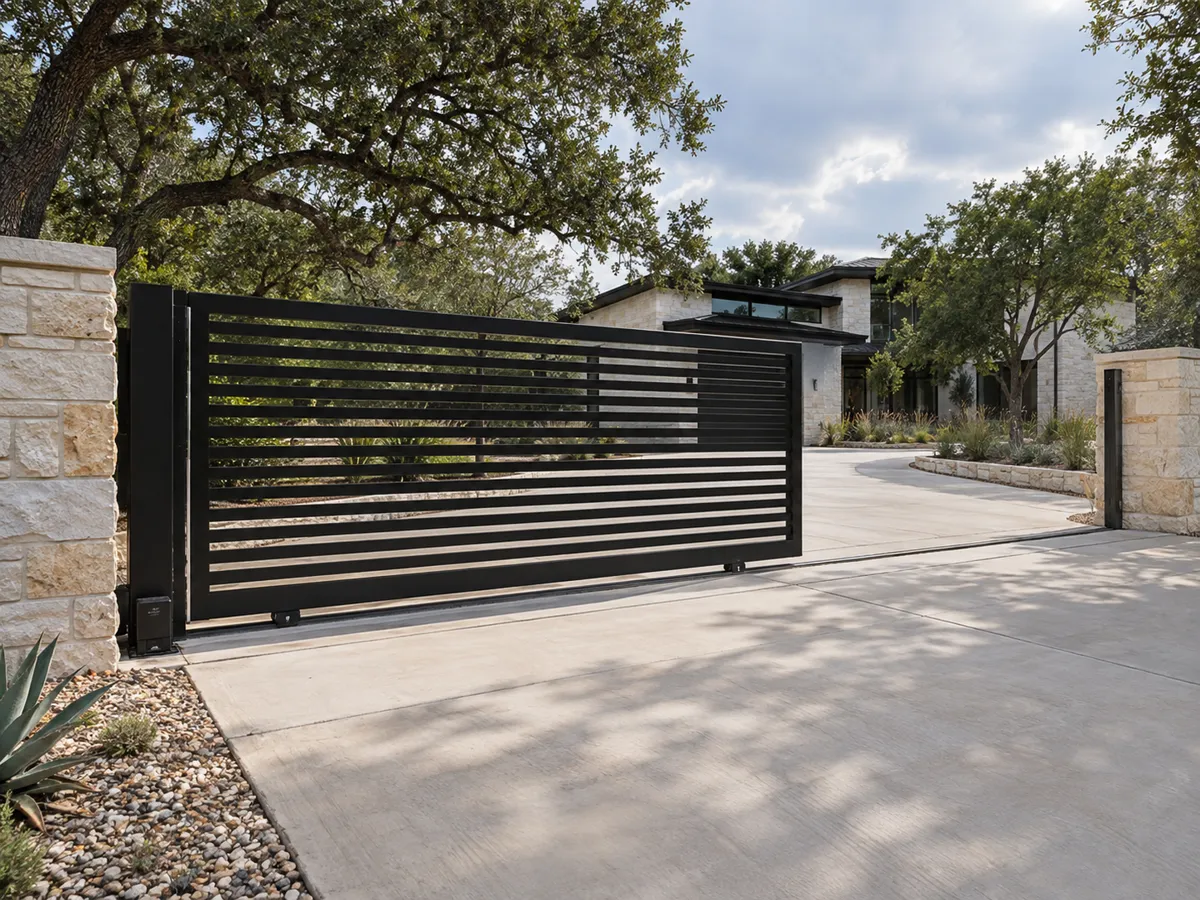
An open picket leaf is the lightest and lets wind pass through. Horizontal slats with gaps sit between the two, giving partial privacy at a moderate weight. On either, a pair of heavy-duty weld-on barrel hinges with sealed bearings usually carries the leaf for years with a little grease.

Solid steel panels

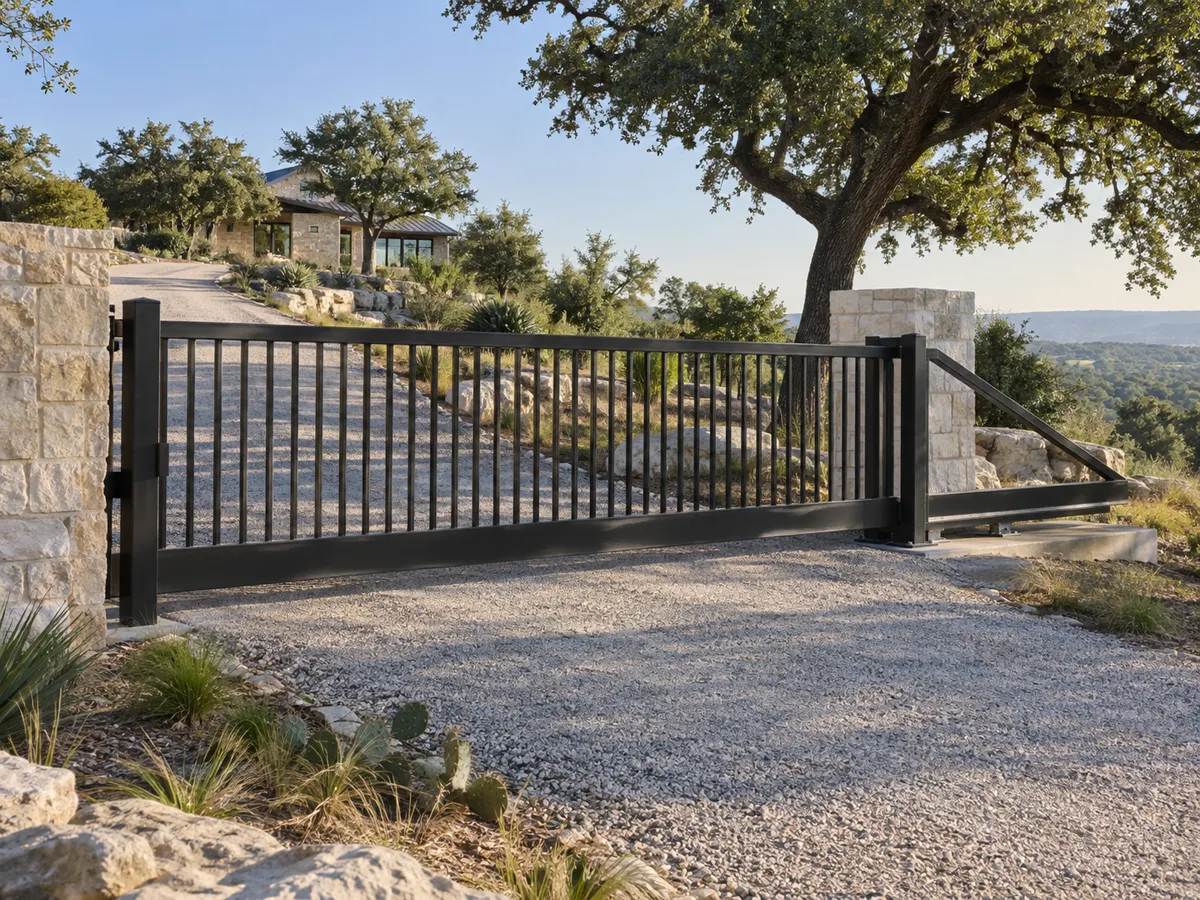
A solid plate or full-privacy leaf can weigh several hundred pounds, an estimate that rises quickly with height and width, and it acts as a sail in a spring storm. Those leaves get adjustable bearing hinges, a heavier post and a deeper footing, and on most openings we recommend a slide rather than a swing for anything wider than about 14 feet.

What Moves the Price of a Steel Gate

A steel gate is priced from a measured drawing and a written list of the steel in it, so two quotes for the same opening can be compared line for line. The factors that change the number:

  • Opening width and height, which set how much tube the frame needs.
  • Tube size and wall thickness, from light pickets to 11 gauge frames and heavy-wall posts.
  • Face style: open picket, horizontal slat or solid panel.
  • Hinges and latches, sized to the finished weight.
  • Footings, drilled into limestone on the west side or taken deeper in eastern clay.
  • Galvanizing and powder coat, the two-layer finish and your colour.
  • Automation, if the gate is built ready for an operator now or later.
  • Approvals, including HOA review and any City of Austin permit for the work.

Most residential steel gates are typically fabricated and installed within a few weeks of drawing approval, an estimate that depends on galvanizer and coater queues.

If you are still deciding on a look, our custom metal gate page covers styles and design options. To see how a frame moves through cutting, welding and finishing, read about our driveway gate fabrication. Or start from the Austin Metal Gates home page to see everything we build.

The process

From Measured Opening to a Gate on Its Hinges

Four steps, and no steel is ordered until the drawings, the steel list and the price carry your signature.

  1. Free site visit

    We measure the opening and the ground at each post, and talk through face style, finish colour and future automation.

  2. Drawings and a steel list

    You receive scaled drawings, the full list of tube sizes and coatings, and one written price.

  3. Welded, galvanized and coated

    The frame is welded and squared in our shop, then sent for hot-dip zinc and powder coat.

  4. Posts set and leaf hung

    Posts go into sized footings, the leaf is hung and adjusted, and we walk the finished gate with you.

More of What We Build

Questions

Steel Gates: Common Questions

How much does a steel gate cost in Austin?

It depends on width, wall thickness, face style and finish. We give one written price after a free site visit, with every size and coating listed so you can compare it fairly.

Is galvanizing worth paying for if the gate is powder coated?

Yes for a drive or ranch gate. Powder coat alone protects only until it is chipped. Zinc underneath keeps rust from spreading from that chip, which is why we use both.

What gauge steel should a driveway gate be?

For most drive leaves we frame in 11 gauge tube with heavier hinge posts. Lighter 16 gauge frames suit small walk gates but tend to sag on wide openings.

Will a dark steel gate fade in the Texas sun?

A UV-stable polyester powder holds its colour far better than epoxy or paint. Some gloss loss over many years is normal, and touch-up is simple.

Can you make my steel gate ready for an opener later?

Yes. We add mounting plates, a heavier post and conduit at install, so an operator can be fitted later without cutting into the finish.

How soon can you start?

We can usually visit within a few days. Fabrication and finishing typically take a few weeks after you approve the drawings, an estimate that we confirm on your quote.

Do you work in my area?

Yes, across Travis County and the west side, including Austin, Rollingwood, West Lake Hills, Barton Creek, Lakeway, Steiner Ranch and Bee Cave.

Is the steel and finish covered by a warranty?

Yes. You get a written warranty covering the welds, hardware and finish, and it comes with your quote so you can read it before you sign.

Free site visit

Talk to us about a steel gate

Free on-site measure anywhere in Austin and the Hill Country. We call you back to pick a time.

Call (512) 503-9203

Calls only, we do not receive text messages.

Call (512) 503-9203