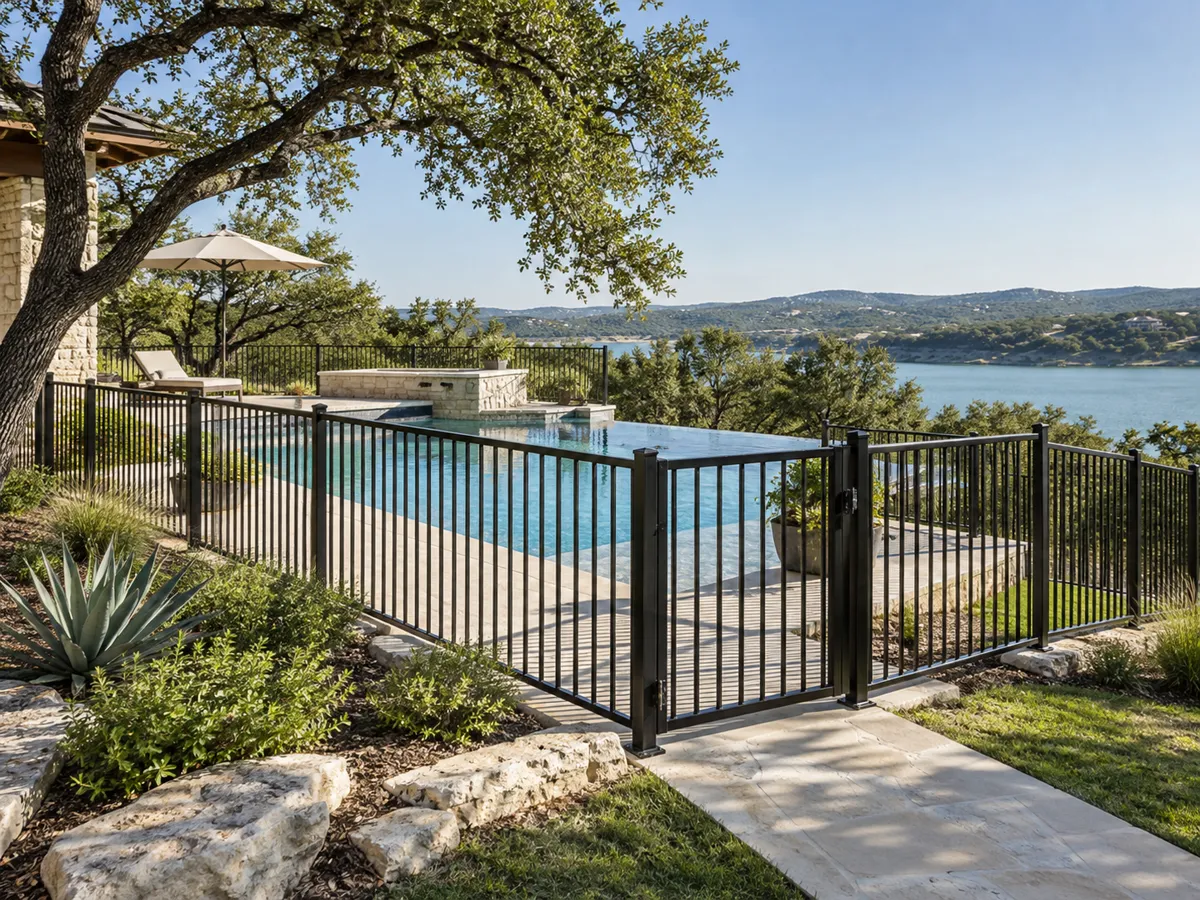
No footholds on the outside
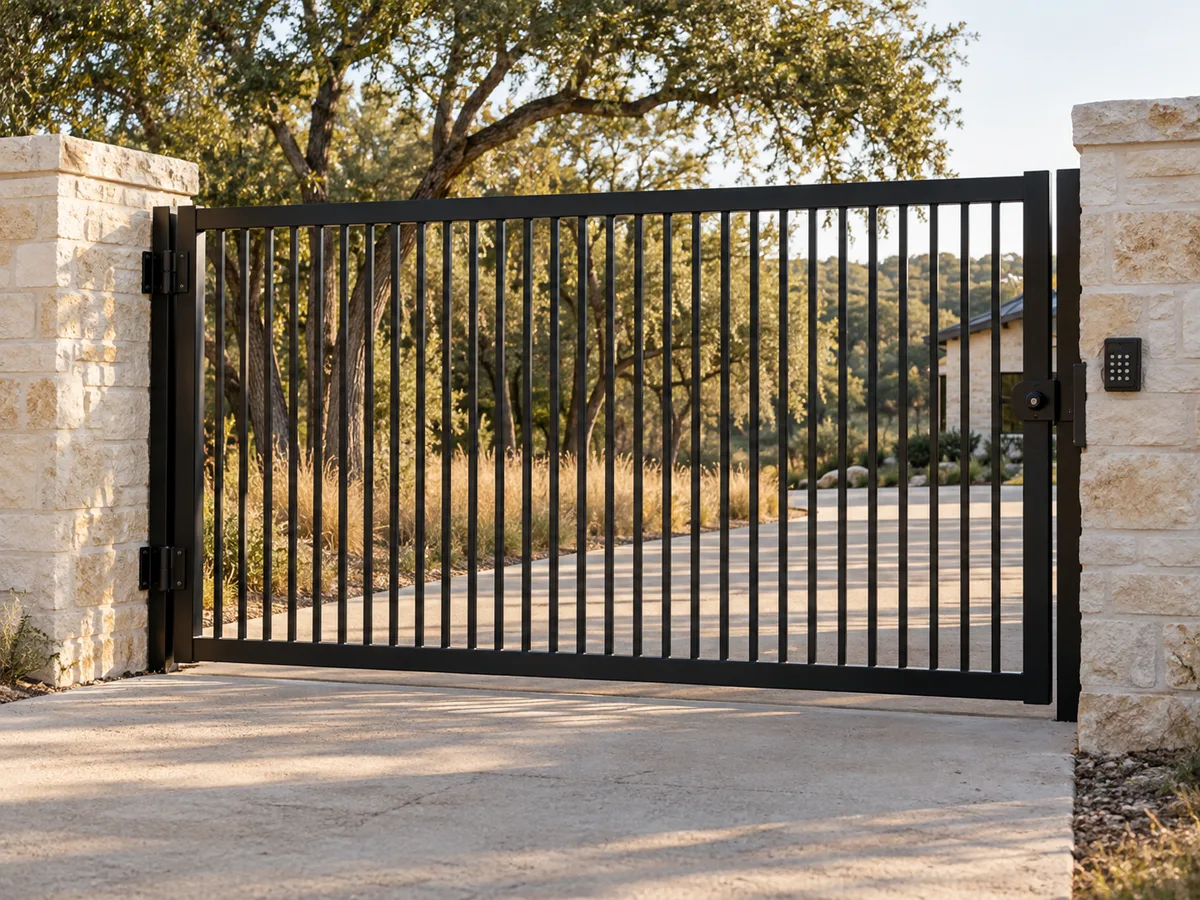
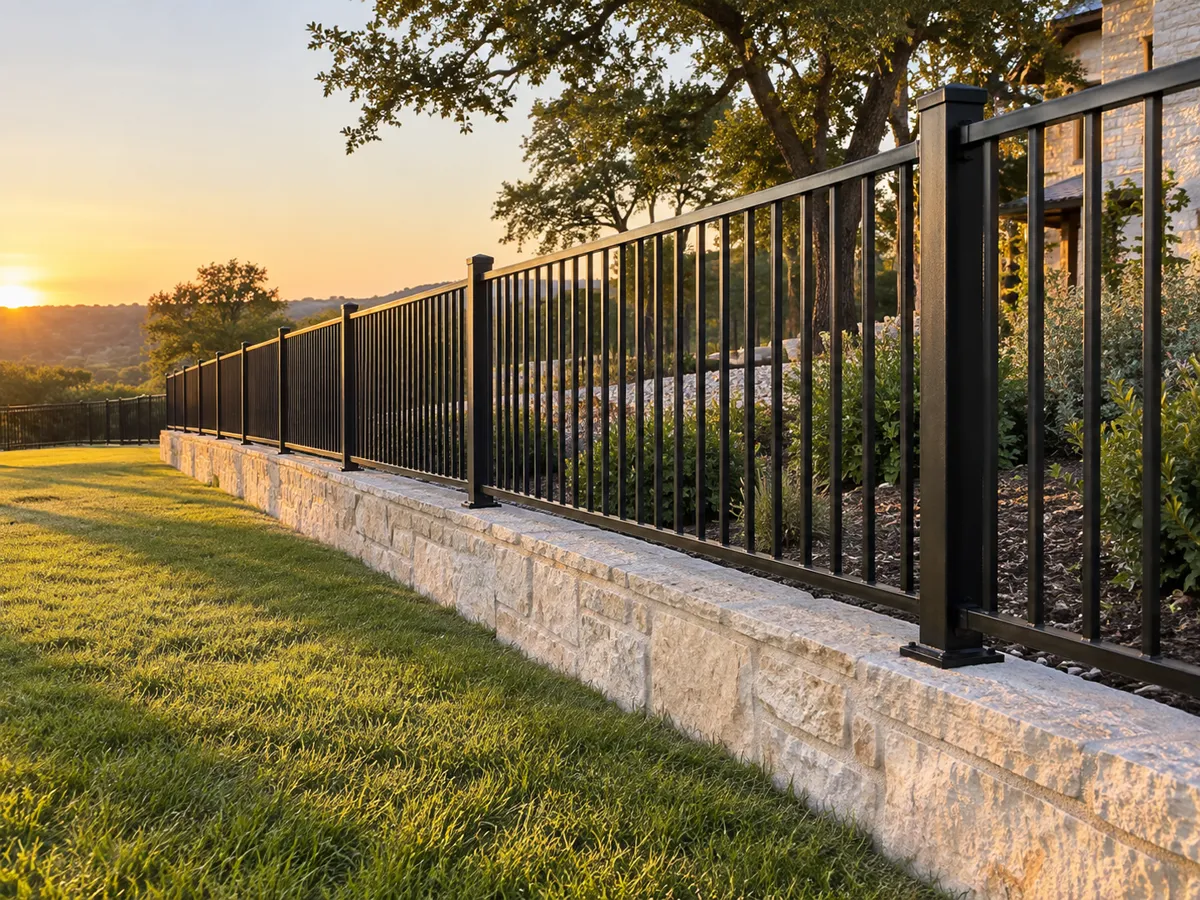
Horizontal rails, braces and decorative scrolls go on the inside face or above reach. From the street, the gate presents vertical pickets and little else.
Austin Metal Gates provides security gate installation in Austin, TX, and is Travis County's leading builder of anti-climb entries for homes and small businesses, specializing in close-picket steel panels, lift-off-proof hinges and coded access control. We offer residential perimeter entries and small-commercial yards, offices and shared drives.
Our team provides a climb, pry and lift review of every design, delivering a gate that stays shut for homeowners and controlled after-hours access for both residential and commercial projects. We weld the pickets, hinge guards and latch boxes in our own shop, and the same crew that measures the opening sets the posts.
From capping hinge pins so a leaf cannot be lifted free to programming the call box and fire department key switch, our team handles every detail. Serving Austin, Lakeway, Volente and Lost Creek, we secure lake houses and second homes that sit empty for weeks at a time.
Why Austin Metal Gates
We look at the entry the way someone trying to get in would. The crew that walks it with you builds and installs the gate.
Most gates are climbed, not broken. A security gate is designed so the outside face gives a hand or a foot nothing to use.
Horizontal rails, braces and decorative scrolls go on the inside face or above reach. From the street, the gate presents vertical pickets and little else.
Pickets are set close enough that a shoe cannot wedge between them and a hand cannot reach through to a latch. We draw the spacing on the plan so you can see it before we build.
Spear tops discourage anyone from pulling over the top rail. Flat tops with pickets running past the rail give a cleaner look with a similar effect. Both work; it comes down to style and HOA rules.
Most residential security gates land between 6 and 8 feet. We confirm height limits and the sight-triangle rules near the drive with the City of Austin Development Services Department or your village before drawing.
A tall, unclimbable gate is wasted if someone can lift it off its pins or reach the latch.
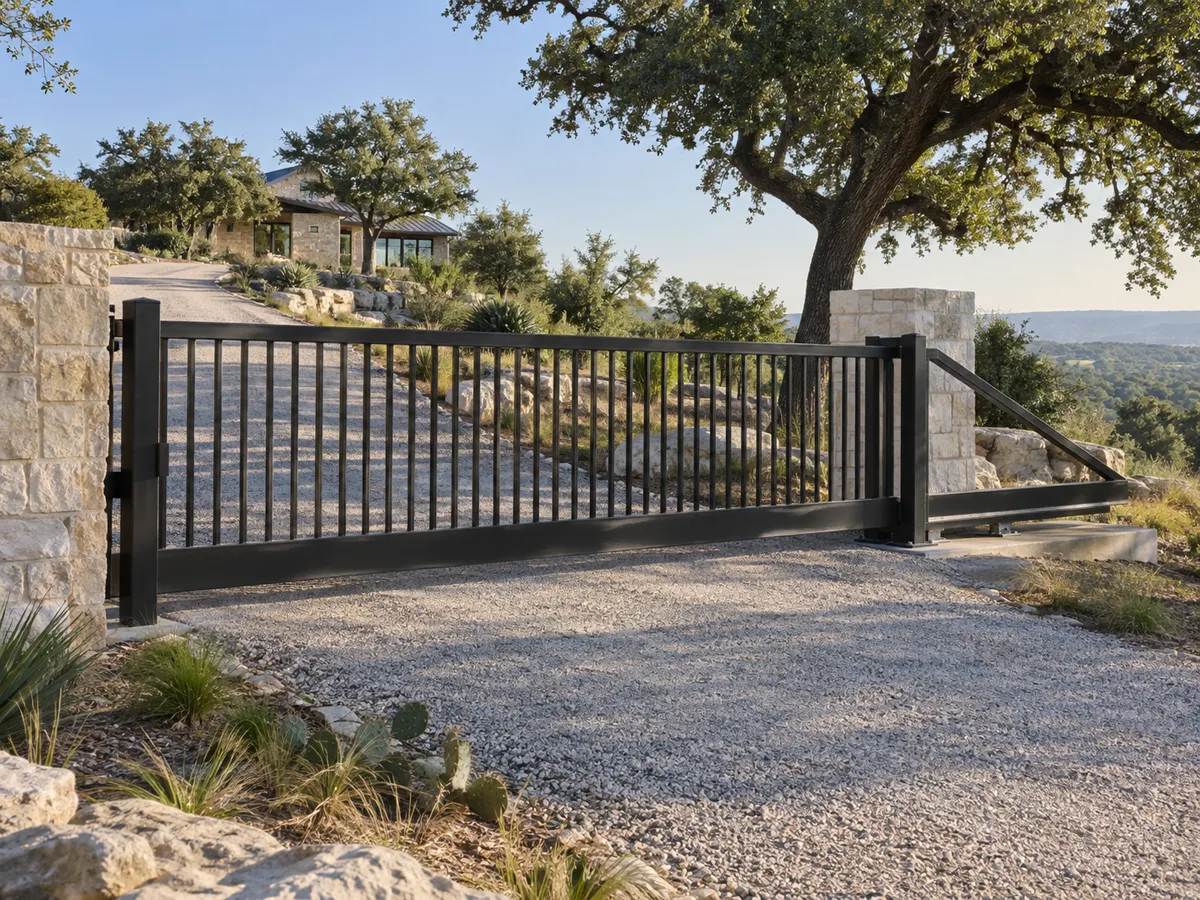
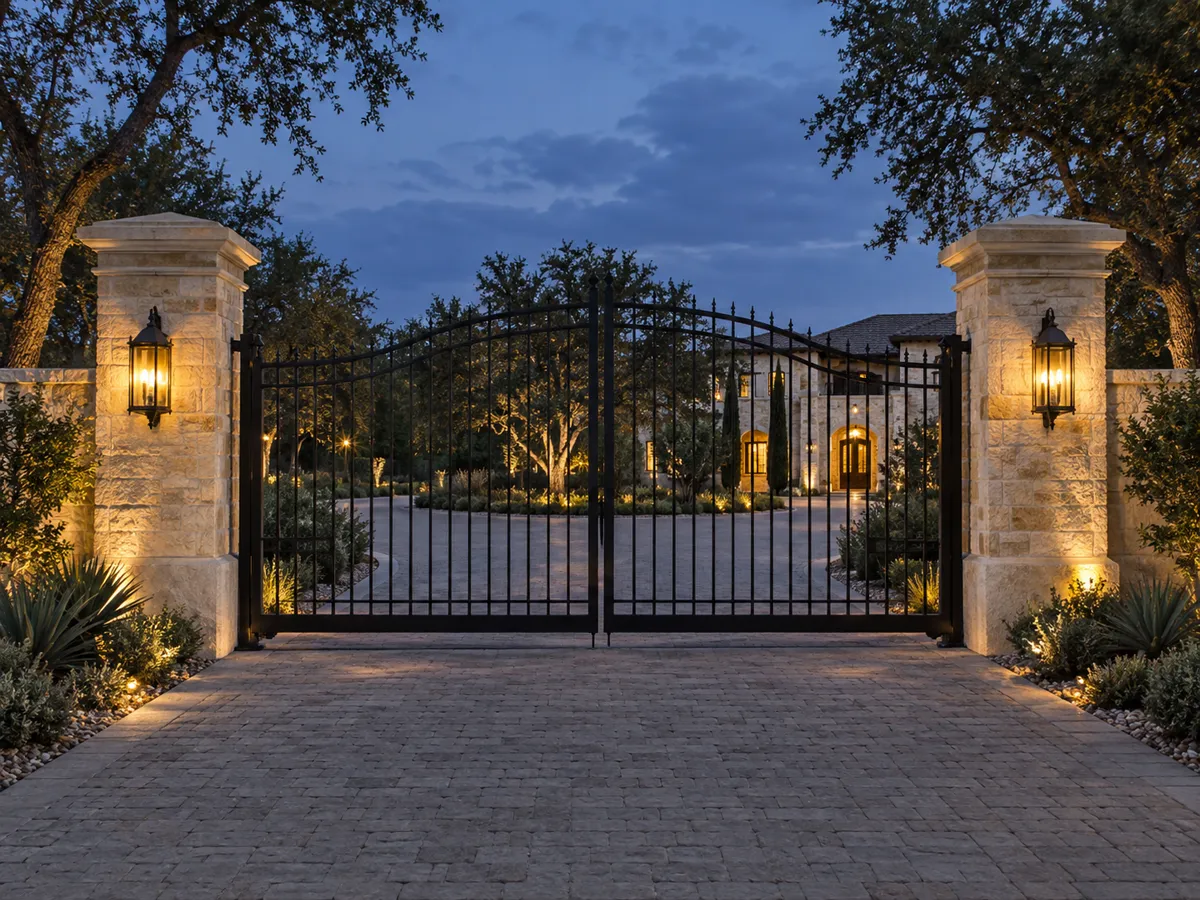
We weld caps over exposed hinge pins, mount hinges so the pins cannot be driven out, or use bearing hinges with captured pins. On sliding gates, an anti-lift bracket keeps the frame from being raised off its rollers.
A lock box welded around the latch and a shroud over the keyway keep tools and hands away from the mechanism. Pedestrian gates can take a keyed or coded lock inside that box.
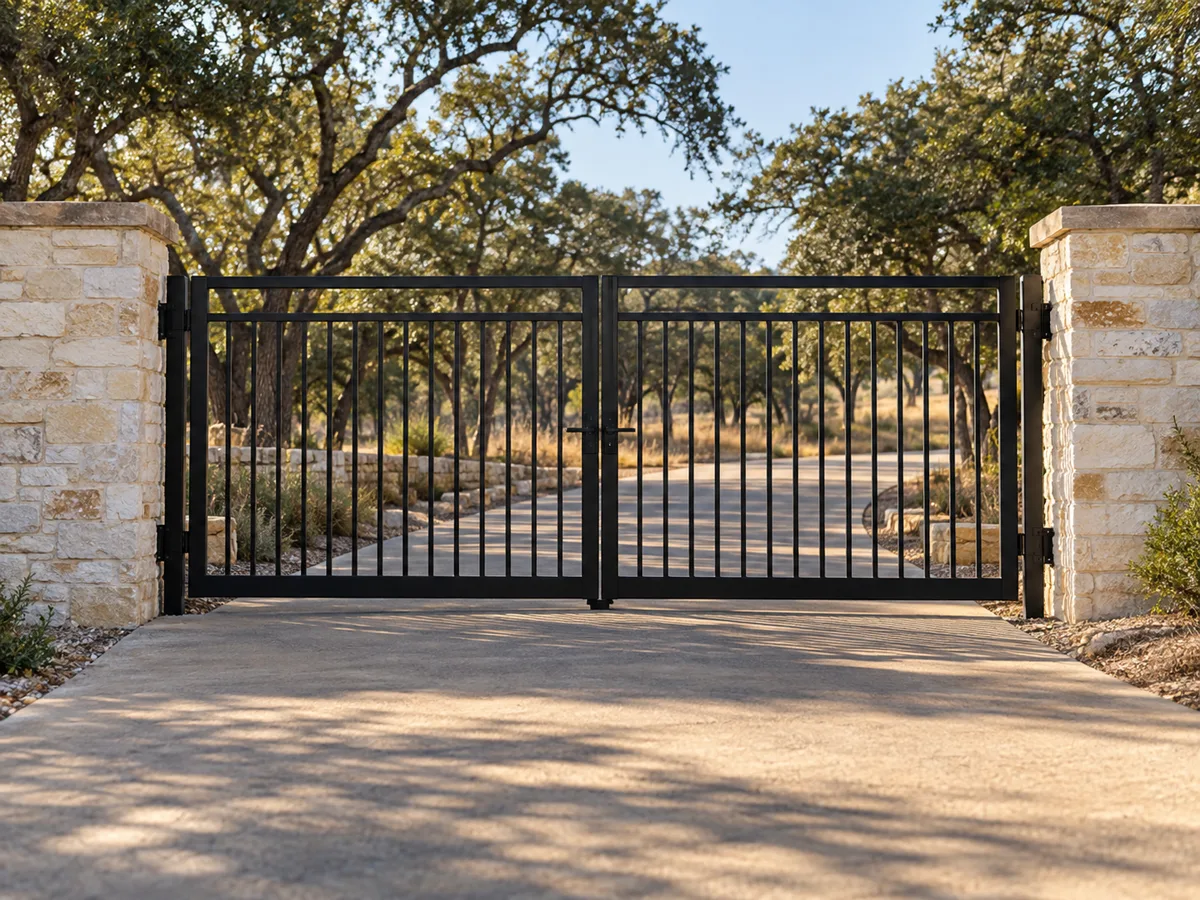
A pry bar works on whatever flexes. We set heavier posts in deep concrete, close the gap between the leaf and the post so nothing slides in, and add a center stop or drop rod on double gates so the two leaves cannot be pushed apart.
Security is not only keeping people out. It is letting the right people in without handing out keys.
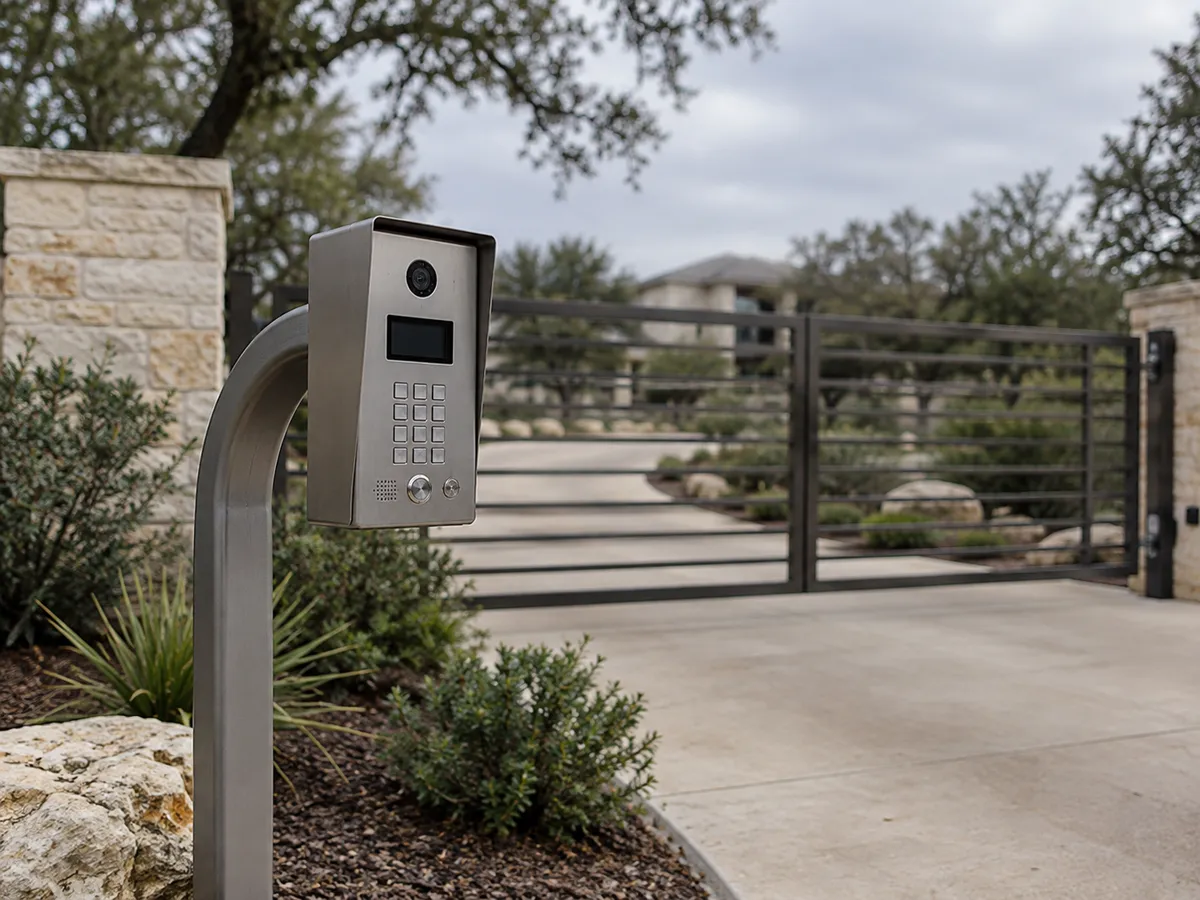
A call box lets a visitor ring your phone, and a keypad gives family, staff and contractors their own codes that can be removed at any time.
A camera at the call box or on a pillar records every arrival. Paired with a cellular or Wi-Fi intercom, you can see and open the gate from anywhere.
Small offices, storage yards and shared drives often want the gate held open during business hours and locked after. We program those schedules into the operator, set separate codes for staff, vendors and cleaners, and keep an entry log you can check when something goes missing.
Emergency crews must be able to get through a locked gate without waiting for you to answer, and a gate that slows them down can fail an inspection or a review.
Austin Fire Department and the emergency services districts serving the lake communities commonly expect a Knox key switch on powered gates, which opens the gate with a key only fire crews carry. We confirm the rule for your address when we quote.
A security gate that dies with the grid is either stuck open or trapping someone. Battery backup and a reachable manual release are part of our standard setup.
Fire codes generally set a minimum clear opening for a gate across a drive that an engine may need to use. A long rural or lake drive often qualifies, so we size the opening to the width your fire district gives us rather than to the look alone.
A property on Lake Travis or Lake Austin that sits empty for weeks needs a gate that guards it without anyone on site.
Cellular call boxes and app-linked operators let you open the gate for a cleaner or a delivery from another city and get an alert when it opens.
We specify battery backup sized for long outages, surge protection for summer storms, and controls set high enough to stay clear of water on low lots that flood.
Lake lots west of the Balcones Escarpment are often steep, with limestone a few inches under the soil. We drill post footings into the rock and lay out the gate so it clears the grade, which matters on drives that drop sharply from the road toward the water.
Security gates are priced from a measured drawing, because height, picket spacing and access hardware vary widely. The main factors:
A typical residential security gate is estimated at a few weeks from approved drawings to installation, with access control wired on the same visit. Small-commercial entries can run longer when a property manager or owner group signs off on the drawings.
For larger sites with multiple lanes, heavy traffic or fleet access, our commercial gate systems cover that scale. To compare keypads, call boxes and video intercoms, see our keypad and intercom entry options. You can also browse everything we build from our Austin home page.
The process
Four steps, and nothing is fabricated until you have approved the drawings, access plan and price.
We walk the entry with you, note climb points and power, and talk through access and fire requirements.
Scaled drawings showing height, spacing and hardware, ready for HOA or city review, with one written price.
Frames, guards and lock boxes cut and welded, then galvanized, powder coated or both.
Posts set, gate hung, access control and key switch wired, operator set up to UL 325 and codes handed to you.
Questions
No outside footholds, close picket spacing, a deterrent top, hinges that cannot be lifted and a protected latch. A regular gate usually has none of these.
Most residential ones are 6 to 8 feet. We confirm the limits for your lot before drawing.
Some, such as capped hinges, lock boxes and a keypad. Climb resistance usually needs a new leaf, because footholds are built into the old frame.
Yes, offices, storage yards, churches and shared drives, with schedules and separate codes. Larger multi-lane sites fall under our commercial systems.
We install the Knox key switch or access device your fire district requires and confirm it for your address.
A sliding gate is harder to force open and needs no swing room. A swing gate suits narrower drives and a more traditional look. We draw both where the site allows.
Yes, with a cellular call box or app-linked operator, plus alerts each time it opens.
Battery backup keeps the gate working for a time, and a manual release lets you open it by hand.
Yes, a written warranty on the gate and the installation, provided with your quote.
Free security walk-through across Austin and the west side. We call you back to set a time.
Calls only, we do not receive text messages.