
Rollingwood · West Lake Hills · Sunset Valley · Shady Hollow
Metal Gates in Bee Cave, TX
Austin Metal Gates builds metal gates in Bee Cave, TX, and is a trusted Travis County fabricator of driveway and estate gates, specializing in powder-coated wrought iron gates, tubular steel fencing and automatic gate operators. We offer open-picket front yard runs and taller privacy-side panels.
- Free on-site measure
- Shop drawings you approve
- Operators set up to UL 325
- One written price
Gates and ironwork in Bee Cave
Our team provides permit drawings, keypads and battery-backed openers, delivering an entry that suits the city's code and the house, for both residential and commercial projects. The same crew that installs measures the opening and the grade, and we weld every frame in our own shop to drawings you approve first.
From the powder coat chosen to match the material list to a commercial pond enclosure built in iron, our team handles every detail. Serving Bee Cave, Lakeway and West Lake Hills, we check each job against the city code on the day we quote it.
Why Austin Metal Gates
How We Work
No stock panels cut down to fit, and no handoffs. The crew that measures your opening builds and installs the gate.
A Bee Cave Fence Permit Comes Before Any Post Goes In
Bee Cave does not leave fence permits to the size of the job. Section 5.1.2 of the city's Unified Development Code says a permit shall be obtained from the city before construction of any fence or screening wall. A short side run, a replacement panel on a new line or a full perimeter all start at the same counter.
That shapes how we schedule a Bee Cave job. The site visit produces the drawing set the permit needs: where the fence and gate sit on the lot, their height, the material and the finish. Fabrication is planned to start once the drawings are approved and the permit is moving, so steel is never waiting on paperwork or paperwork on steel.
If the property also sits under a homeowners association, its architectural review is a separate approval. We prepare one drawing set that answers both, and we do not set a post until both have said yes.
Front Yards: Four Feet, Open, Never Solid
The front yard rule is the one that decides most designs here. Opaque fences or walls are prohibited within a required front yard, and a fence or wall there may not exceed four feet, except in the AG or P districts. Behind the front yard, side and rear fences may reach eight feet, with no barbed wire and no electrification.
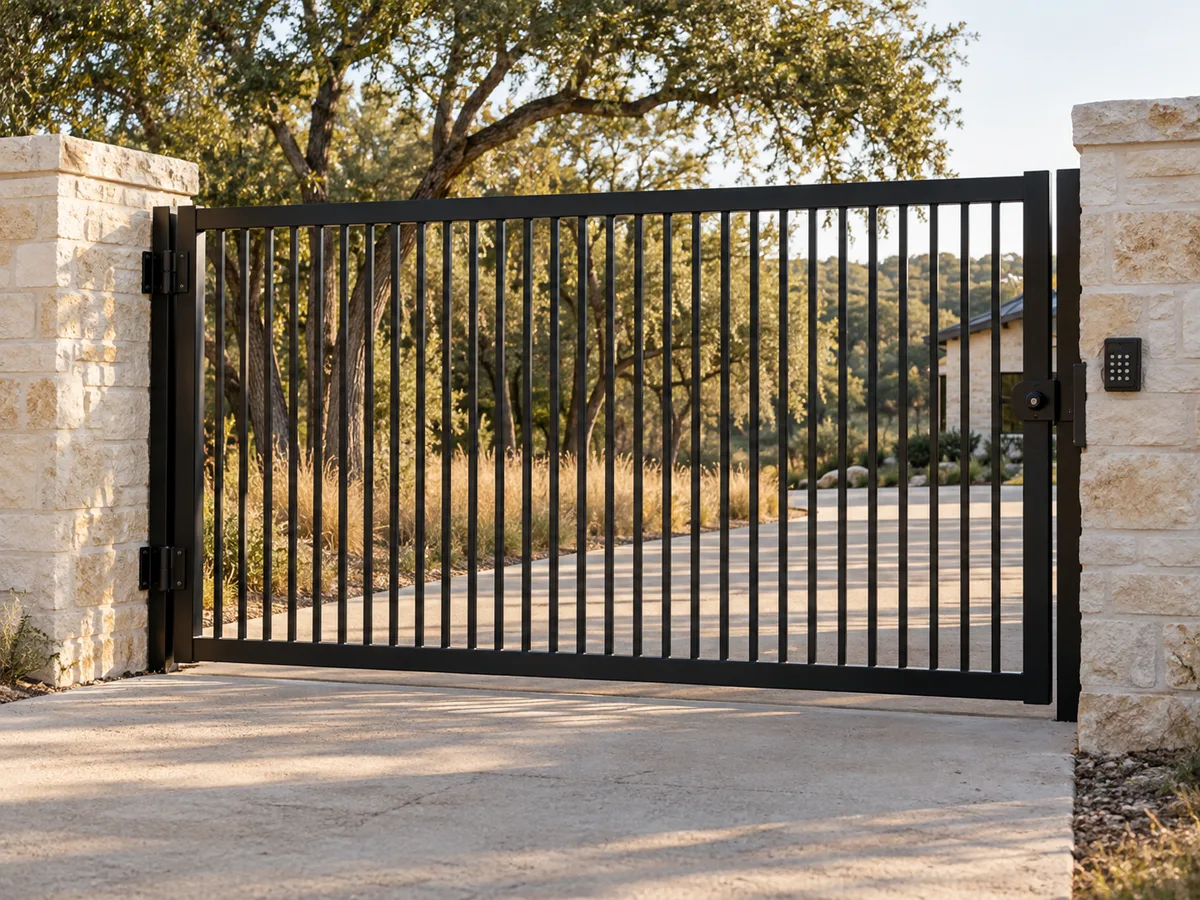
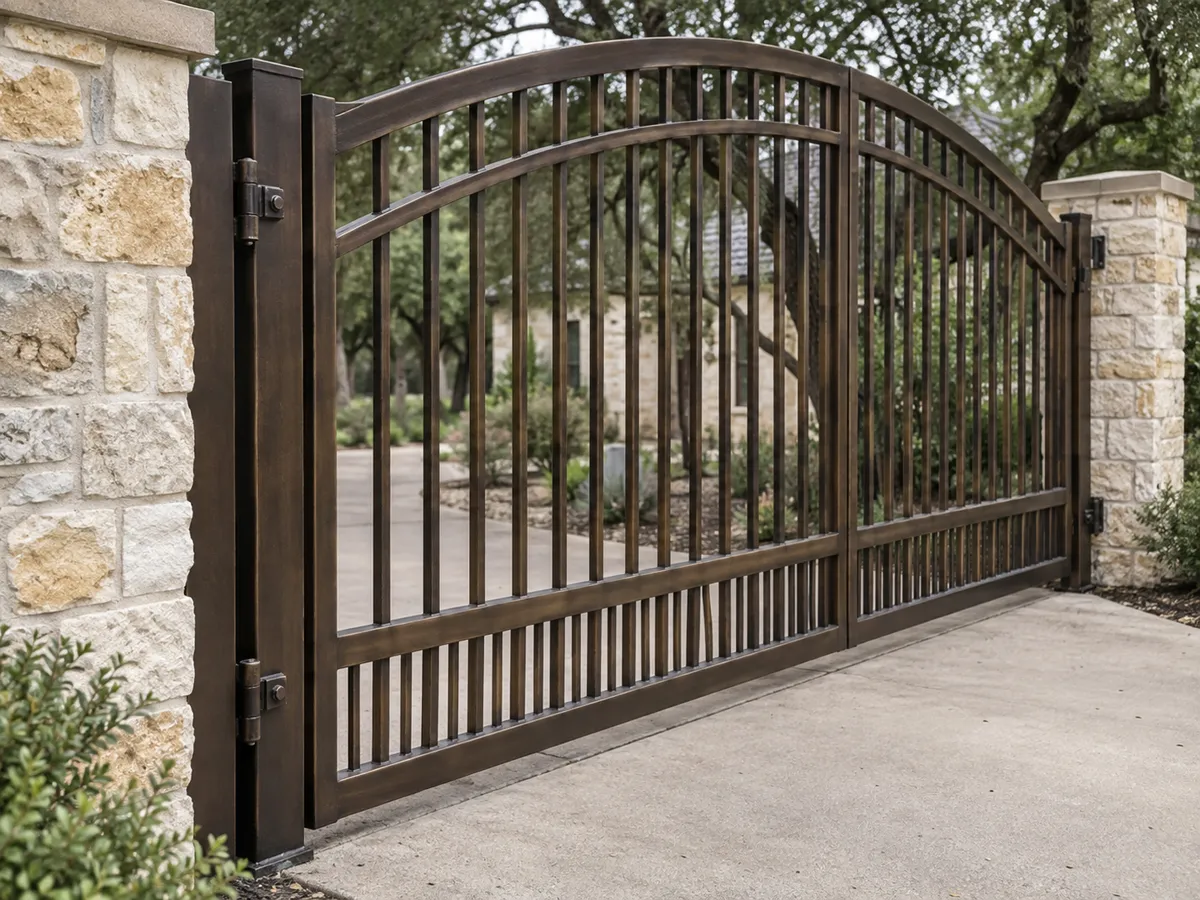
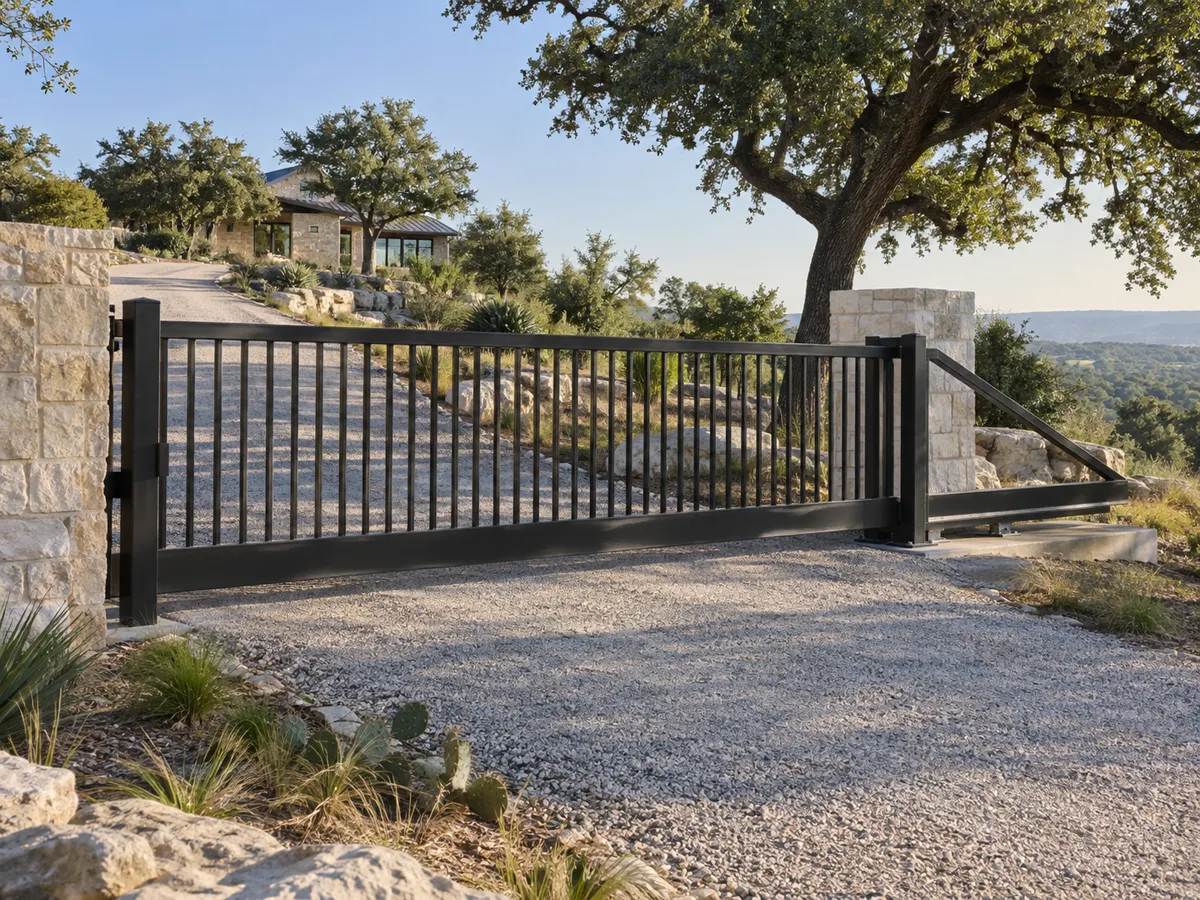
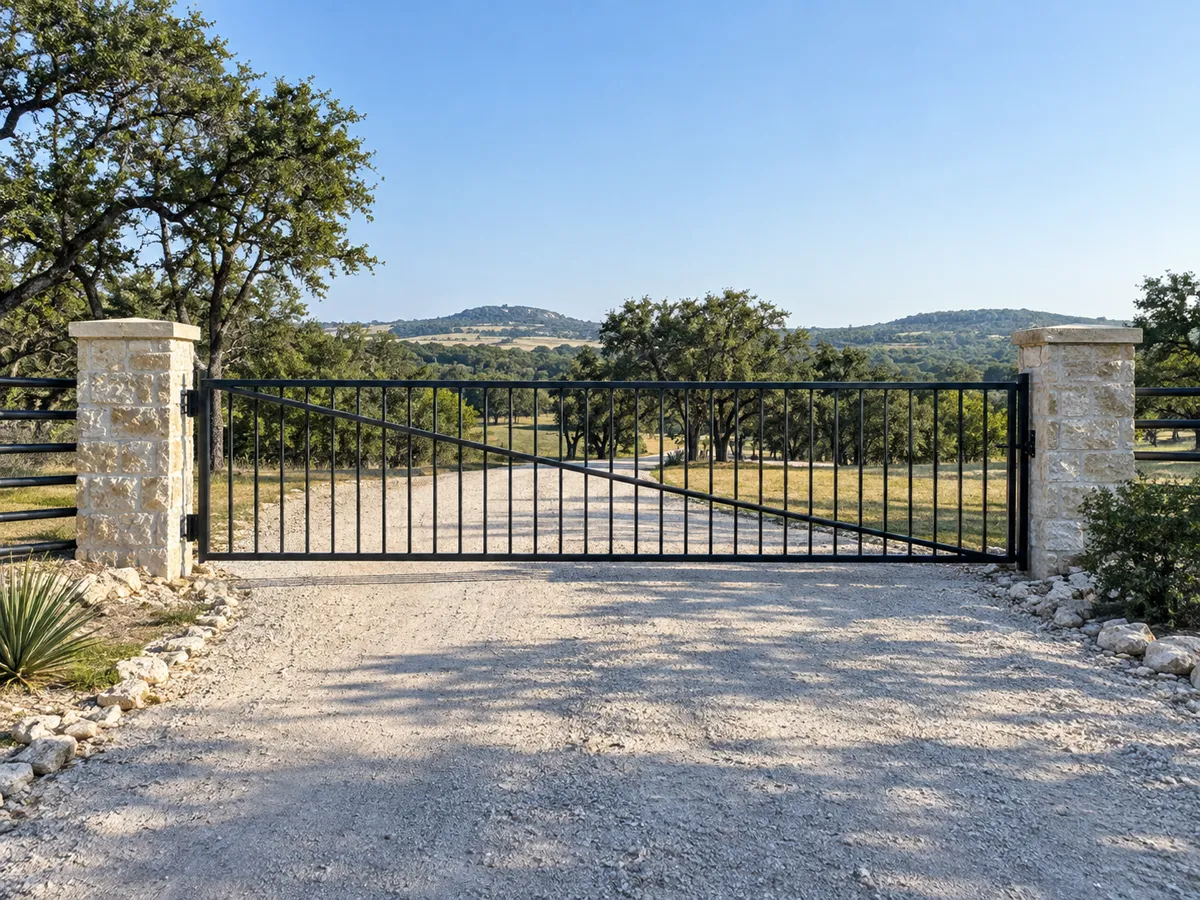
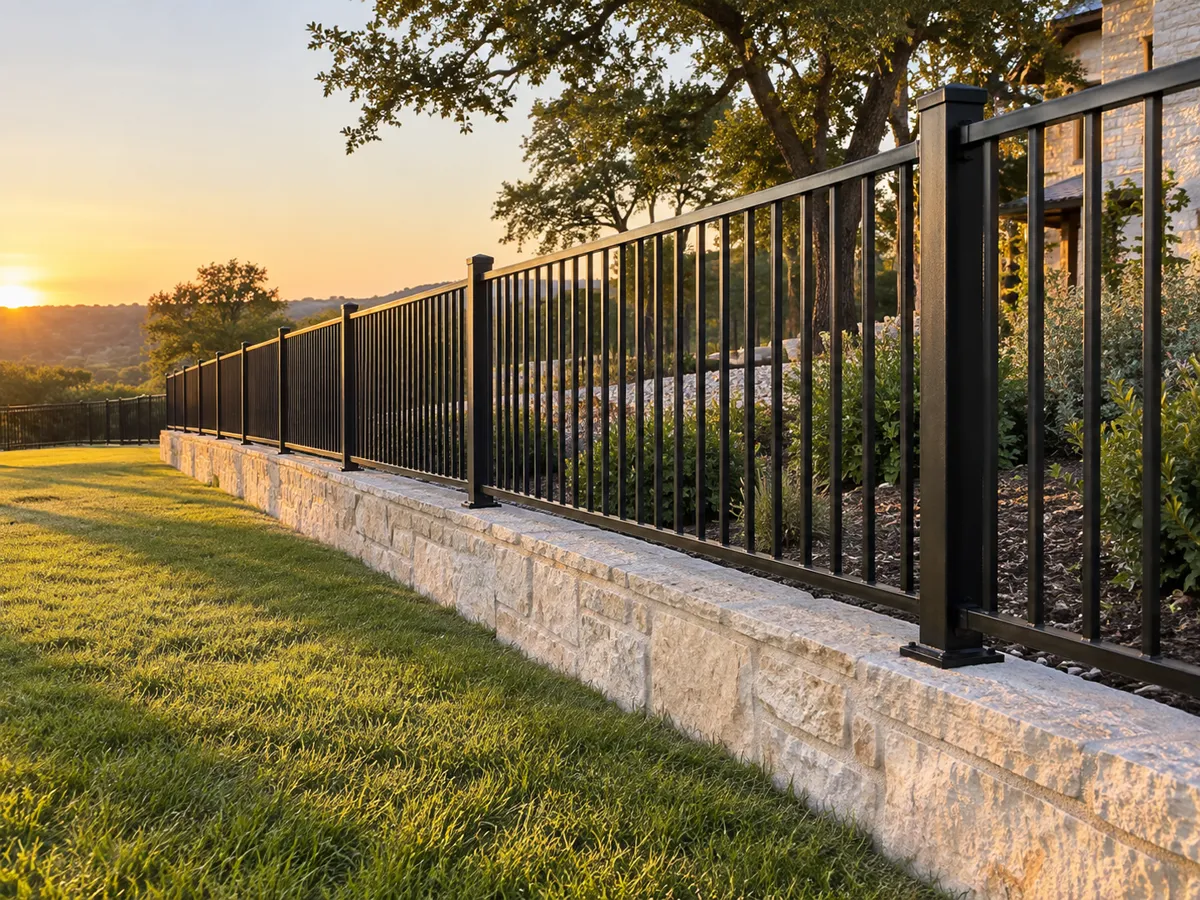
For an iron or steel fence that rule is easy to meet and hard to meet badly. A four foot run of vertical pickets on a flat top rail reads as open from the street and still marks the property line. Where a homeowner wants more height, we carry the run back past the front yard line and step it up to the taller panel there, with a matching post at the change so the two heights look planned.
A driveway gate inside a front yard run raises one more question: whether it is judged as part of the fence. We draw it in the same open style and at the same height as the run beside it, then confirm the city's reading at permit before fabrication, so a tall solid gate is never built for a spot the code keeps low and open.
Why Bee Cave's Material List Points to Iron and Steel
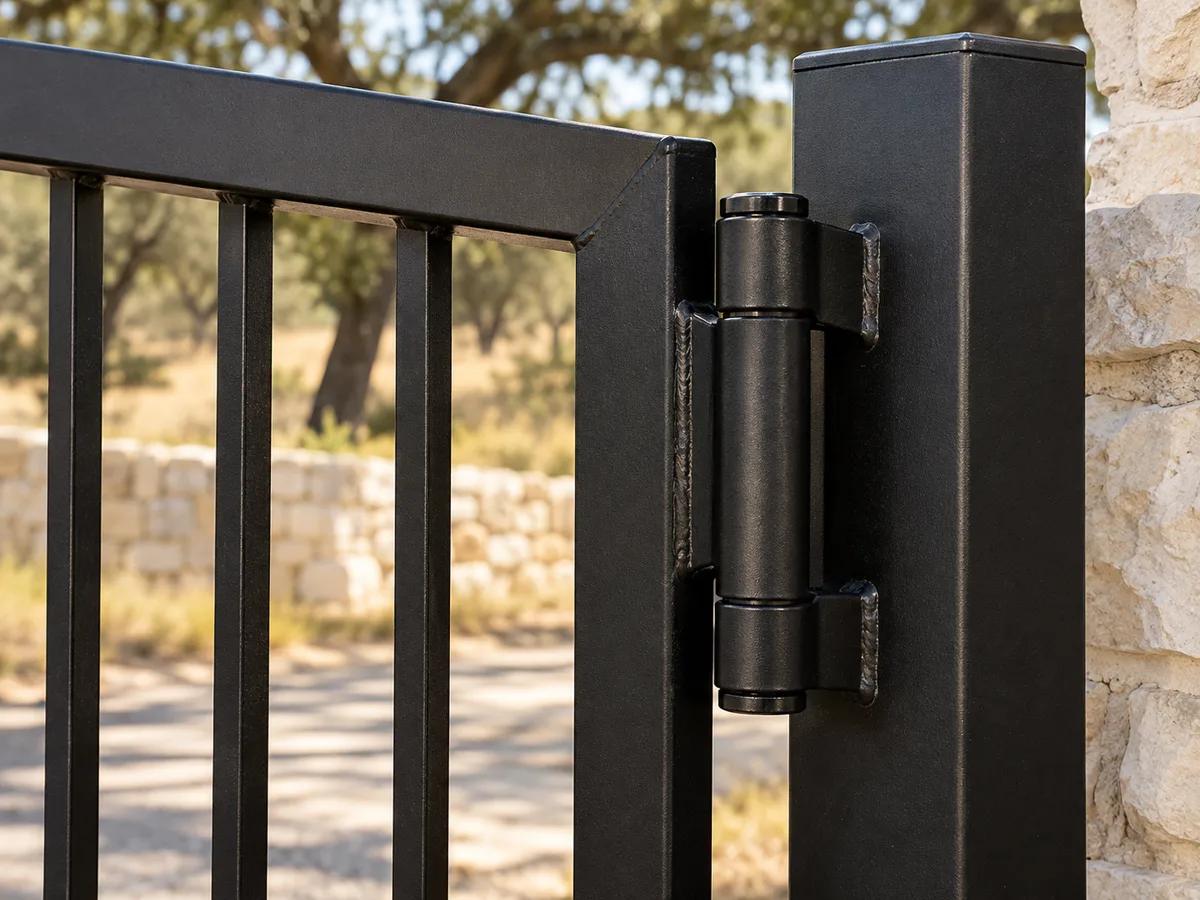
Bee Cave also says what a fence may be made of. In R-1, R-2 and R-3 subdivisions, interior and front-facing residential fences shall be stained or painted cedar with rustproofed metal posts and top caps, rustproofed and powder-coated wrought iron, rustproofed and powder-coated tubular steel, or masonry.
Two of those four options are our work, and the code spells out the finish as well as the metal. Nearly every modern fence sold as wrought iron is mild steel, so the rustproofing is what earns its place on the list. Our process is hot-dip galvanizing first, which bonds a layer of zinc to the steel, then a heat-cured powder coat over it, which is tougher than paint.
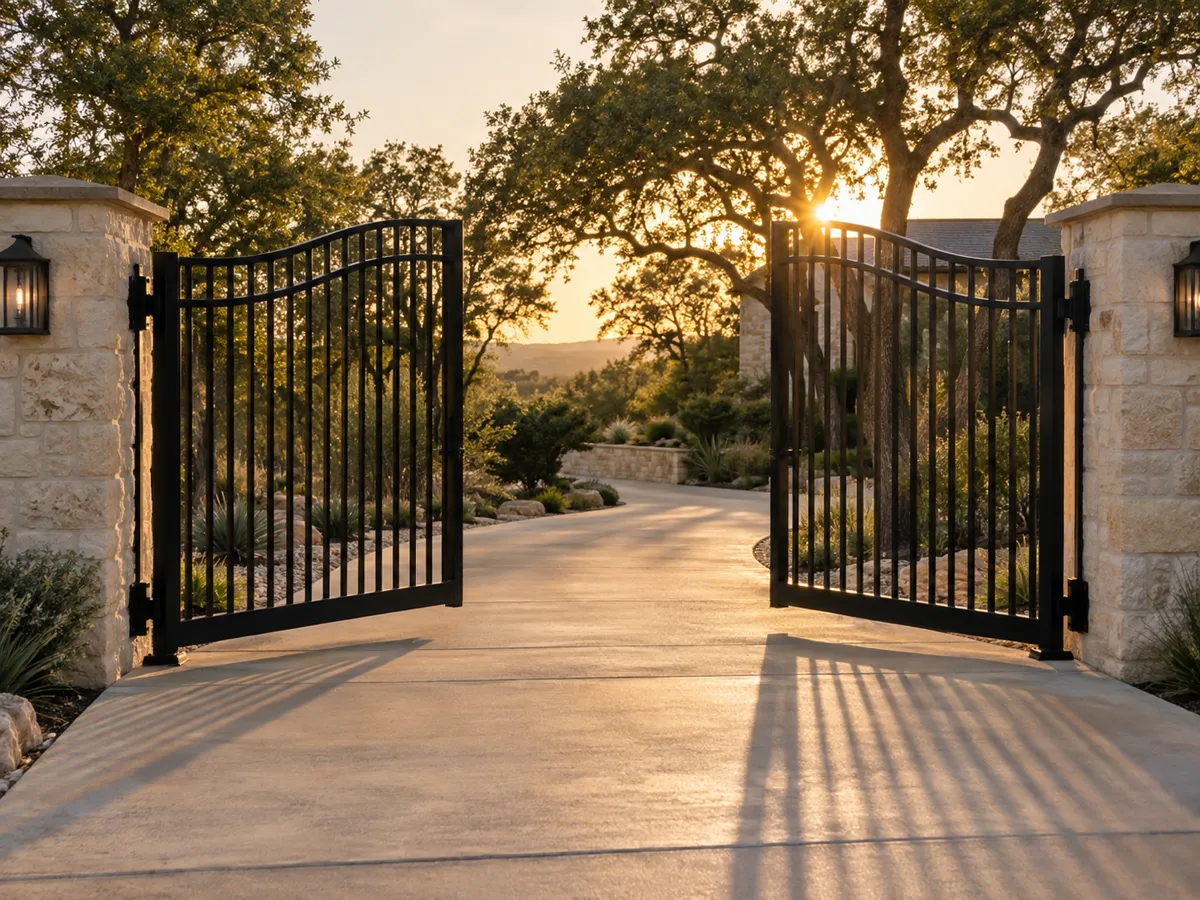
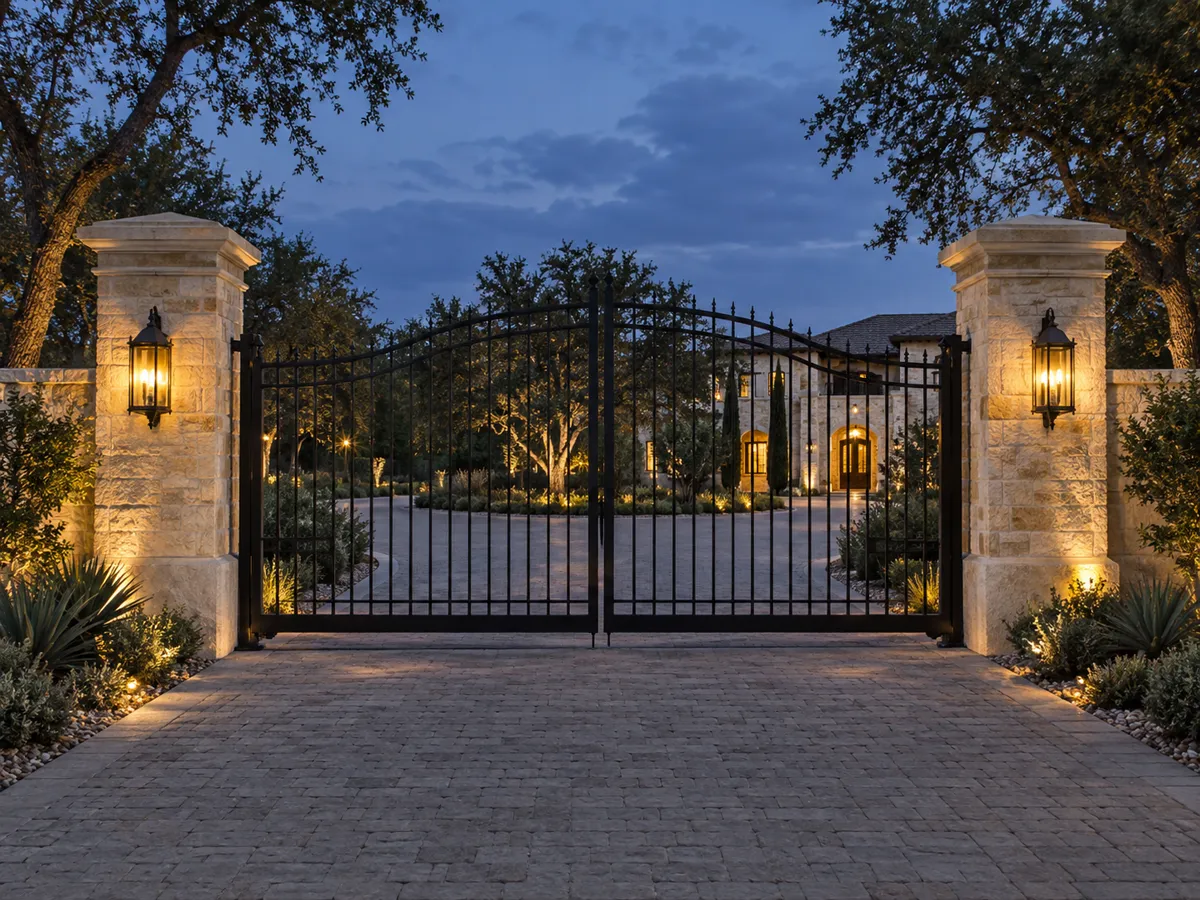
Tubular steel suits a clean, modern house: square pickets, slim rails and a flat or capped top. Ornamental iron suits a traditional facade with collars, rings or a curved top rail. Either way the finish named on the permit drawing is the finish that arrives on site, and a cedar or masonry section elsewhere on the lot can meet the iron at a post or a column without breaking the rule.
Detention Ponds and Commercial Frontage
Bee Cave is also a retail and office town, with the Hill Country Galleria and the shopping along Highway 71, so a share of its gate and fence work is commercial. One line in the code matters most there: fenced detention and retention ponds must employ wrought iron or a living screen.
A pond enclosure is a long, plain run with a service gate wide enough for maintenance equipment. We build it in galvanized and powder-coated steel with a flat top rail, a pedestrian gate and a double drive gate for the maintenance crew, each with a lockable latch. On a sloped pond bank the panels are racked or stepped to follow the grade, so the bottom rail never leaves a gap a child or a dog could slip under.
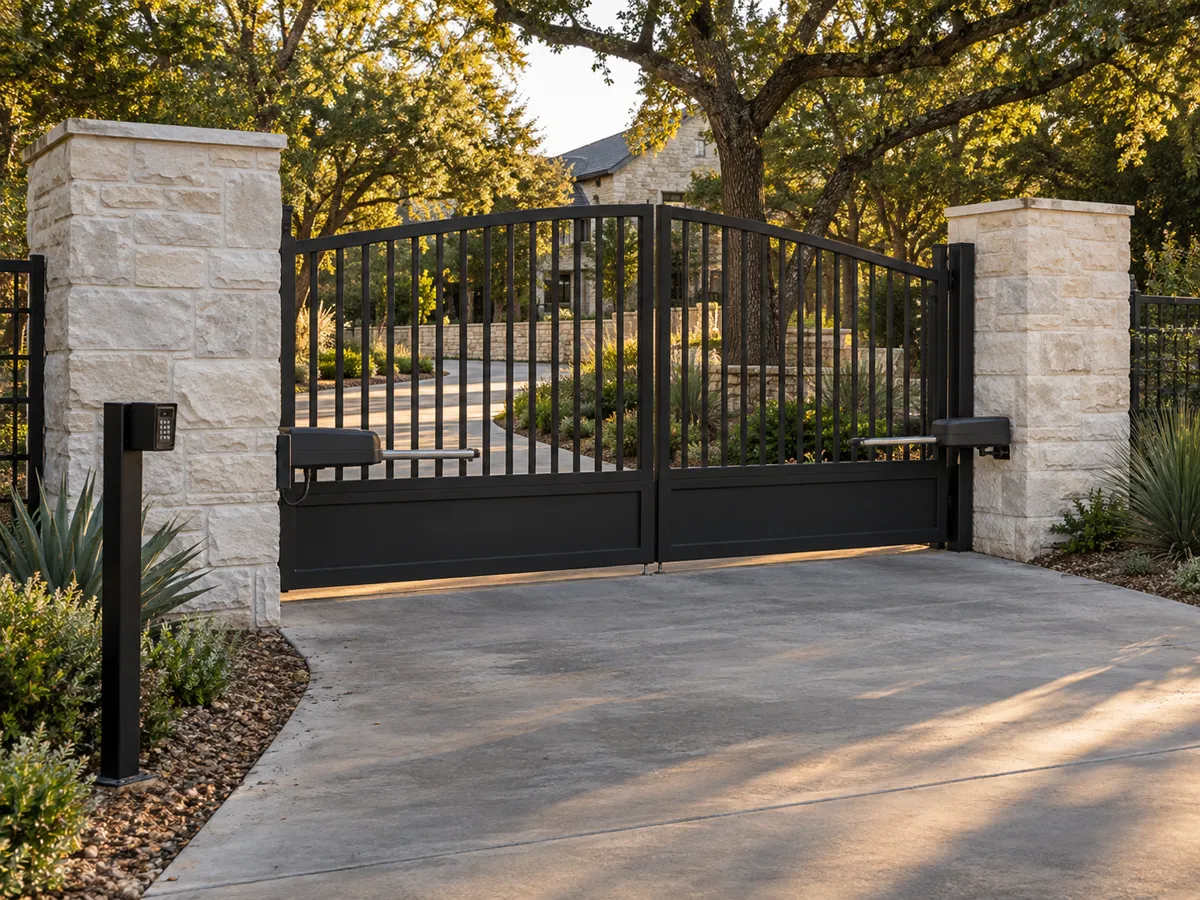
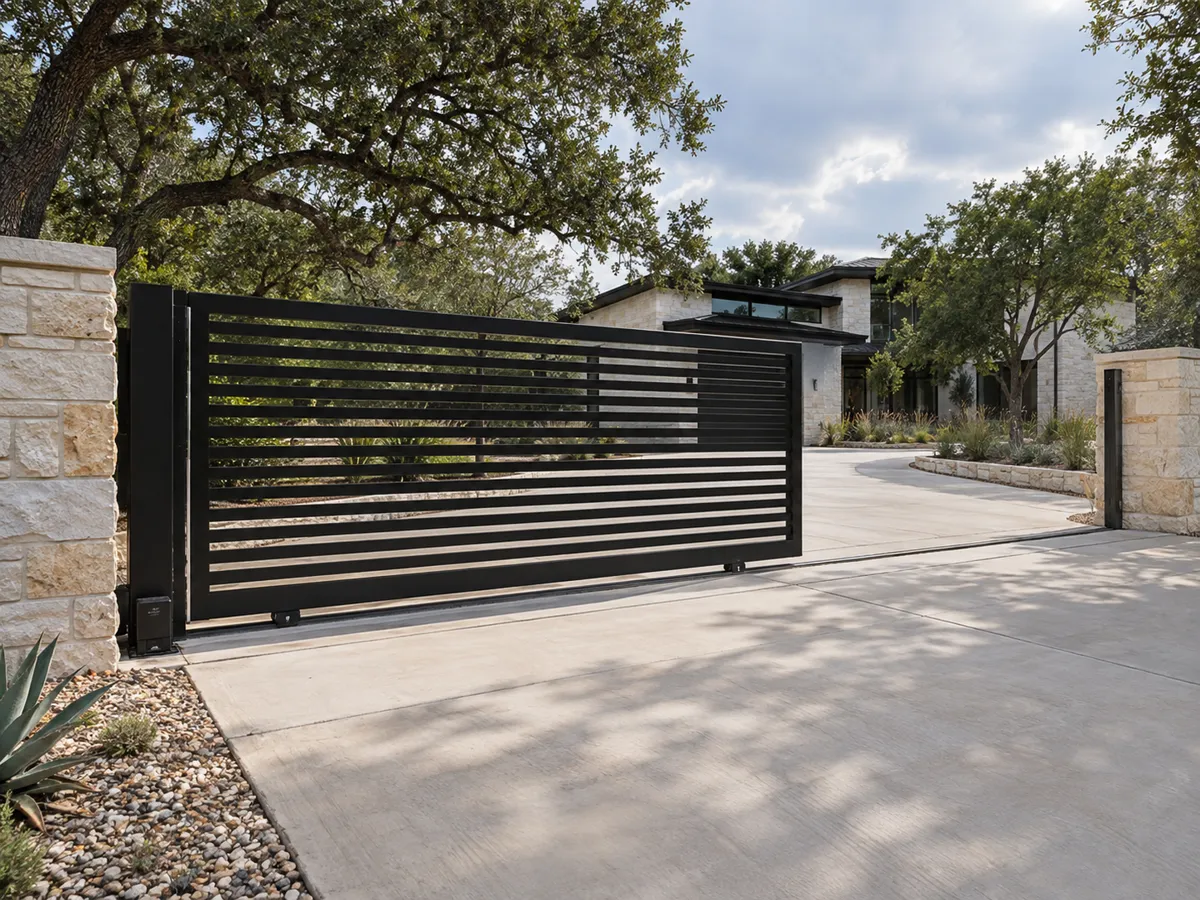
For storefronts and offices the same shop builds dumpster enclosure gates, rear service gates and slide gates for loading areas, and the operators are set up to UL 325, the safety standard automatic gate operators are listed to in the United States.
What Drives the Cost of a Bee Cave Gate or Fence
We quote each Bee Cave job in writing after measuring it, because the permit and material rules above change the scope from lot to lot. The main cost drivers:
- Gate type: a single or double swing, a slide, or a cantilever for a drive with no room to swing.
- Opening width, leaf count, and the frame and picket gauge the design needs.
- Material: powder-coated ornamental iron or tubular steel, and how much decorative work goes on top.
- Fence length, and the split between four foot front yard runs and taller side and rear panels.
- The operator and its daily cycles, battery backup, and whether power reaches the gate by trench or solar panel.
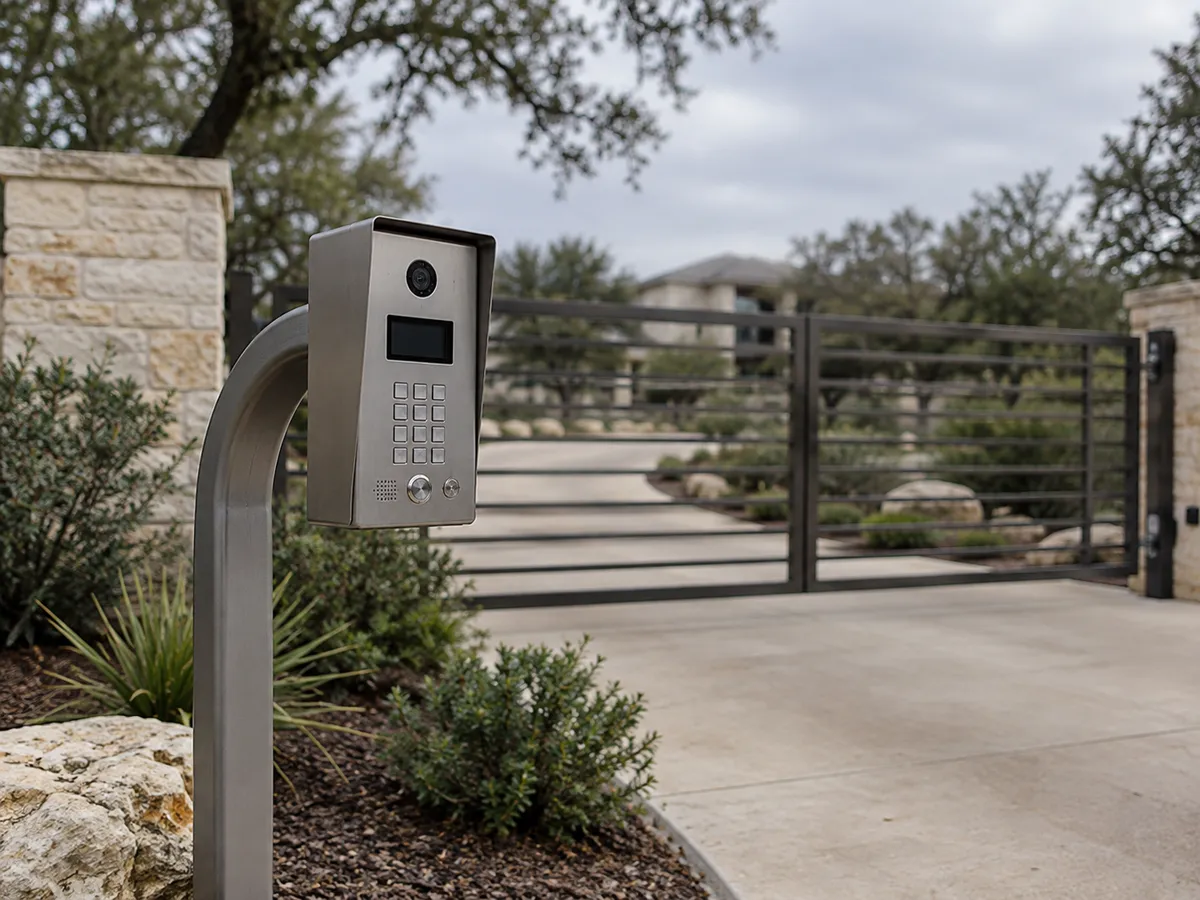
- Keypad, intercom, photo eyes and safety edges.
- Columns and footings, including masonry columns and digging through limestone.
- Galvanizing and powder coat, and the permit drawings and filing.
A photo cannot show the front yard line, the grade or the rock under the posts, so we price from the measured site. The visit costs nothing and you keep the written scope either way.
How a Bee Cave Gate Job Runs, Start to Finish
The first visit is at the property. The installers who will hang the gate measure the opening, the drive, the grade and the required front yard line, and note where power can reach a post. That tells us how much of the run must stay at four feet and which gate type the drive allows.
Shop drawings follow: elevations, the fence layout on the lot, the gate swing or travel path, the operator position and the finish. You approve them, we check them against the code as it stands that day, and the permit is filed.
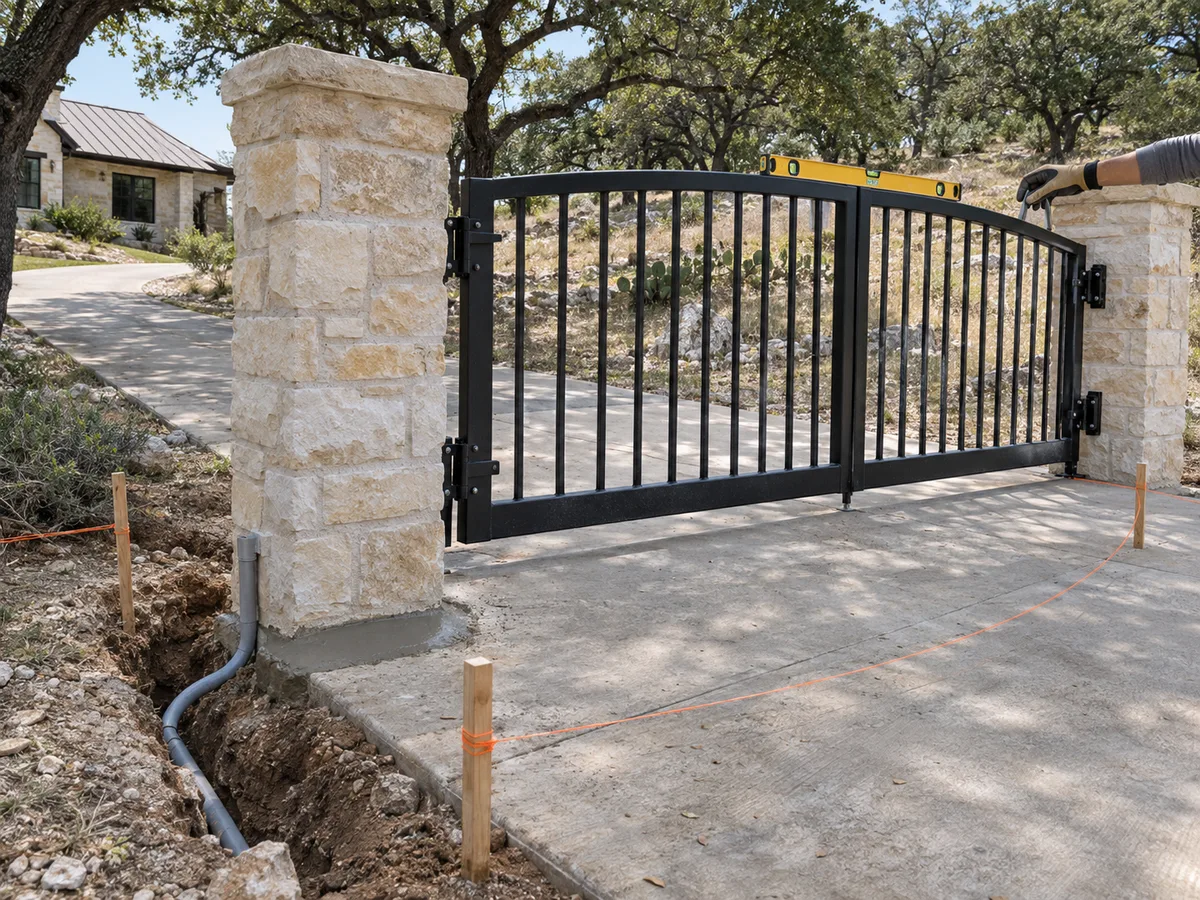
Every panel is cut and welded in our shop, galvanized and powder coated before it leaves. On site the crew sets posts and columns, hangs the leaves, wires the operator with its backup battery, and tests the photo eyes and manual release in front of you. The job closes with a written warranty.
The process
From Site Visit to a Gate That Runs
Four steps, and nothing is fabricated until you have signed off on the drawings and the price.
Free site visit
We measure the opening, the slope and where power can reach, and talk through style, automation and access.
Drawings and a written price
You get scaled drawings for your approval and for any HOA or city review, with one written price.
Fabricated in our shop
Steel is cut and welded to the approved drawings, then galvanized, powder coated or both.
Installed and tested
Columns and posts set, gate hung, operator set up to UL 325 and every safety device tested with you.
Gates, Fences and Ironwork We Build
Service area
Nearby Areas We Cover
Questions
Bee Cave: Gate and Fence Questions
Do I need a permit for a fence or gate in Bee Cave?
Yes. The city's code requires a permit before construction of any fence or screening wall. We prepare the drawings the application needs and wait for approval before setting posts.
How tall can a front yard fence be in Bee Cave?
Four feet inside a required front yard, outside the AG and P districts, and it may not be opaque. Side and rear fences can go to eight feet, with no barbed wire or electrification.
Can my driveway gate be solid steel?
If it stands inside the required front yard, plan on an open design at fence height, because opaque fences are prohibited there. Further up the drive a gate has more freedom. We confirm the city's reading for your lot at permit.
Which fence materials does Bee Cave allow in my subdivision?
In R-1, R-2 and R-3 subdivisions, front-facing and interior residential fences are limited to stained or painted cedar on rustproofed metal posts, powder-coated wrought iron, powder-coated tubular steel, or masonry. Our iron and steel are galvanized and powder coated to match that list.
What does a new gate cost in Bee Cave?
It turns on the gate type, width, steel gauge, operator and power, access control, columns and finish. We measure first and give a written quote, with no number offered before we have seen the opening.
Do you build pond fencing for commercial sites?
Yes. Bee Cave requires fenced detention and retention ponds to use wrought iron or a living screen. We build galvanized, powder-coated steel enclosures with pedestrian and maintenance gates.
Will my HOA need to approve the gate too?
If your property is under an association, usually yes, and that review is separate from the city permit. We make one drawing set that serves both.
Is there a warranty?
Yes. Every gate, fence and operator installation carries a written warranty, handed over at the final walkthrough.
Talk to us about a gate in Bee Cave
Free on-site measure across Austin and the west side. We call you back to set a time.
Calls only, we do not receive text messages.