Skip to content

Electric Sliding Gate Installation in Austin, Built for Level Lots and Busy Yards

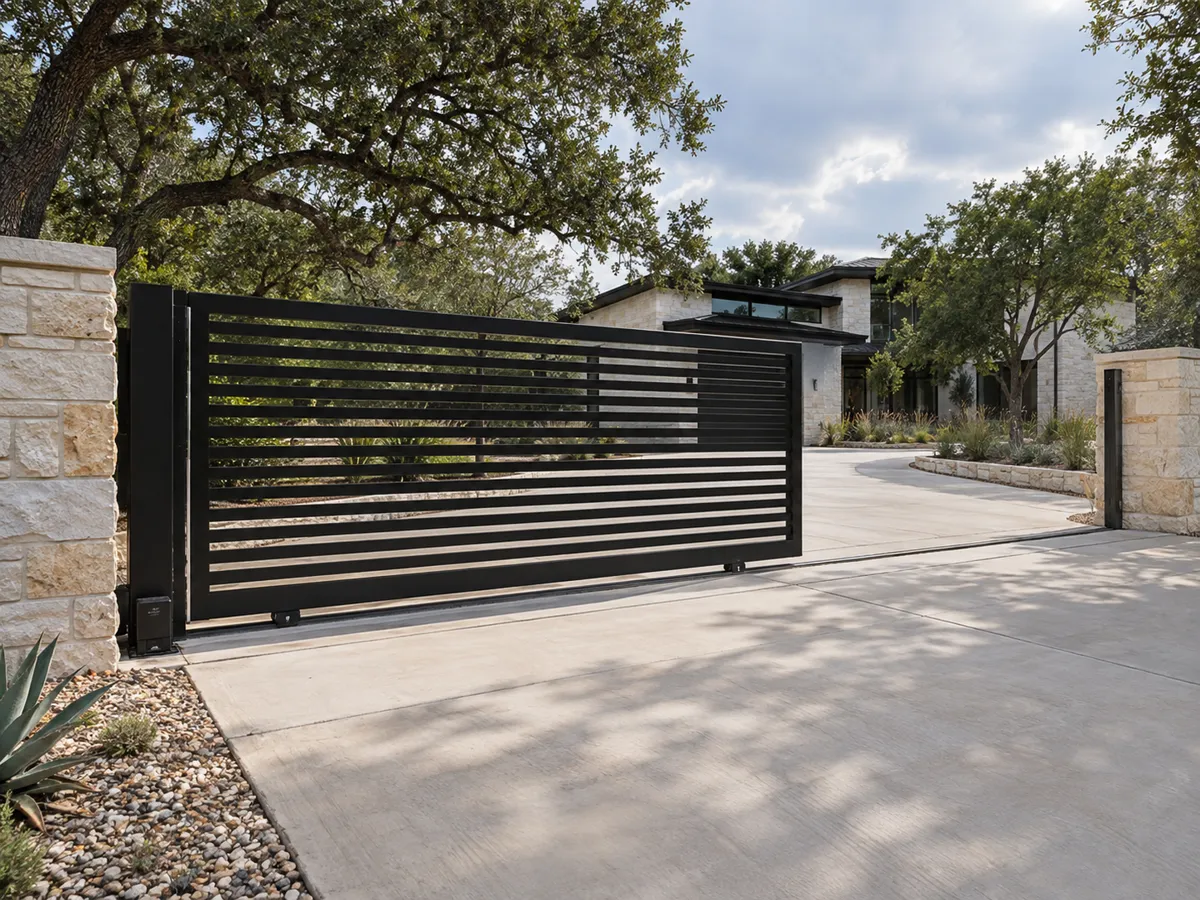
Austin Metal Gates provides electric sliding gate installation in Austin, TX, and is Travis County's leading specialist in ground-track slide gates, specializing in rack and pinion operators, drained track beds and commercial yard entries. We offer residential slide gates and heavy-duty yard gates for frequent traffic.

  • Free on-site measure
  • Run-back room checked
  • Track bed drained
  • Operator sized to the gate

Request a free site visit

About our electric slide gates

Our team provides a level, drained track and a correctly sized operator, delivering a gate that rolls smoothly to the side for homeowners and a fast, high-cycle entry for both residential and commercial projects. We weld every gate in our own shop, and the same crew that measured your drive pours the track and sets the operator up to UL 325, backed by a written warranty.

From checking the length of wall beside your drive to setting safety edges and photo eyes, our team handles every detail. Serving Austin, Sunset Valley, Shady Hollow and Rollingwood, we install slide gates where the ground is flat enough for a wheel to run true.

Why Austin Metal Gates

How We Work

A ground-track gate is only as good as the line it rolls on. We set the track first and build the gate to suit it.

Run-back room measuredClear length beside the drive checked on site before any drawing
Track set levelEmbedded or bolted rail on a poured, reinforced bed
Drainage built inTrack beds sloped and slotted so storm water leaves fast
Operator sized rightMotor and rack rated for the gate weight and daily cycles

Where a Ground-Track Slide Gate Fits

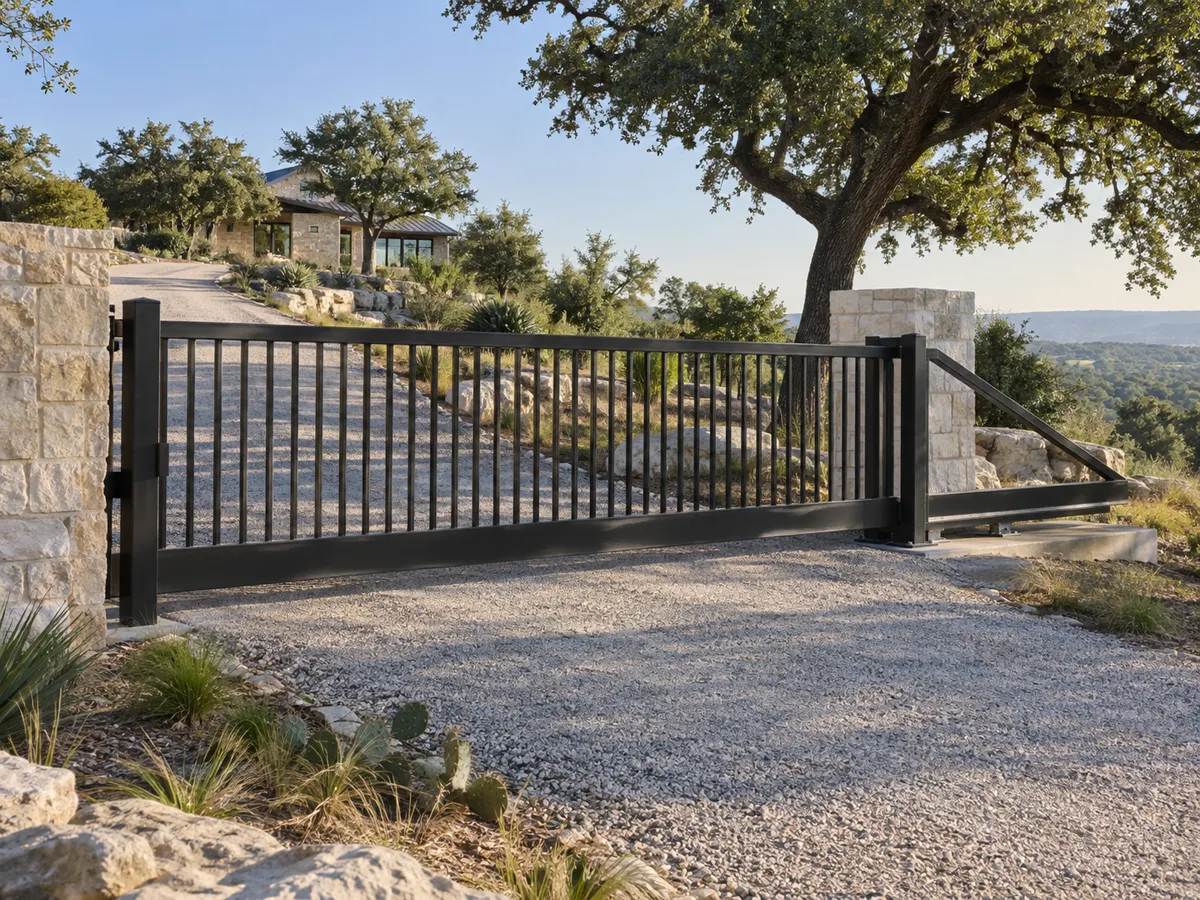
A tracked slide gate rides on V-groove wheels along a steel rail set in the drive. It suits flat, paved openings where a swinging leaf has no room to open.

Flat residential lots

Much of east Austin and the flat ground out toward Pflugerville and Manor sits on level Blackland Prairie, which makes a ground rail easy to keep true. A slide gate also works where the house sits close to the street and there is no depth for a swing arc.

Commercial yards and lots

Contractor yards, storage lots and warehouse entries often need wide openings of 20 feet or more that open and close dozens of times a day. A tracked gate carries that width on its wheels, so it needs no heavy counterweight tail.

When to choose cantilever instead

If the drive slopes, is gravel or caliche, or sits where debris washes across, a trackless gate is the better pick. Our <a href="/services/slide-cantilever-gates/">cantilever slide gate</a> page explains how those hang clear of the ground.

Run-Back Room and Layout

A slide gate needs a clear stretch beside the opening at least as long as the gate itself. That stretch is the first thing we measure.

Measuring the run

A 16 foot opening needs roughly 17 to 18 feet of clear, level ground to one side for the gate to park in, with a small overlap at each end. Trees, meters, walls and steps inside that run change the layout, so we walk it with a tape before quoting.

Guides, stops and posts

The gate runs between guide rollers on a guide post, closes into a receiver post on the far side and stops against a positive end stop. We set those posts in footings matched to the soil, since a guide post that leans makes the gate bind.

Clay, concrete and a straight rail

On the expansive clay east of I-35, a thin slab can lift and crack as the ground swells after rain, and a rail that rises in the middle makes the gate climb and stall. We pour the track bed thicker, reinforce it with steel and give it a firm base, so the rail stays straight through wet springs and dry summers.

Pedestrian access beside the gate

A slide gate takes time to open fully, so many owners add a separate walk gate beside it for mail and foot traffic. We plan it alongside the run-back so it does not sit in the gate's path.

Track Drainage, Flash Floods and Debris

Central Texas sits in Flash Flood Alley, and a ground track is the lowest point in a drive. Water, silt and gravel all end up in it if it is not planned for.

Draining the track bed

We pour the track on a raised or sloped bed and add drainage slots or a channel drain under low spots, so a heavy storm clears the rail instead of pooling around it. Wheels that sit in standing water rust and pit their bearings early.

Keeping the rail clear

Leaves, pecans, gravel and mud stop a wheel or derail a gate. We fit track brushes or scrapers on the wheel carriages, and the operator's reversing sensor stops the motor if something blocks the path.

Heat and fire ants

Summer days over 100 F bake the operator housing, so we choose units rated for the heat and leave them vented. We also seal cable entries and set ant-resistant bases, because fire ants nest in warm control boxes and short out boards.

The Rack and Pinion Operator

A slide operator turns a small pinion gear that runs along a toothed rack bolted to the gate. It is simple, strong and easy to service.

Sizing the motor

We match the operator to the gate's weight and how many times a day it moves. A home gate may cycle a dozen times a day, a busy yard gate a few hundred, and each needs a duty rating to suit.

Rack, pinion and upkeep

A steel rack lasts longer than nylon on a heavy gate and stands up better to summer heat, while nylon runs quieter on a light residential leaf. We set the gap between pinion and rack so the teeth mesh without riding, and check it again at each service visit, since a sagging wheel or a worn bracket slowly opens that gap until the gear skips.

Power, backup and safety

New gate circuits inside the city usually need an electrical permit from the City of Austin Development Services Department, and power comes from Austin Energy or, on much of the west side, Pedernales Electric Cooperative. We add battery backup, since the February 2021 storm showed how long outages can last, plus photo eyes and edge sensors so the gate stops and reverses on contact.

What Shapes the Cost of an Electric Slide Gate

An electric slide gate is priced from the site, the gate and the operator together, and we list each in your quote. The main factors:

  • Opening width and gate weight.
  • Run-back length and anything that has to move to clear it.
  • Track bed: new concrete, cutting into existing paving and drainage.
  • Gate design: pickets, slats or solid panels.
  • Operator duty rating, residential or high-cycle commercial.
  • Power run from the panel and the electrical permit.
  • Safety devices: photo eyes, edges and loops.
  • Access controls such as keypads, remotes and an AFD Knox key switch.

Most electric slide gates are typically installed in two to four days on site once the gate is built, an estimate that depends on concrete cure time.

For keypads, intercoms and phone entry, see our gate access control work, and for wide business entries visit commercial gate systems. You can also start from the Austin Metal Gates homepage.

The process

From Level Rail to First Open

Four steps, and nothing is poured or welded until you have approved the layout and the price.

  1. Free site visit

    We measure the opening and the run-back room, check the grade and note where water flows across the drive.

  2. Layout and a written price

    You get a drawing of the track, posts, operator and power run, with one written price.

  3. Track and gate

    We pour the drained track bed and posts while the gate is welded and finished in our shop.

  4. Operator and testing

    The rack, operator, sensors and backup are fitted, then we test every safety stop before handing over the remotes.

More of What We Build

Questions

Electric Slide Gates: Common Questions

How much does electric sliding gate installation cost in Austin?

Opening width and gate weight come first, since they decide the steel, the track length and the motor size. The concrete track bed and the power run to the operator pad come next, and the free visit gives you one written figure for all of it.

Tracked or cantilever: which do I need?

A tracked gate suits a flat, paved drive and costs less to build. A slope, gravel or debris-prone drive is better served by a cantilever gate, which needs no ground rail.

How much room does a slide gate need?

Plan on a clear, level run beside the opening a little longer than the gate itself. We measure it on site.

Will heavy rain stop my gate?

Not when the track is drained. We raise or slope the track bed and add drainage slots so storm water and silt clear the rail.

What happens in a power outage?

A battery backup keeps the gate running through most outages, and every operator has a manual release so you can open it by hand.

Is a slide gate good for a business yard?

Yes. Tracked slide gates handle wide openings and high daily traffic well, with a commercial-duty operator sized to the cycle count.

How long does installation take?

A site visit is usually possible inside a few business days. The gate itself takes a few weeks in the shop, then the track pour and operator setup typically take two to four days on your drive, all estimates on your quote.

Is the installation covered by a warranty?

Yes. A written warranty covers the slide gate, the track work and the operator setup, and you can read its terms on the quote before you sign anything.

Free site visit

Talk to us about an electric slide gate

Free on-site measure across Austin, from flat east-side lots to the lake roads. We call you back to arrange a visit.

Call (512) 503-9203

Calls only, we do not receive text messages.

Call (512) 503-9203