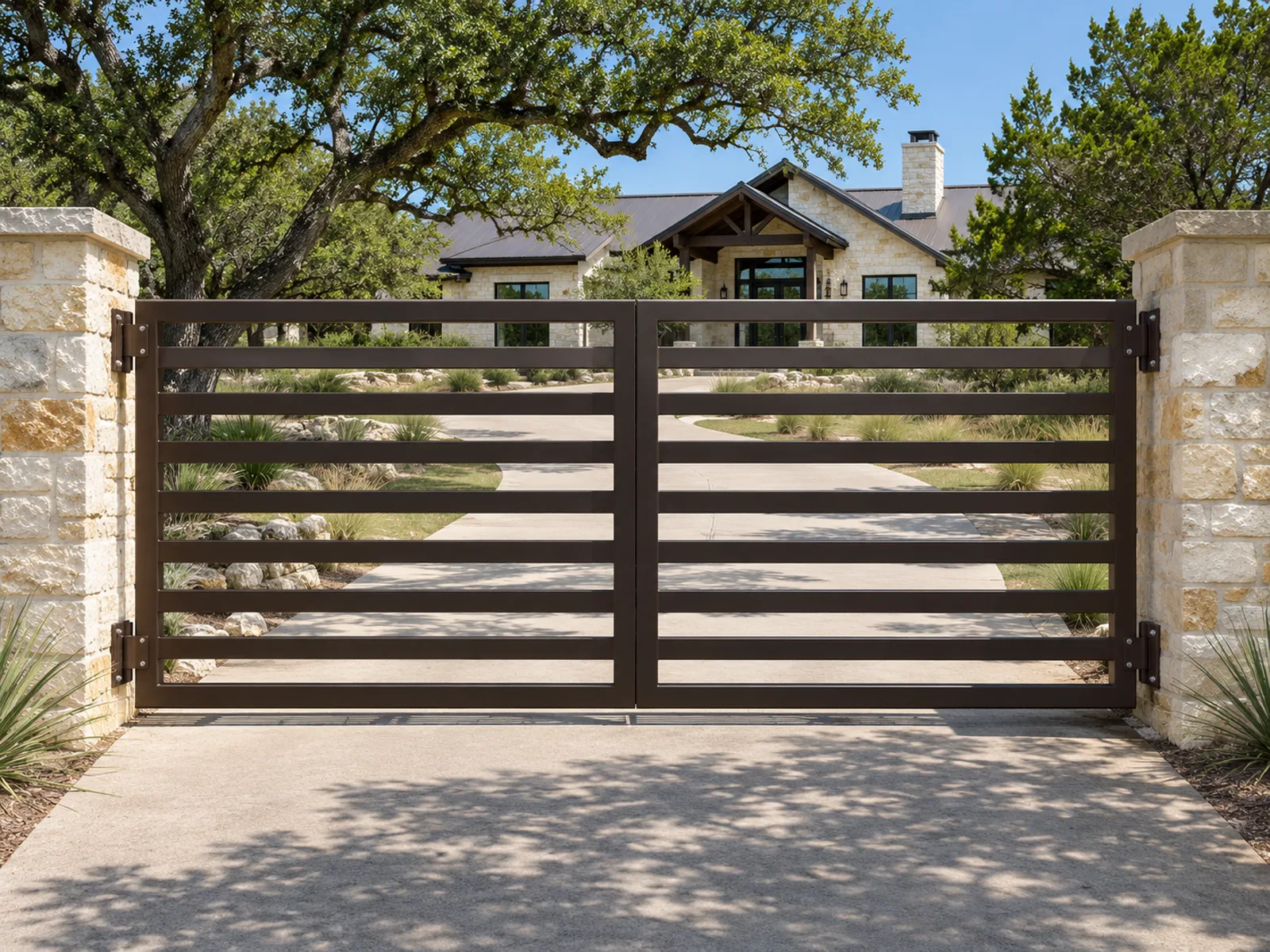
Contemporary and hillside homes
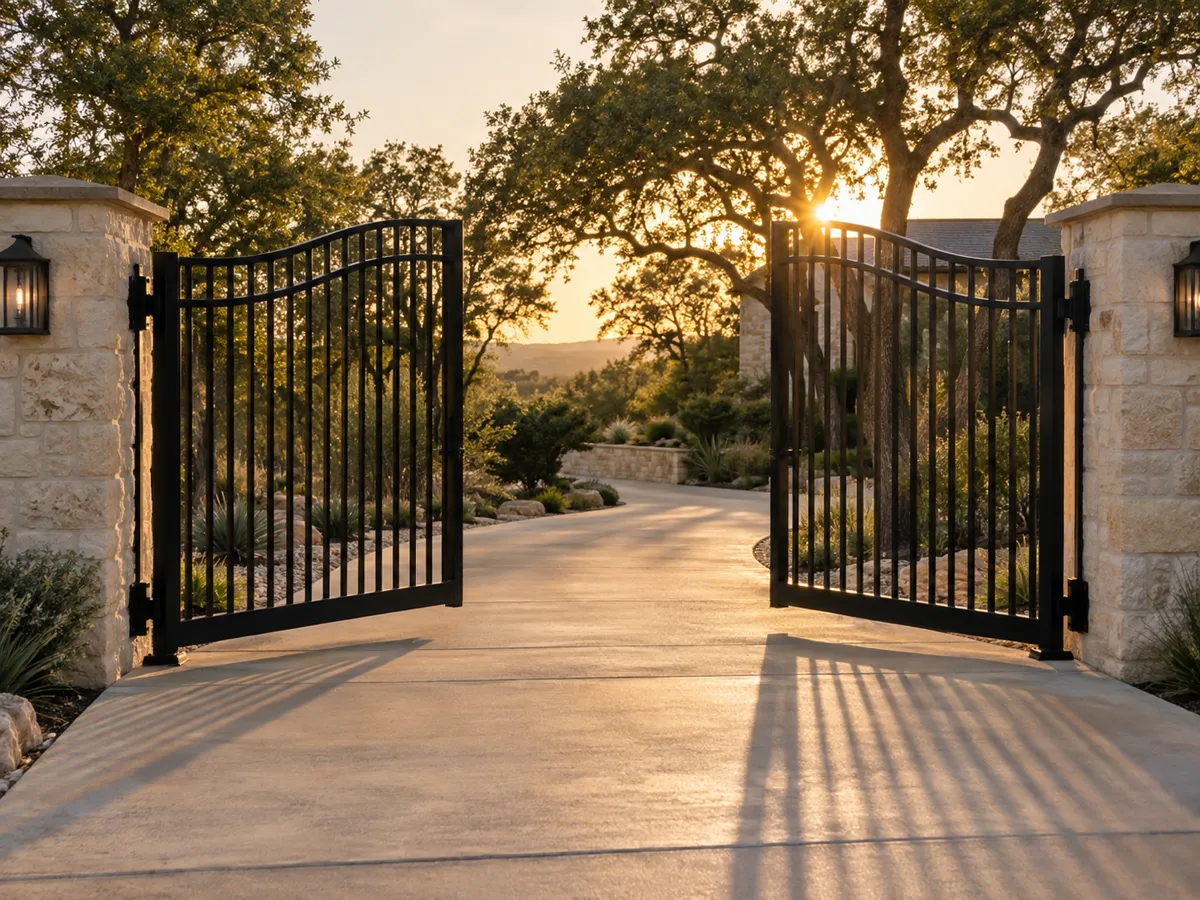
Flat roofs, large glass and stone veneer call for a gate with the same calm geometry. Level slats repeat the horizontal lines of the house, where scrollwork would fight them.
Austin Metal Gates builds horizontal slat gates and matching fences in Austin, TX: slatted driveway gates, matching walk gates and continuous fence runs in powder coated aluminum or steel, with wood-look infill where you want the warmth of timber. We draw the whole frontage as one design.
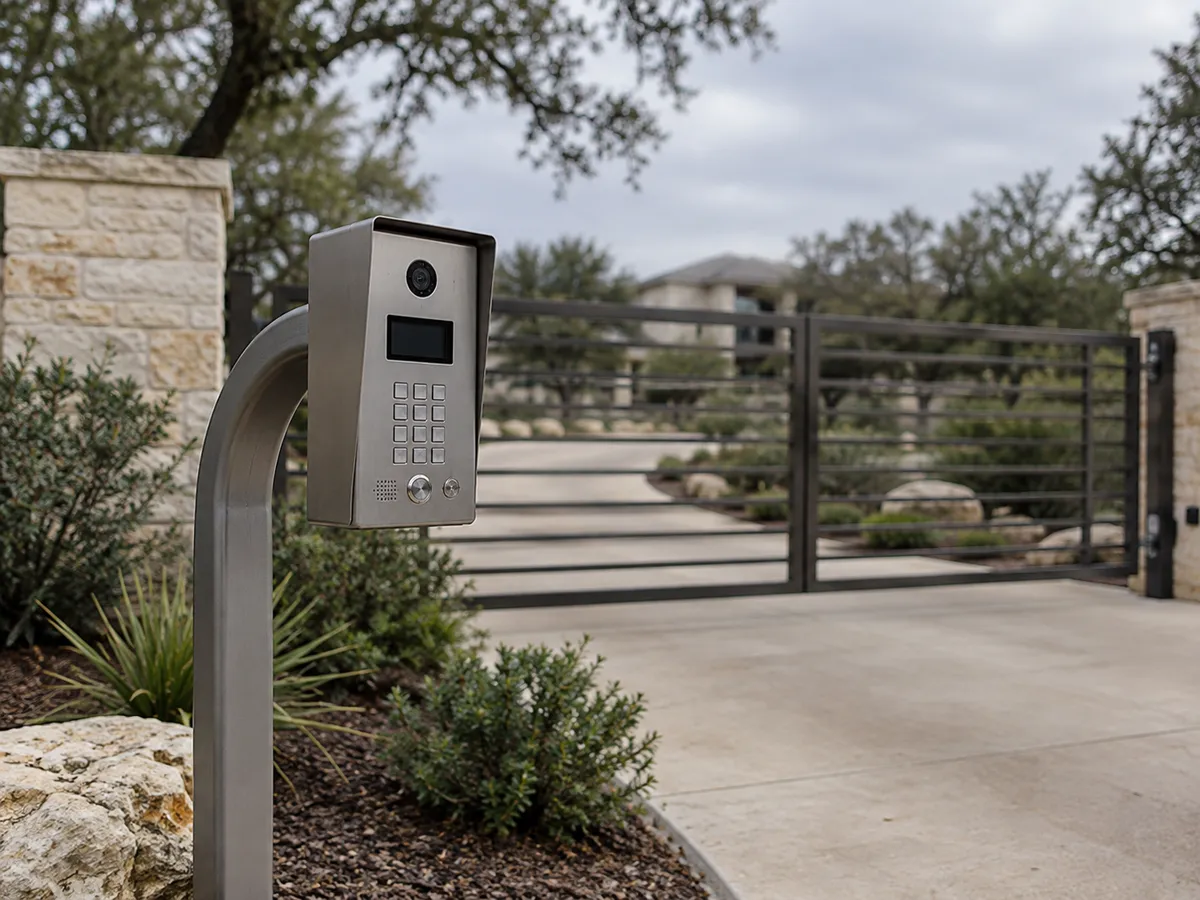
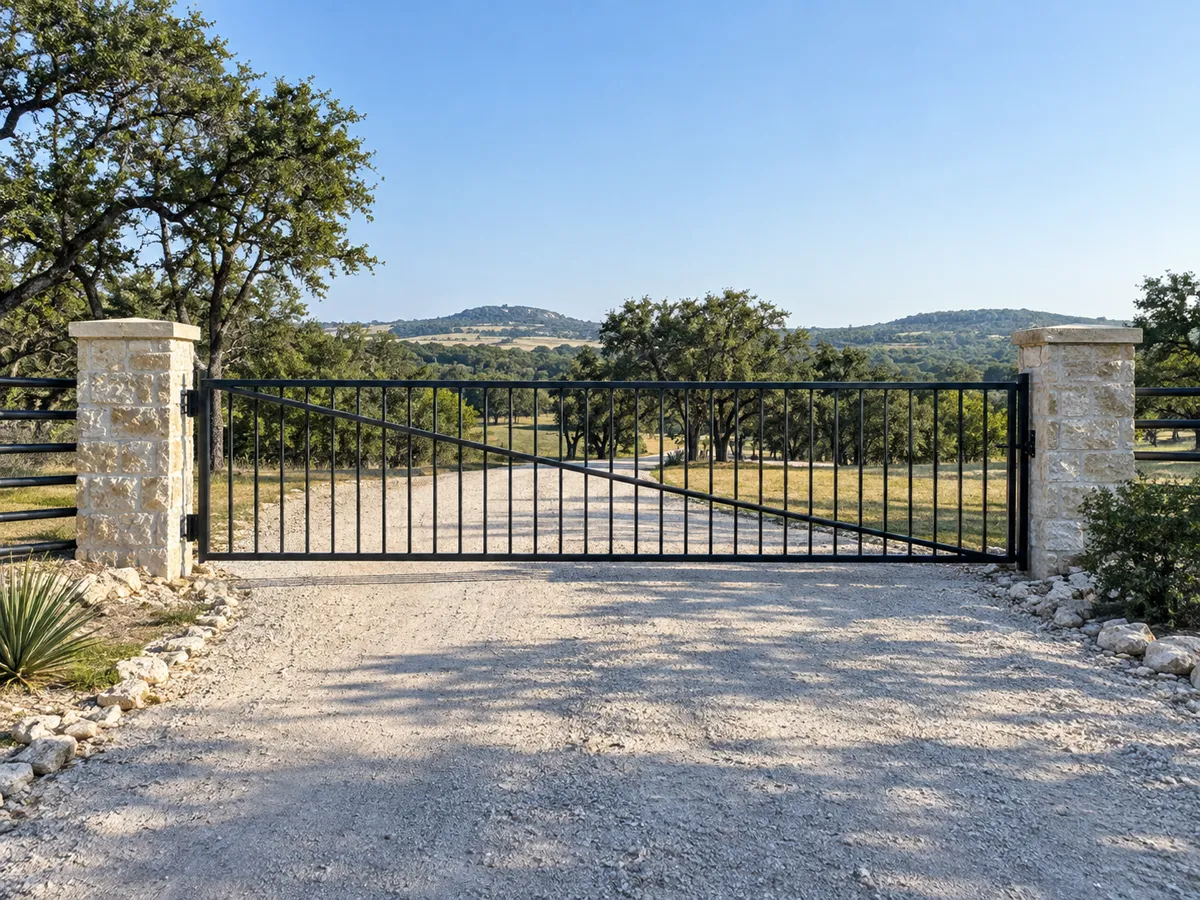
A horizontal slat gate screens the front of a lot without turning it into a wall. The boards run level, the gaps let air and some light pass, and the result reads as modern and calm next to stucco, limestone or board and batten siding. We measure the frontage, agree the slat size and spacing with you, and draw the gate, walk gate and fence together.
Austin has plenty of homes that suit the look: contemporary builds in the hills, remodeled ranch houses in the older neighborhoods and new subdivisions with clean lines. Serving Austin along with Westlake, Lakeway and Bee Cave, we build slat runs that hold their lines in Texas sun and wind.
Why Austin Metal Gates
A slat gate is only as good as its straight lines. We measure the frontage, draw every panel to one layout and check the finished run with you before we leave.
A horizontal slat gate suits houses with flat planes and simple trim, and it gives owners privacy at the front of the lot without the closed feel of a masonry wall.
Flat roofs, large glass and stone veneer call for a gate with the same calm geometry. Level slats repeat the horizontal lines of the house, where scrollwork would fight them.
Many older Austin neighborhoods have low ranch houses that were updated inside and out. A slat gate and fence give the street side a fresh look without a full rebuild of the front.
Builders often leave the front yard open, and owners add a gate and fence to claim the space. A slat run gives privacy for a side yard, a pool or a dog while still looking tidy.
The boards block a straight line of sight from the street, yet breeze still moves through, which matters in an Austin summer when a solid fence traps heat in the yard.
An existing fence can stay and the new gate can be drawn to suit it. We measure the board size and spacing, copy the finish and build a leaf that continues the line. If the old fence is tired, we may suggest refacing it so the whole frontage reads as one.
Posts deserve attention, because a slat run is only as straight as what holds it. Expansive clay moves footings through wet and dry spells, so we set posts deeper where the soil calls for it and brace the gate posts for a leaf that carries real weight. Where a sliding gate suits the lot better than a swing, see our sliding gates page, and for a custom frame built to your opening visit driveway gate fabrication.
Gates and fences often live inside a neighborhood association's rules, and many Austin communities review height, color and style before work begins. Our HOA and community gate systems page covers that process, and for a house that is not governed by one, we still follow the city rules for fence height and sight lines at the street.
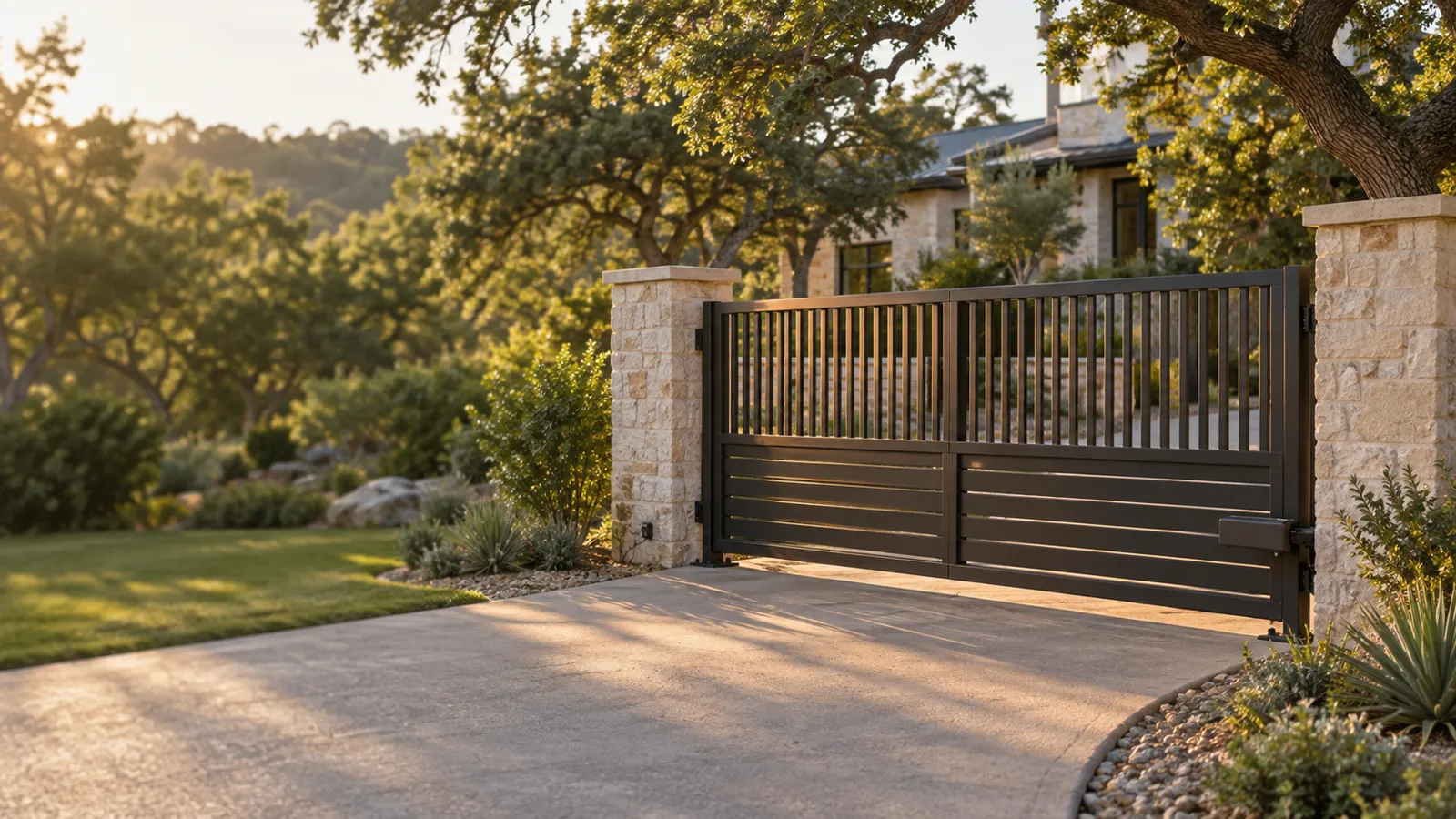
Gap width controls two things at once: how much of your yard a passerby sees, and how much wind the leaf catches. Close-set boards hide more but behave like a sail, while wider gaps spill the wind and reveal more.
Central Texas gets strong spring storms and gusty fronts, and a near-solid leaf catches that wind across its whole face. The load lands on the hinges, the posts and any operator, so the spacing and the frame are chosen together.
What people see depends on the viewing angle as much as the gap. A passerby looking straight on sees little, while a driver on a rise sees more. We stand where people will stand and judge the view before the spacing is final.
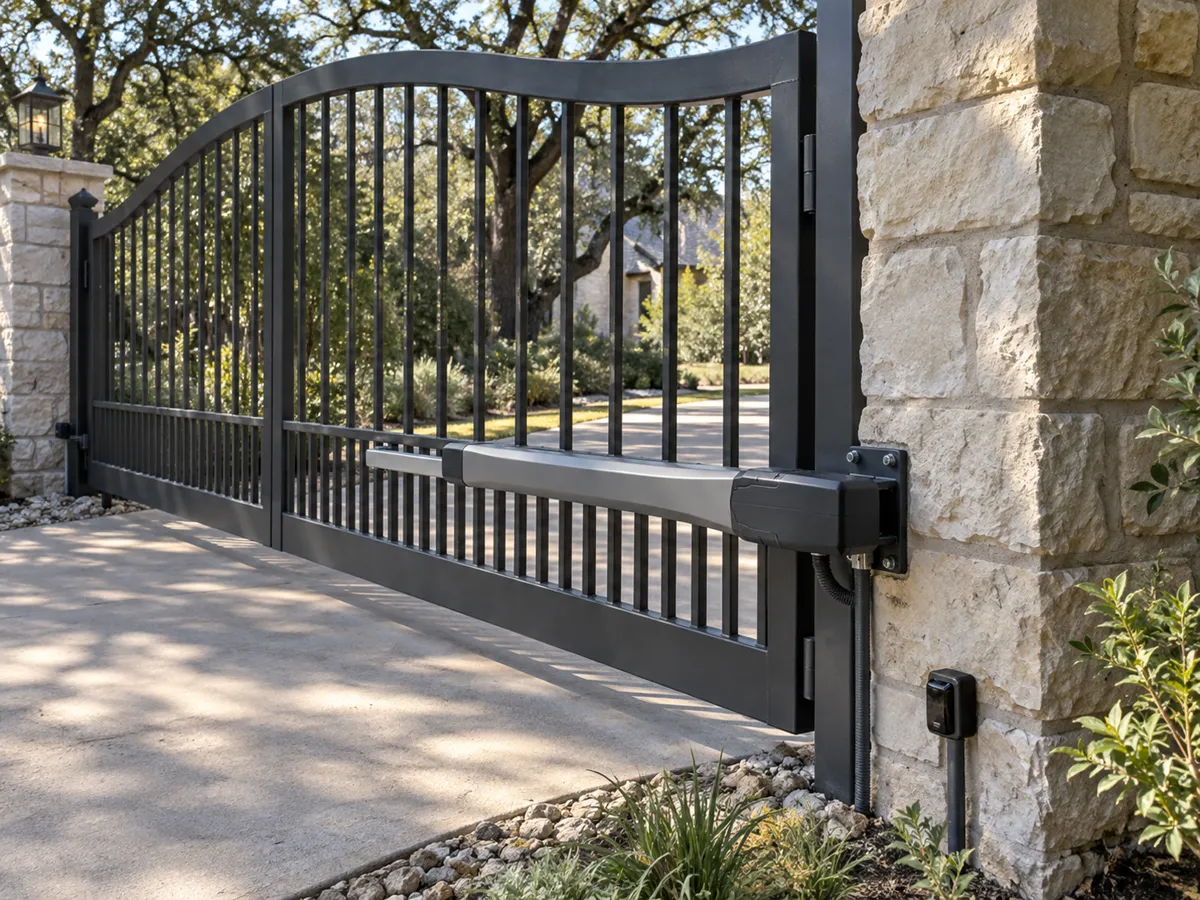
A slatted leaf weighs more than an open picket leaf and takes more wind, so the operator is sized to the leaf and its worst day. Our gate automation page covers how we pick and set up operators, and every automated gate gets photo eyes and edge sensors.
For a large frontage we can hold up a sample panel at the site so you see the spacing against your own house and light before we commit to the full run.
Frame and infill do different jobs: the frame holds the weight and the infill sets the upkeep. In Austin we build slat gates in four ways.
This is the lightest build, which is gentle on hinges and operators. It does not rust, and the powder coat holds its color well in strong sun. Our aluminum gates page explains why it suits long, wide leaves.
A steel frame is stiffer across a wide opening and suits a heavy driveway gate. It is primed and powder coated, and we recommend touching up any chip so rust does not creep in.
Powder-coated boards printed to look like cedar or composite boards in a timber tone give the warmth of wood without staining. We pick boards with room to expand in the heat, because a panel packed too tightly will buckle.
Cedar boards on a metal frame look wonderful on day one. Texas sun and cycles of wet and dry will gray and move them, so we ask owners to be honest about how much sealing they will do.
Your quote comes out of the frontage measurements. No figure appears on this page, since run length, material and operator choice move the result so far that a general number would mislead. Rely on the written quote that follows a free visit.
To get started, ask for a visit through the form and have a few photos of the frontage ready. If the run should also include a pool enclosure or ornamental sections, our ornamental steel fencing shares the same posts and finishes.
Slats look deliberate only when every piece of the frontage follows the same lines. A reveal that changes width or a top edge that jumps is what a neighbor spots first.
Every slat height comes from one reference line, so a board on the fence runs level through the drive gate and the walk gate beside it.
A driveway gate needs more steel than a fence panel. We place the extra structure behind the boards, where it does not change what you see from the street.
Beside the drive gate, the pedestrian leaf repeats the slat pattern and carries hardware sized for daily use, with a spring hinge, a latch at a comfortable height and an optional keypad. Our pedestrian entry gates page covers the hardware choices.
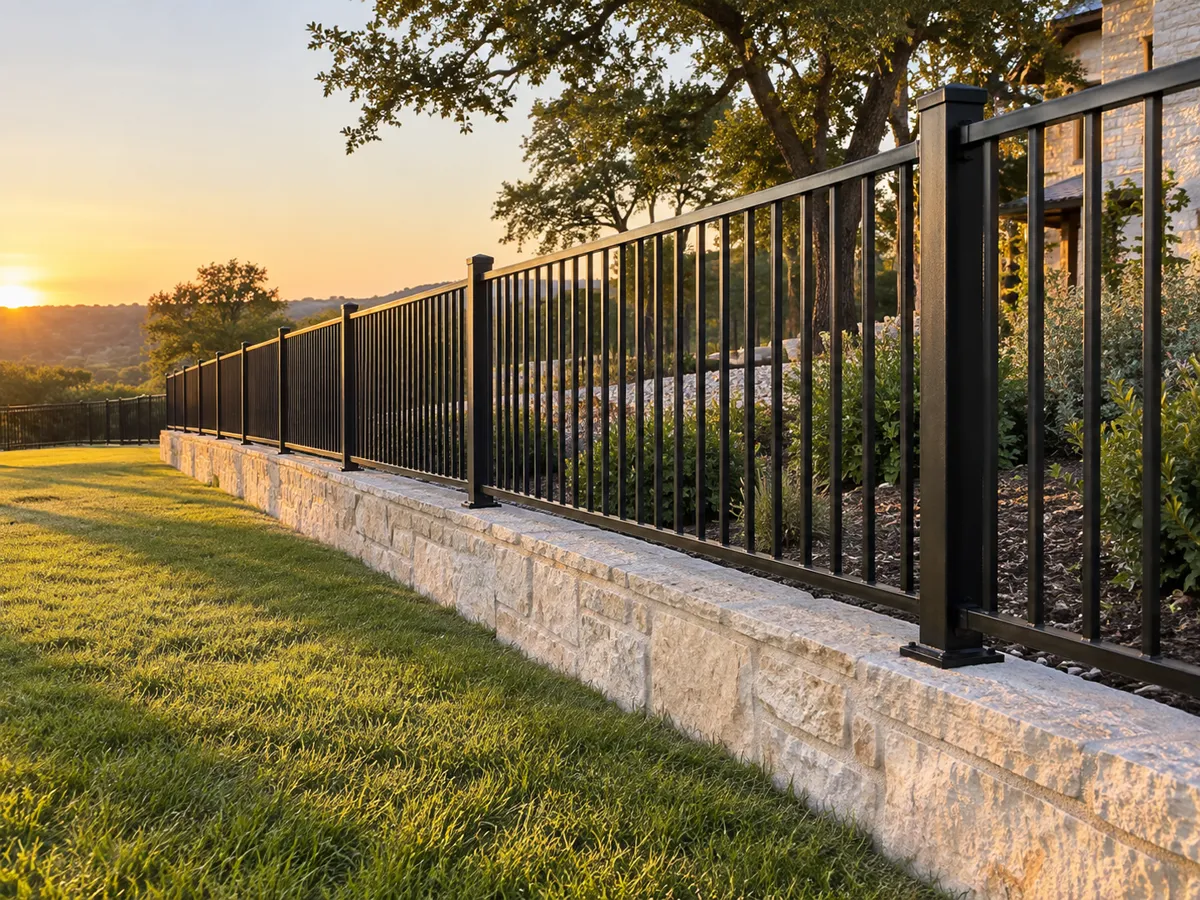
Many Austin lots slope, and shallow limestone under the topsoil makes digging slow. Panels step down the grade so the slats stay level, and post spacing is planned around the rock we expect.
The process
The job runs in four steps, and no metal is built until you approve the layout and the scope in writing.
We walk the frontage, measure each opening and the whole run, check the grade and the soil, and note where power and posts will go.
You get a scaled layout showing slat size, spacing and the single datum, plus a written quote naming materials, finish, hardware and any operator.
Panels and gates are built and finished in our shop, then set on posts, hung, wired if automated and adjusted until the slats line up across the run.
We run the gate with you, test each safety device, set up remotes or keypads and walk the whole line before we call it done.
Service area
Questions
As much as you choose to build in. Tight spacing blocks most of the view from the street, and wider spacing lets more through. We judge the sight lines on site so the gap you pick gives the screening you want.
Good ones are built for it, and the key is allowing room to expand in the heat. We pick boards and fixings made for outdoor use and leave expansion gaps so a hot afternoon does not buckle a panel.
Aluminum is better for a wide, light leaf and for owners who want no rust, and steel is better for a very wide or heavy gate that needs stiffness. We recommend one after seeing the opening and the soil.
Yes. We measure the board size, the spacing and the finish, then draw the gate so its slats continue the existing line. If the old fence is past repair, we can price a new run in the same style.
Many do. Height, color and style are common review items, so we prepare drawings and finish samples for the board. Tell us your community and address and we confirm what is needed.
Yes, with an operator sized for the leaf and its wind load. Swing and slide both work, and every automated gate gets photo eyes and edge sensors tested at handover.
Rinse it with a hose now and then, check the hinges and latch every few months and touch up any chip in the coating. Sealing is only needed for real wood, which asks for more attention in Texas sun.
Plan on several weeks from the signed layout to installation, as an estimate. Finish and material lead times and the length of the run set the schedule, and we give a date range when we quote.
Use the form to request a visit and we will call to arrange a time. Send a few photos of the frontage if you have them.
Calls only, we do not receive text messages.